Insight Focus
Indian sugar prices have shot up to record highs. The government has permitted a million-tonne duty-free import quota. The quota could decrease coastal refineries’ white sugar exports rather than create new raw sugar import demand.
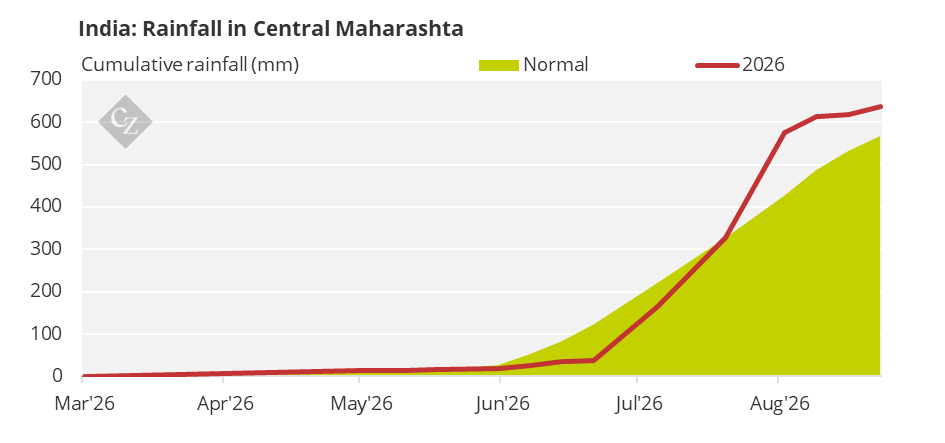
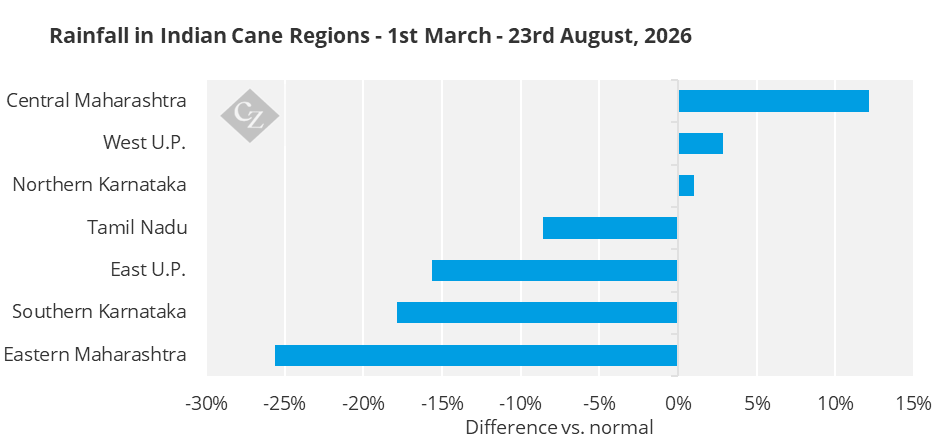
It’s been an eventful couple of weeks in the Indian sugar market. After improved rainfall in July in Central Maharashtra, dry weather returned in August. This accentuated concerns that a poor monsoon could hurt yields in 2026/27 and reduce plantings for 2027/28.
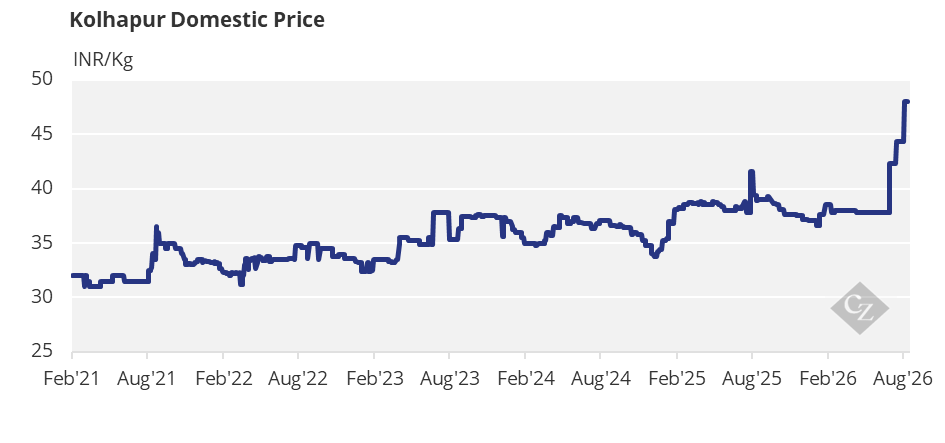
Sugar prices subsequently shot up with some mills in Maharashtra selling sugar at over INR60/kg during last week. This is 60% higher than at the start of July, and are the highest prices on record in India.
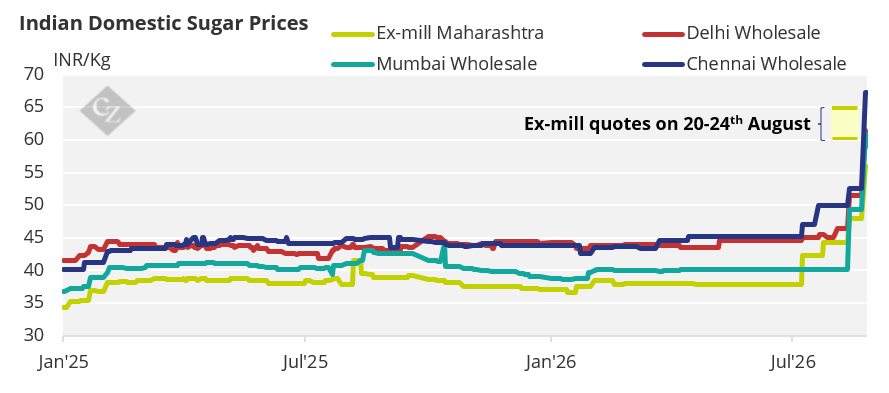
The government has responded by permitting a duty import quota of one million tonnes. There’s a string of major festivals about the begin and continue till Diwali in early November. Stocks are likely to remain tight until the second half of November when the next crushing season begins. The government is under political pressure to contain prices during the festival season particularly as its recently faced criticism for diverting sugar to produce ethanol and permitted exports just a few months back.
The import quota allows up to one million tonnes of raw sugar to be imported to supply the domestic market after refining. However, the timelines for importing new sugar are tight. Applications need to be made by 28th August, Letters of Credit confirmed within 15 days after that, the sugar arrive in India by 15th October. Mills/refineries then have two months from the Bill of Entry to refine and sell the sugar.
Alternatively sugar already imported duty-free by coastal refineries under the re-export program can be used to supply the quota instead of being exported. However, applications for these volumes too need to be made by 28th August, and sales need to be completed by 31st October.
Given the tight timelines, we think there’s likely to be limited new demand for raw sugar imports from India. As we’d expected in last week’s Market View, the world market will instead feel the impact of the quota through reduced refined sugar exports from India’s coastal refineries as they divert some of their volumes to the domestic market.
The rally in world sugar prices does however mean Indian sugar prices need to be higher than they have been to encourage coastal refiners to sell domestically instead of export. Based on current No.5 white sugar prices and FOB premiums for Indian sugar, we calculate ex-refinery prices would have be over INR52/kg to match the returns refineries get on exports.
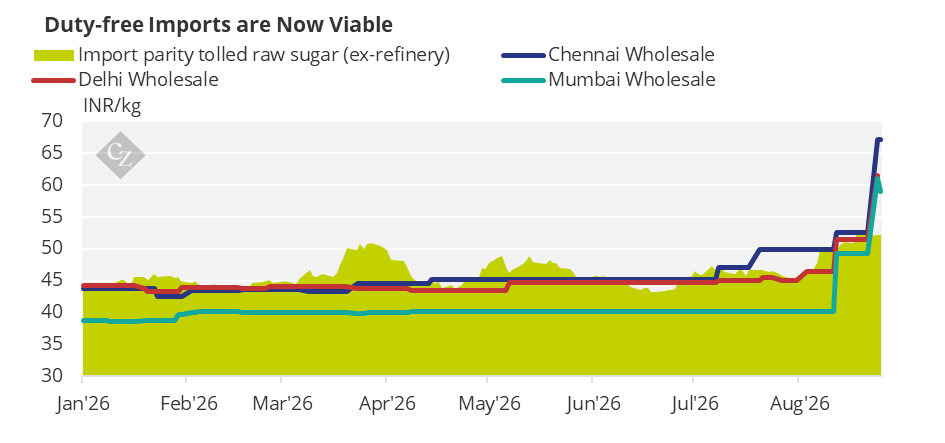
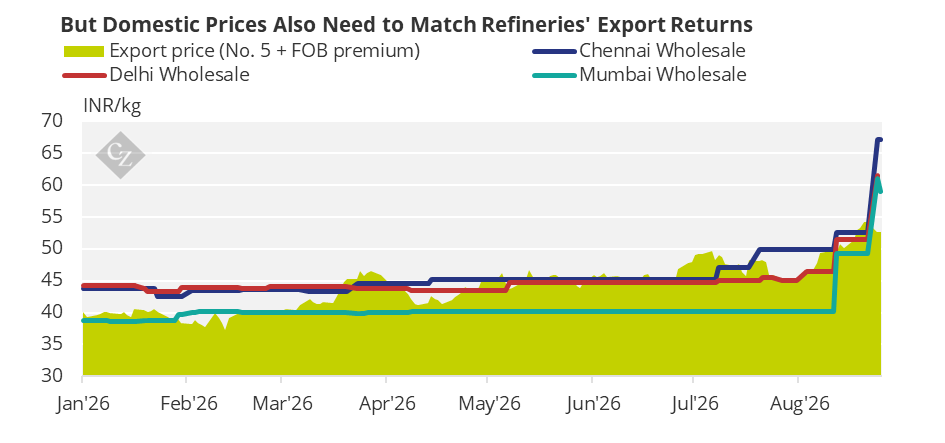
Prices today are above this level. The challenge for refineries is that they need to apply for the quota by 28th August, and then hope that domestic prices stay high. Reports indicate prices have already started to ease from last week’s highs.
In contrast, selling to the export market carries lower price risk as they can lock-in attractive No.5 futures prices.
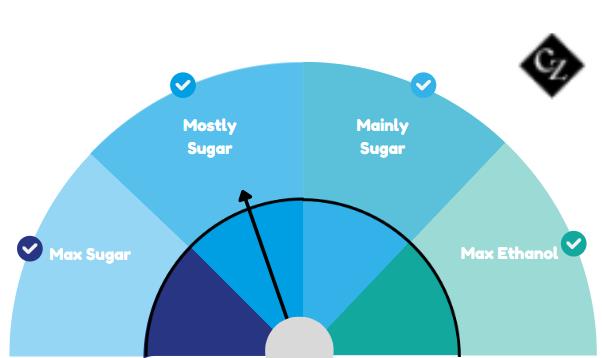
Latest Prospects for Diversion of Sucrose to Ethanol
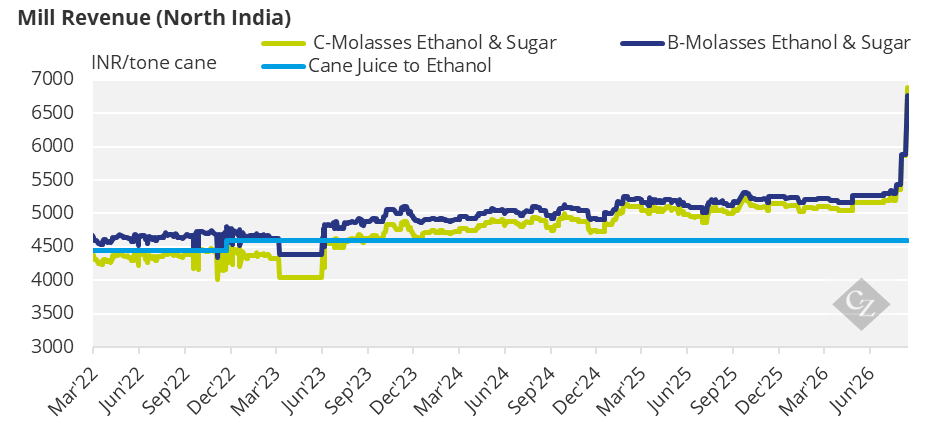
The recent increase in sugar prices makes it unattractive for sugar mills in Maharashtra for divert cane juice to produce ethanol. There’s also now not much difference between returns from making ethanol from B-molasses instead of C-molasses (making ethanol from B-molasses results in a higher ethanol yield and lower sugar yield than C-molasses).
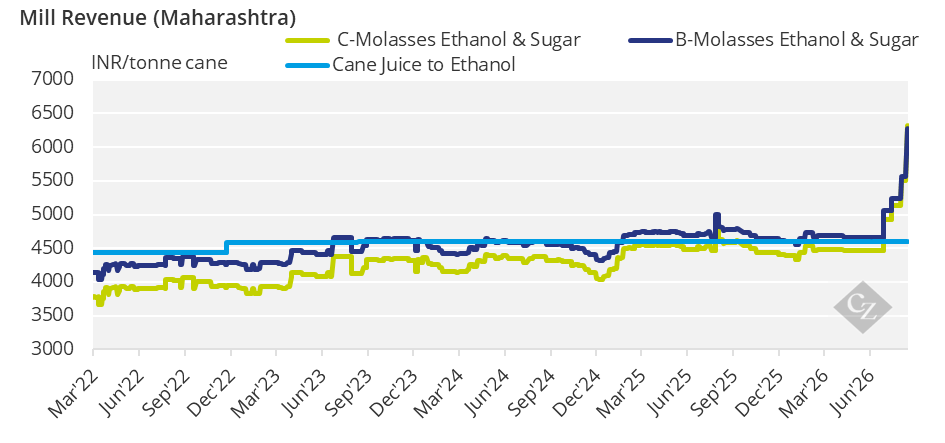
Meanwhile, in Northern India where sugar prices are even higher than in Maharashtra, mills would lose revenue making ethanol from B-molasses compared C-molasses.
These developments indicate that, even if the government does allow some sugar to be diverted to ethanol in 2026/27, it’ll have to either increase ethanol procurement prices, or hope that sugar prices fall once the crushing season begins.
That’s the economics. However the government’s decision on how much sugarcane ethanol it’ll permit mills to make will be influenced by political and socioeconomic factors.
On the one hand, there’s been sharp reversal of sentiment towards sugarcane ethanol. Just a couple of months ago the government was seriously looking at ways to better utilise India’s substantial ethanol production capacity to reduce dependence on imported energy.
However serious resistance has emerged. Consumers have raised concerns about ethanol providing lower mileage than gasoline. There’s also been complaints that higher blends have damaged car engines as older vehicles are not compatible. Additionally, critics of ethanol blending have highlighted the impact on food and water security that increasing sugarcane and grains cultivation for fuel could have.
The recent escalation in sugar prices has added to the resistance. Given the concerns around both the 2026/27 and 2027/28 crops, we’d expect the government to be hesitant about how much ethanol production it allocates to sugarcane this year.
At the same time, we shouldn’t rule out diversion to ethanol completely. The main alternative feedstocks to sugarcane are corn and surplus rice. Indian rice stocks are much more comfortable than sugar and the government has indeed signalled ethanol made from surplus rice will play a larger role in 2026/27.
However let’s keep in mind containing rice prices is arguably more important for food security than sugar prices. Rice plantings are so far 3% down compared to this time last year, while corn plantings are 4% down. If a poor monsoon hurts grains yield, the government may also hesitate to produce too much ethanol from rice.
This means, without some sugarcane ethanol production, India may have to reduce its ethanol blend and import more crude oil, which could have knock-on implications for its macroeconomy.
In contrast to reduced rice and corn plantings, sugarcane area is similar to last year for India as a whole, and has reportedly increased in the largest sugar producing states of Maharashtra, Uttar Pradesh and Karnataka. Irrigation also means sugarcane yields are less at risk from poor rainfall than rice and corn, which are still grown on rainfed land in many parts of India.
Moreover there’s state elections in Uttar Pradesh in 2027 just after the crushing season ends. The government will be keen ensure farmers are paid well, and paid on time. Improving sugar mills’ cashflows through producing ethanol is one way of doing this.
Appendix
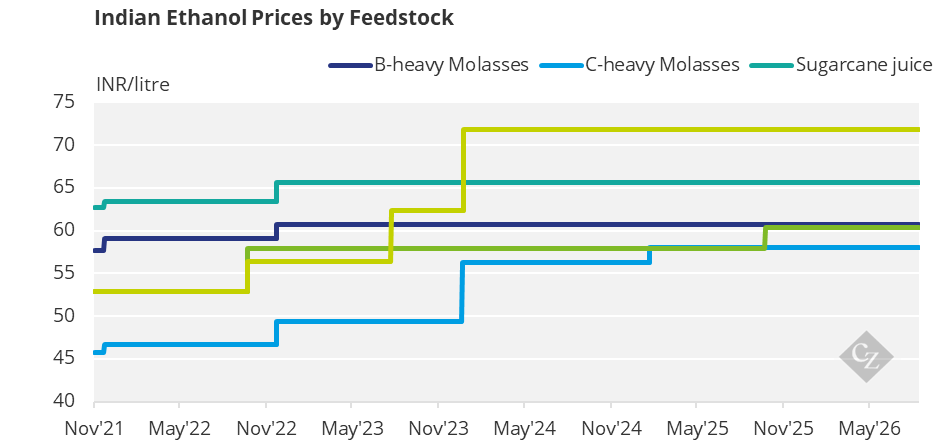
Our analysis considers the returns that mills earn from producing ethanol at the expense of sugar. Many mills/distilleries have a choice over which feedstocks they use to make sugar or ethanol based on the relative prices of ethanol paid by the oil marketing companies (OMCs), which is summarised below:
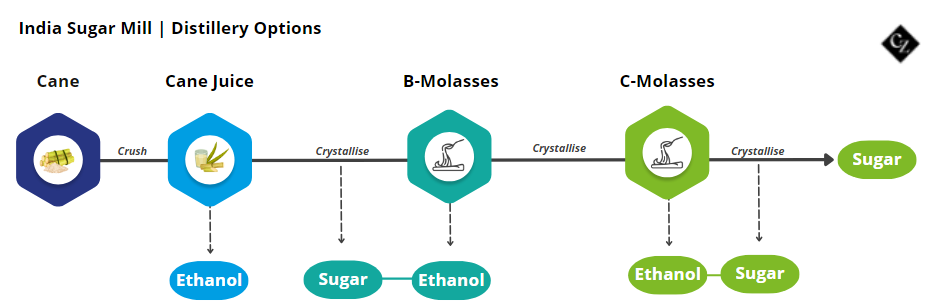
Proportion of Sugar to Ethanol: