
Insight Focus
Dairy markets were mixed as buyers focused on future needs. Avian influenza resurfaced in Washington, while powder markets diverged as WPC prices weakened and nonfat dry milk demand remained active. Holiday demand supported butter and cheese markets, while expanding processing capacity tightened raw milk availability in New York.
This update is from Sosland Publishing’s Dairy Report. For more information and subscription details, CLICK HERE.
Dairy product markets were irregular this week. Spot activity slowed as buyers turned their focus toward 2027 needs.
Avian Influenza Surfaces Amid Mixed Powder Markets
Avian Influenza Surfaces Amid Mixed Powder Markets
Highly pathogenic avian influenza was confirmed in a Benton County, Washington, dairy herd following two earlier detections in Yakima County. The latest case was identified through routine surveillance before cattle exhibited symptoms. The herd was quarantined, with no dairy shortages anticipated.

Nonfat dry milk prices varied by region as buyers resisted elevated offers despite restricted production. Domestic demand was active, particularly for 2027 contracts, while Mexican purchasing showed signs of slowing. One trade source said nonfat dry milk was beginning to find its footing as inventories stayed lean.
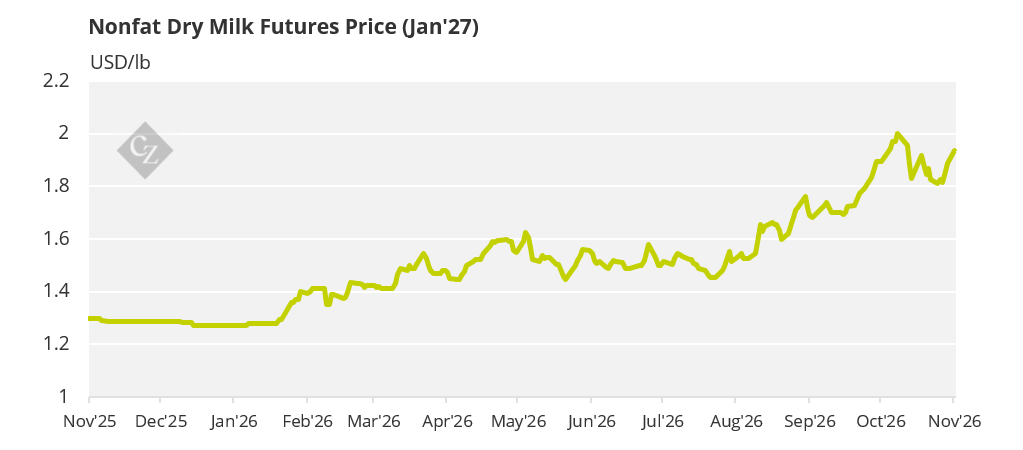
Dry whey prices were steady to higher, with spot availability constrained by processors’ emphasis on higher-protein products. Whey protein concentrate (WPC) 34% was scarce, but prices declined as buyers awaited signs of a market floor.
WPC 80% values softened further, with transactions near USD 9/lb and occasional loads below that level. Following a retreat from roughly USD 13/lb, buyers were reluctant to rebuild inventories until prices settled. Stocks accumulated during the earlier rally were still being worked down, leaving the timing of renewed purchasing unclear.
Holiday Buying Supports Key Markets
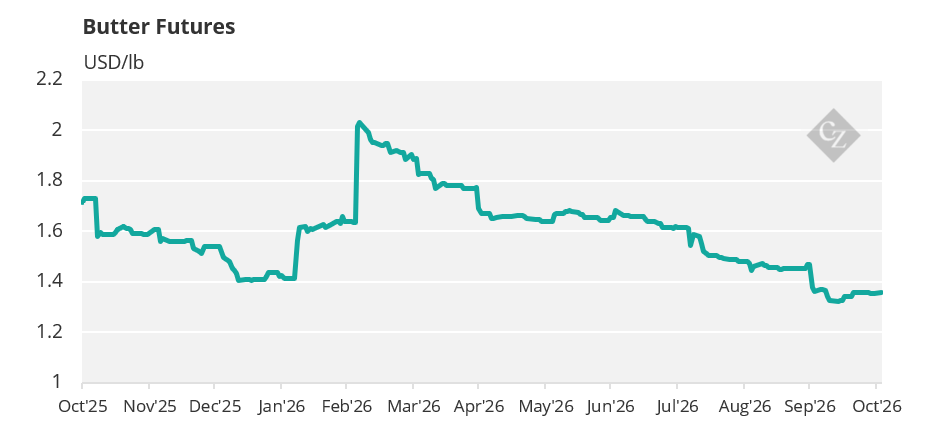
Butter prices moved higher on improving seasonal demand. Churns maintained busy schedules as manufacturers prepared consumer-sized packages for holiday sales. Cream availability varied geographically, with competition from other dairy processors restricting volumes in some regions.
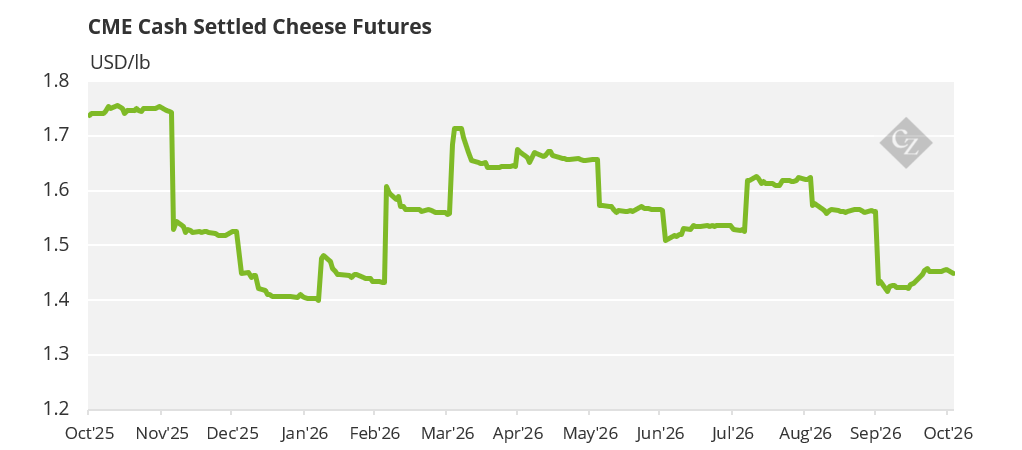
Cheese prices advanced throughout the week but ultimately closed lower. The market was partly aided by limited availability of exchange-eligible young Cheddar. Retail movement improved ahead of the holidays. Manufacturers maintained active production schedules, particularly for barrels and curds.
Milk availability was particularly constrained in New York, where one trade source reported inquiries from three major dairy processors seeking raw milk. Expanding yogurt, high-protein beverage, and cheese operations were absorbing volumes previously available to other plants. Regional processing capacity had outpaced available milk despite increased production.