Insight Focus
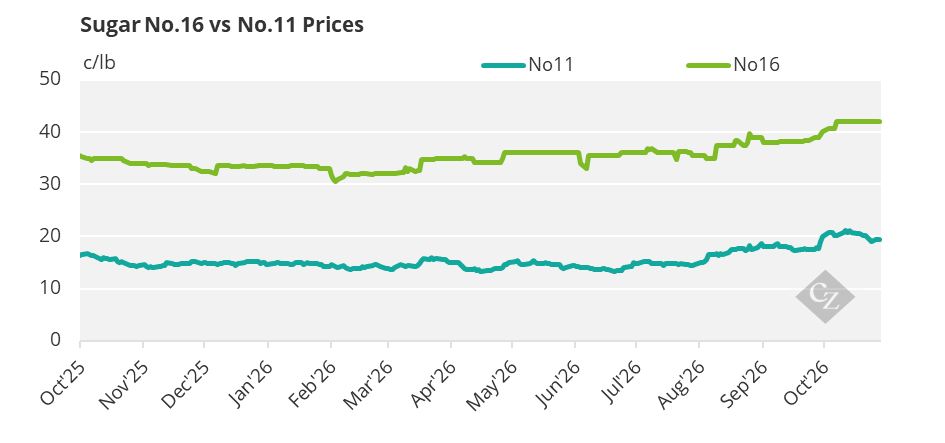
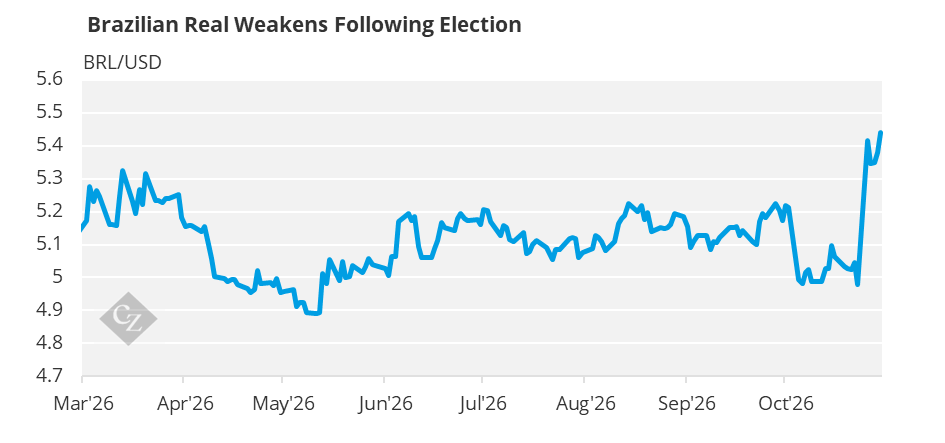
US sugar availability concerns continue to support domestic prices. Warm weather, potential beet yield impacts, reduced Florida cane output and constrained refining capacity are keeping supply concerns elevated. Meanwhile, Brazil’s election and a weaker real pressured No. 11 futures, creating potential downside for the domestic No. 16 market.
This update is from Sosland Publishing’s Sweetener Report. For more information and subscription details, CLICK HERE.
Sales were slow in the domestic cash market this week. Sugar cane supplies were available but limited. Sugar beet offers mostly remained withdrawn as processors continued to assess crop prospects. Prices were steady for spot sugar beet sales, but offers for spot and 2027 sugar cane jumped by 5c/lb.
Harvest Challenges Tighten US Sugar Availability
Concerns about the availability of sugar supplies from both domestic and international sources supported the market. The US sugar beet harvest was nearing completion in several regions, but there were concerns that the extended period of dry, warm weather throughout the summer and fall months may have impacted yields. The continued warm weather also limited outdoor piling opportunities, slowing the movement of beets into processing channels and delaying additional supplies from reaching the market.
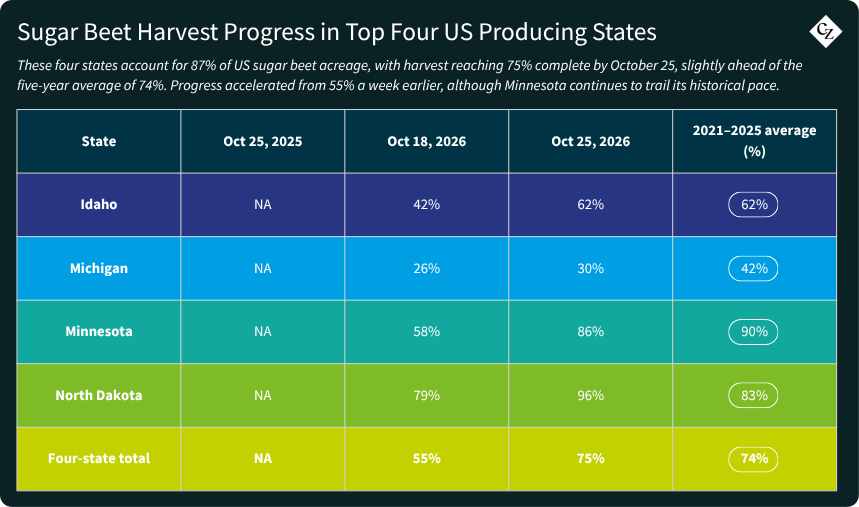
The USDA said that, as of October 25, harvest completion was 86% in Minnesota (58% a week earlier, 90% for the 2021-25 average), 96% in North Dakota (79%, 83%), 62% in Idaho (42%, 62%), 30% in Michigan (26%, 42%), 75% in Colorado (55%, 72%) and 76% in Wyoming (58%, 81%).
For the sugar cane harvest, the USDA said 30% of the crop had been collected by October 25, ahead of the average pace of 27% for the date. The USDA does not provide harvest updates for the Florida sugar cane crop, but one trade source indicated that output has been severely impacted by pasture mealybug infestations, resulting in a notable reduction in available sugar cane supplies compared with prior seasons.
Brazilian Election Adds Pressure to Global Sugar Prices
Another factor supporting prices was constrained domestic refining capacity, following the closure of two large mills in recent years. Additionally, tariff uncertainty remained a concern. The recent re-election of Brazilian President Luiz Inácio (Lula) da Silva to a fourth four-year term further dampened expectations for relief from existing trade tensions. Relations between Lula’s government and the Trump administration have remained strained, contributing to the continuation of a 50% tariff on most imports from Brazil, the world’s largest sugar producer.
Lula’s re-election also impacted the world raw sugar futures market. In the first trading session after the vote was finalised, the No. 11 market plunged 6%.
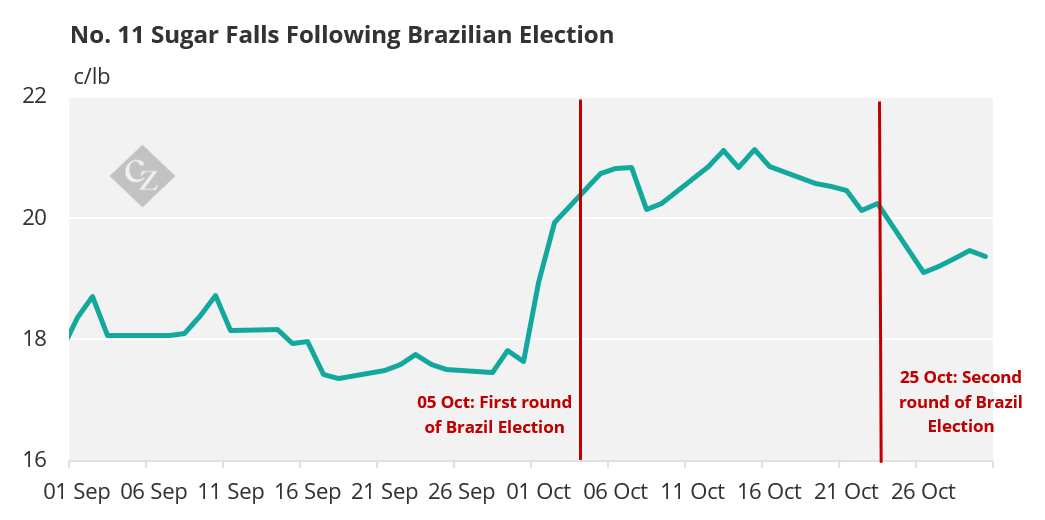
The decline coincided with a sharp depreciation of the Brazilian real, improving export economics for Brazilian sugar producers and prompting futures selling. If sustained, the sharp decline in No. 11 sugar futures may eventually exert downward pressure on the domestic No. 16 market, which has remained largely illiquid as concerns about supply have overridden broader bearish influences.
Annual corn sweetener contract negotiations were entering their final stages, with industry sources estimating that about 80% of 2027 requirements had been booked.