
Insight Focus
A futures market allows commodities to be bought or sold at an agreed price for delivery at a later date. These markets help participants manage price risk and provide a transparent reference point for commodity prices.
What is a Futures Market?
A futures market is a marketplace where standardised contracts to buy or sell commodities at a future date are traded.
Each futures contract sets out the quantity and quality of the commodity, as well as the delivery period. This standardisation means participants can trade the contract without having to agree these terms each time.
Futures contracts are traded on centralised exchanges. The exchange stands between the buyer and seller, helping to ensure that both sides meet their obligations and reducing the risk of either party failing to complete the trade.
Businesses can use futures markets to manage their exposure to changing commodity prices. Traders and investors can also use them to take a view on whether prices will rise or fall. Most futures positions are closed before the contract reaches expiry, so trading a futures contract does not usually result in the physical commodity being delivered.
Futures markets also produce widely followed prices that reflect the price that market participants are willing transact today for a commodity’s delivery at a point in the future. These prices are therefore used as benchmarks for physical commodity trading.
Exchange-Traded and OTC Markets
Commodity price risk can be managed through either an exchange-traded futures contract or an over-the-counter contract.
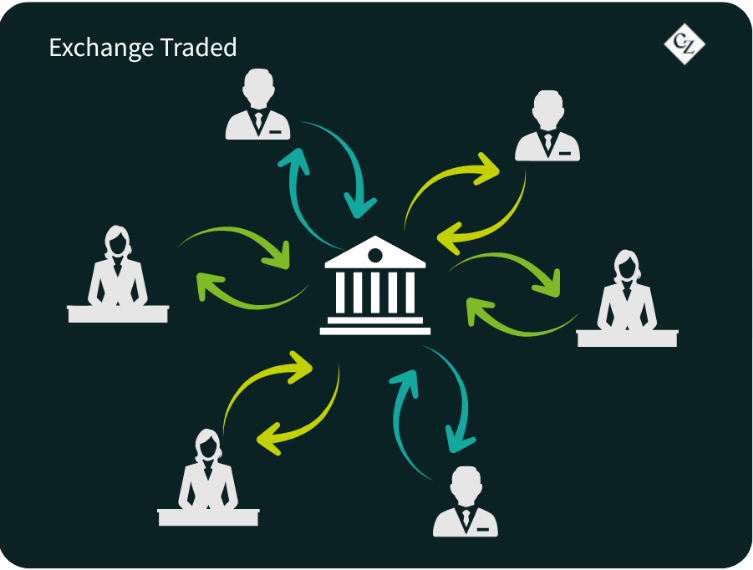
On a centralised exchange, contracts are standardised and the exchange stands between the buyer and seller. Buyers take a long position, while sellers take a short position. Because the exchange acts as the counterparty to both sides, neither participant has to rely directly on the other to complete the trade.
Over-the-counter, or OTC, contracts are agreed directly between two parties rather than traded on a centralised exchange. Their terms can therefore be tailored more closely to the buyer and seller, including the volume, price and settlement date. However, OTC markets are generally less transparent and less liquid than centralised exchanges.
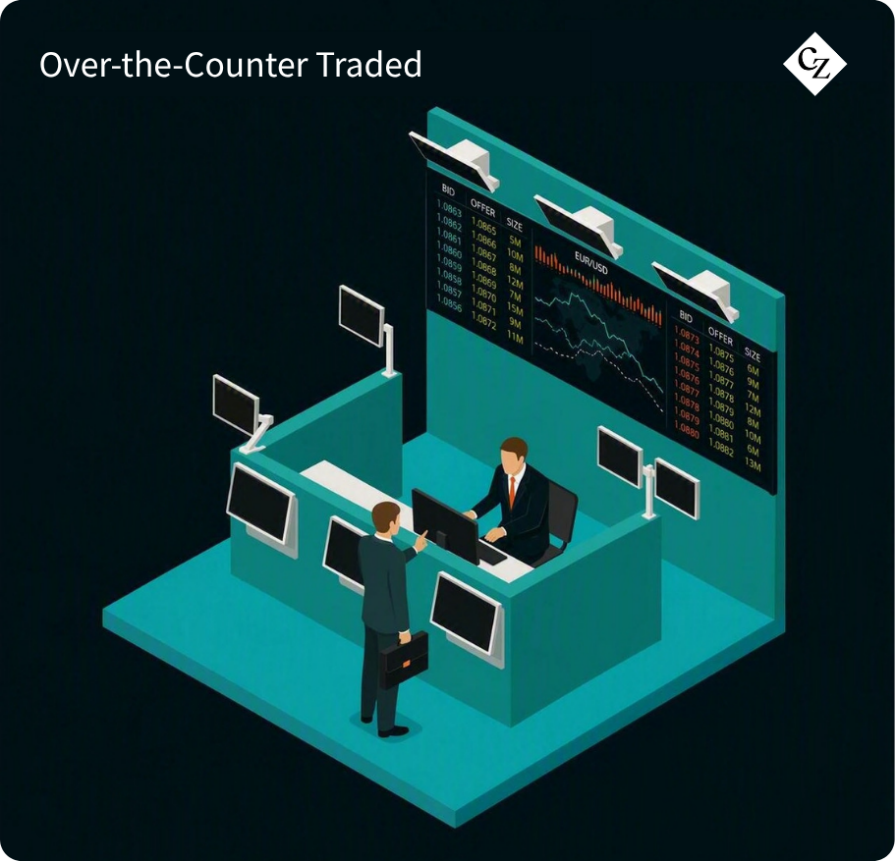
For commodities such as sugar, OTC contracts can also provide pricing for periods beyond those currently available on an exchange. This can be useful for businesses that want to manage price risk further into the future or require terms that do not match a standard futures contract.
The main difference is therefore one of structure. Exchange-traded futures are standardised and centrally cleared, while OTC contracts are privately negotiated and can be adapted to the needs of the two parties.
As of August 2026, ICE lists white sugar futures through May 2029. OTC contracts may be structured for later or more specific dates, although availability and pricing depend on market conditions and counterparty agreement.
Active Contracts for White Sugar Futures (Exchange vs OTC Traded) as of August 2026
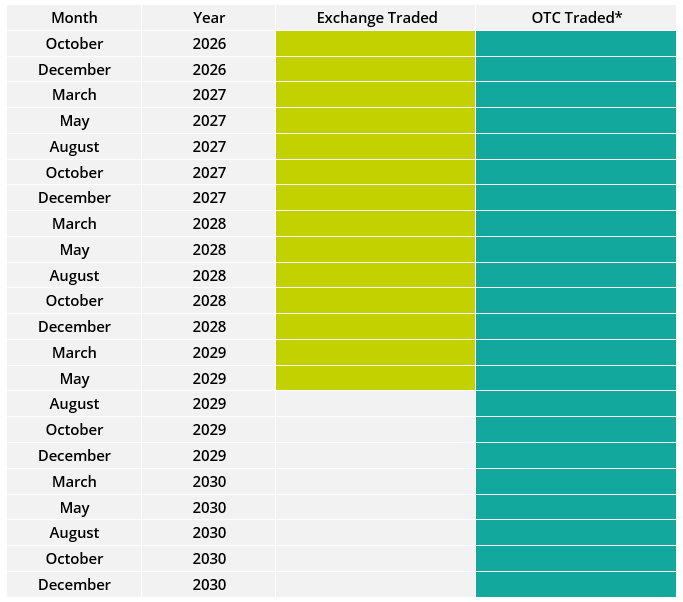
*OTC contracts are privately negotiated and can be structured for dates beyond those listed on the exchange. The dates shown are illustrative rather than a complete list of available OTC maturities.
What Does a Futures Contract Look Like?
The futures contract tells you what each lot (the unit contracts are traded in) represents. This includes the size of the lot (in tonnes, kg, etc.), the quality requirements of the product, and when the delivery window for exchange of goods will open and close (contract month).
Since a futures contract is a financial contract whose value is derived from an underlying commodity it is classified as a derivative.
These contracts are either settled with cash or settled with the physical delivery of the product.
In general, exchange traded futures contracts are listed against a month of the year, each with its own code:
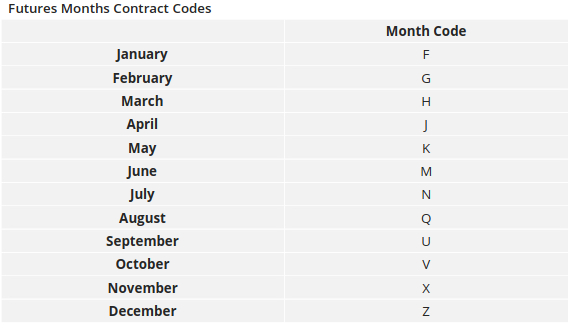
Combined with the year this gives the contract its name, for example the May 2026 contract would be called K’26. This determines when the contract will expire and when the delivery window for the physical good opens.
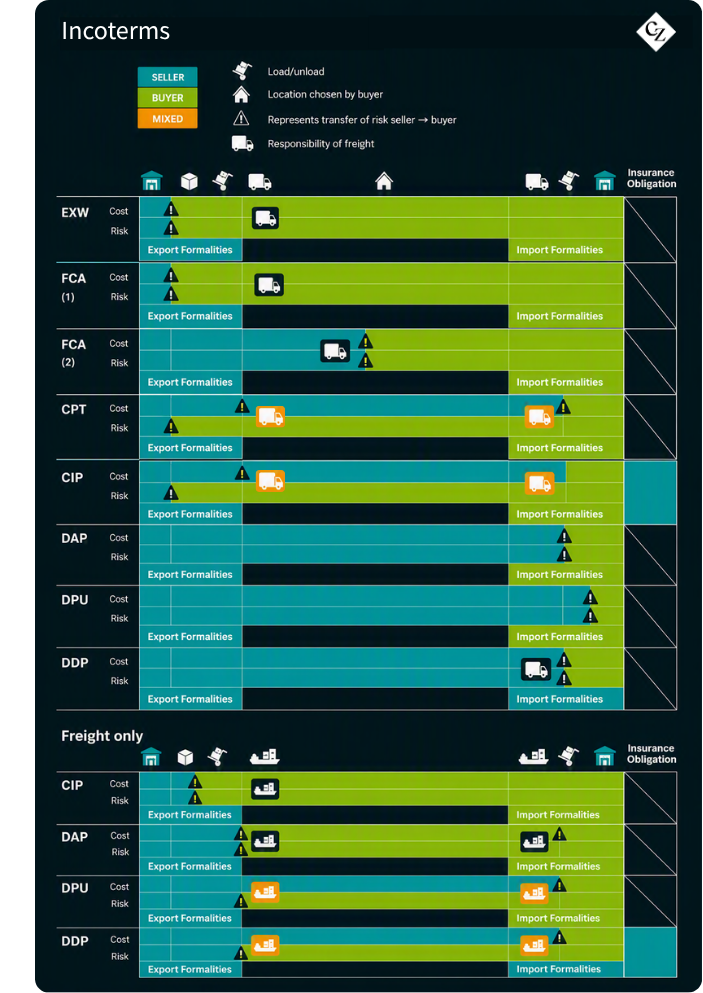
Also built into the contract is the point at which the risk transfers from the seller to the buyer, standardised according to the international recognised incoterms. Transfer of risk can occur as early as the goods leaving the sellers warehouse (ex-works), or as late as once the goods arrive at the buyers warehouse (delivered duty paid).
A common incoterm for commodities like sugar is free-on-board, FOB, this means the seller’s risk ends once the goods are passed over the rails of the ship at the port of origin. Here’s a list of others:
Finally, the futures contract would outline how the commodity should be packaged for transfer (e.g in double lined Poly-propylene bags), what type of vehicle/vessel it should be loaded onto (e.g a breakbulk vessel), and any other requirements surrounding the loading/discharge of the vessel (such as achieving a minimum load rate).
Accessing the Futures Market
There are a number of brokerages that provide market access, allowing clients to open an account to trade on a futures market, for a fee. Clients would need to sign an ISDA (International Swaps and Derivatives Association) agreement with one of these companies, ISDA provides a standardized agreement for entering into a derivatives trade.
Clients trading on their own account would also need to manage broker line availability, paying margin calls and undertaking full hedge accounting if required.
As we will outline in more detail, pricing embedded into a CZ physical contract gives you full market access without the limitations of the above.
If you cannot open an exchange traded account, then there is the option to use an OTC account instead. This is generally more flexible however you would have to pay more for the market access.
What are the Costs?
Like other financial instruments, futures markets operate with leverage, using borrowed money to control larger positions than would be possible without.
Futures contracts are traded using leverage called ‘margin’. Margin is deposited with the brokerage in order to cover the risk the broker is exposed to by opening a trade on behalf of the client. The amount deposited should cover a percentage of the market price when the trade is made.
Once the trade is open, the client will then have to pay any margin calls if the futures market price begins to differ significantly from the price the trade was locked in at.
Margin calls occur if the futures price falls too far below the price a long position was opened at, or too far above the price a short position was opened at (i.e. in a losing trade), then the value of the margin paid into the margin account will fall below what the broker requires. This will require the margin account to be topped up.
When a client trades futures on their own account, they will also have to take the mark to market (a means of valuing assets by their most recent market price) on their hedge positions every month as profit or loss.
Hedging with CZ
For clients of CZ these futures contracts are embedded into a physical contract, this means we help our clients avoid needing to account for the profit or loss on their futures market hedge.
Additionally, by using a CZ futures account clients don’t need to worry about having sufficient cash to cover their hedges as all margin calls are covered by CZ.
We also don’t charge commission payments on the initial trade or when rolling (repositioning) positions. For some more complex spread trades this can amount to up to 40c/mt on a single execution.
All of our pricing is sourced using a strategy that is optimal for your business. Whether we execute using the futures market trading an exchange trade derivative, through one of our many bank relationships as OTC, or create a position for you as a bespoke trade, you can be certain you have obtained the most efficient pricing in the market.
Please contact Jay for more details.

What Happens at Contract Expiry?
A contract will expire at a predetermined date before the month name of the contract, after this no more trades can be made in this contract and it is considered as ‘settled’.
This period can be different from one commodity to the next. For example, the No.11 raw sugar contract will expire the last working day before each contract month.
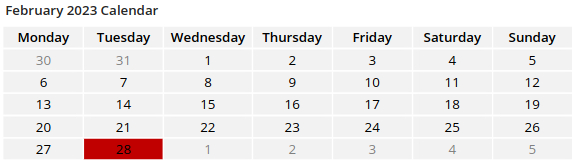
The highlighted square denotes the day of expiry – these examples are taken from February 2023
However, No.5 refined sugar contracts typically expire 16 days before the contract month.
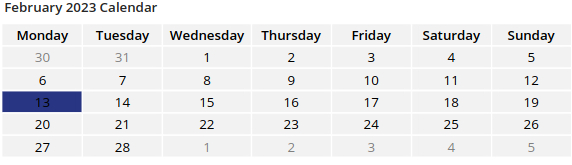
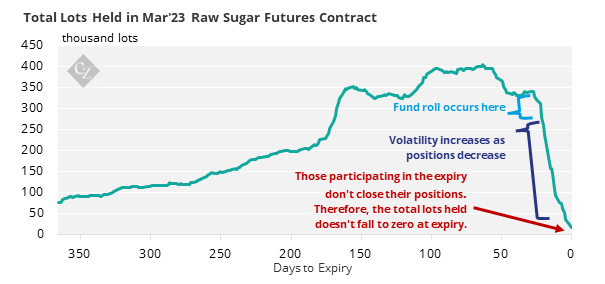
Once a futures contract has expired only those who wish to deliver or receive the commodity through the exchange should still have open positions. Those who wished to use the futures market to hedge the trade of the commodity outside the exchange, or those looking to speculate on the price movement of the underlying should have closed all positions in advance of the expiry.
This is why most positions are closed out before an expiry.
As such, all positions that CZ undertakes in the futures market related to pricing embedded in physical contracts are closed before contract expiry.
We typically ask that all pricing orders are concluded at least two weeks before the expiry date. This is because as participants close their positions volatility in prices increases. This is due to a lack of participants needed to trade.
Concluding all pricing at least two weeks before expiry ensures that our clients avoid this volatility caused by a reduction in liquidity.
Once a contract has expired, the exchange matches up all remaining long and short positions to determine the volume of commodity needed to be delivered and how the goods are transferred from the sellers (deliverers) to the buyers (receivers), this is achieved using a process called novation.
Since the quality of the commodity should be within the specification of the contract, buyers can receive from a variety of sellers and a seller may have their commodity delivered to multiple buyers if the novation process produces this as the best solution.
The contract will also specify how long after expiry the deliverer has to make the commodity available to the receiver, and where it must be made available, depending on the incoterm.
For example, the No.11 raw sugar contract requires the deliverer to make the sugar available at an authorised port since it is an FOB contract, within 75 days of the contract expiring.
The contract may also stipulate a minimum rate of loading that needs to be achieved, what type of vessel it is to be loaded onto, and how the commodity is packed.
Once the risk has transferred to the receiver the delivery process is considered complete, and final delivery to the buyer’s warehouse/factory is up to the buyer.