Insight Focus
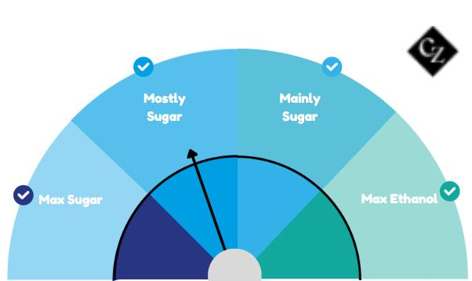
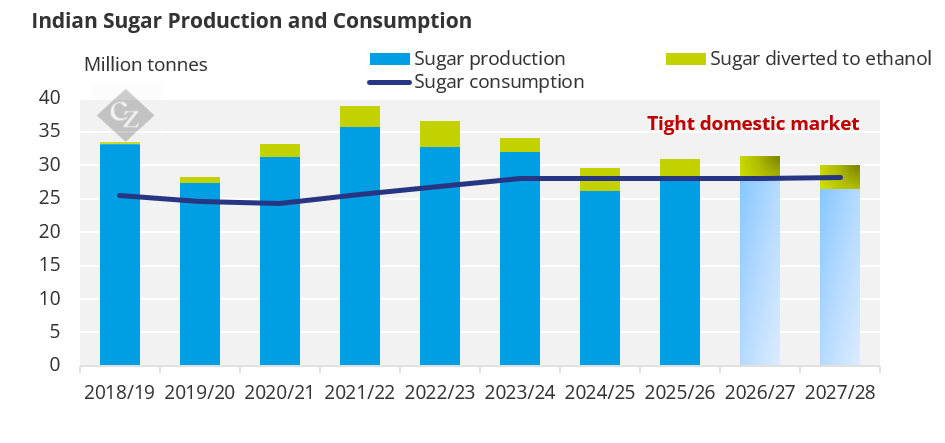
Indian sugar prices have increased 12%. The government will be hesitant to permit sugar exports in 2026/27 as it tries to keep food and energy inflation under control. It may need to increase ethanol prices if they want to encourage mills to divert more sucrose to ethanol.
Monsoon Performance has Varied by Region
We’re now halfway through India’s 2026 monsoon season (which officially runs from June to September). Maharashtra is the key region to monitor as it’s much more dependent on rainfall to replenish its reservoirs and groundwater than in Northern India.
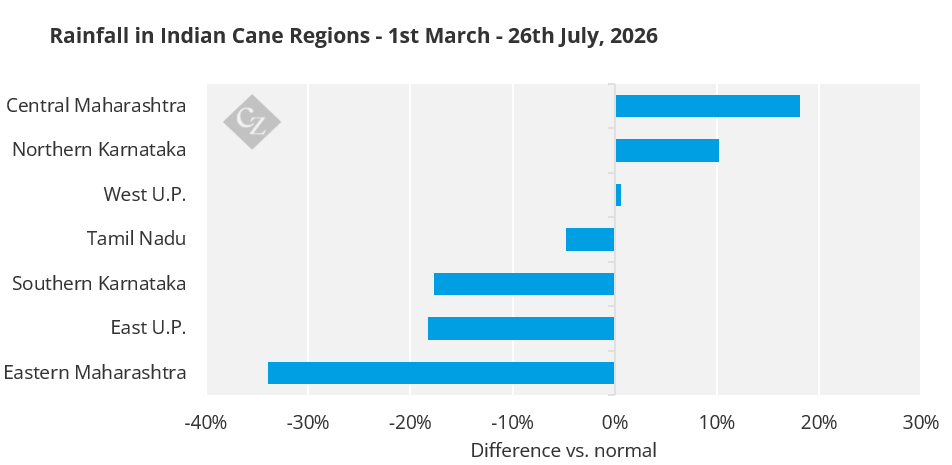
There’s been a stark contrast in monsoon performance within Maharashtra. The central parts of the state (the region known as Madhya Maharashtra) saw a recovery in rainfall in July. This region covers the prime cane growing parts of the state that account for the majority of its sugar production.
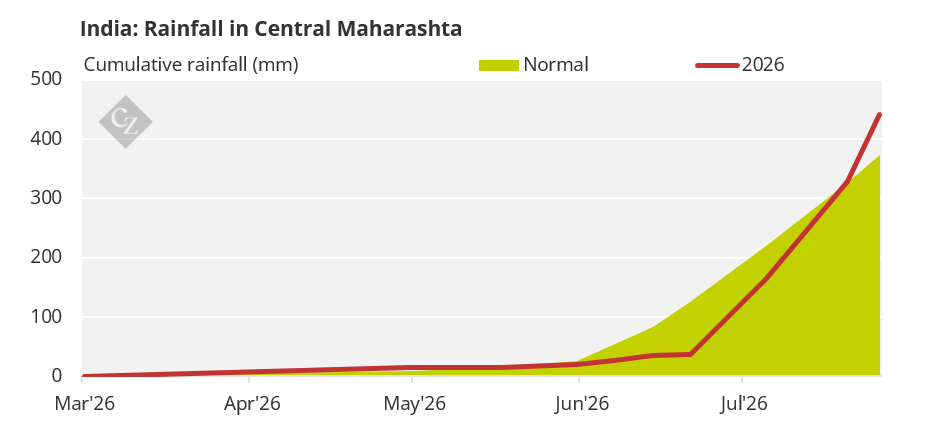
However eastern parts have continued to suffer poor rainfall. Historically the eastern parts of Maharashtra have been worst hit during droughts and, at times, the government has stepped in by restricting irrigation supplies to preserve drinking water.
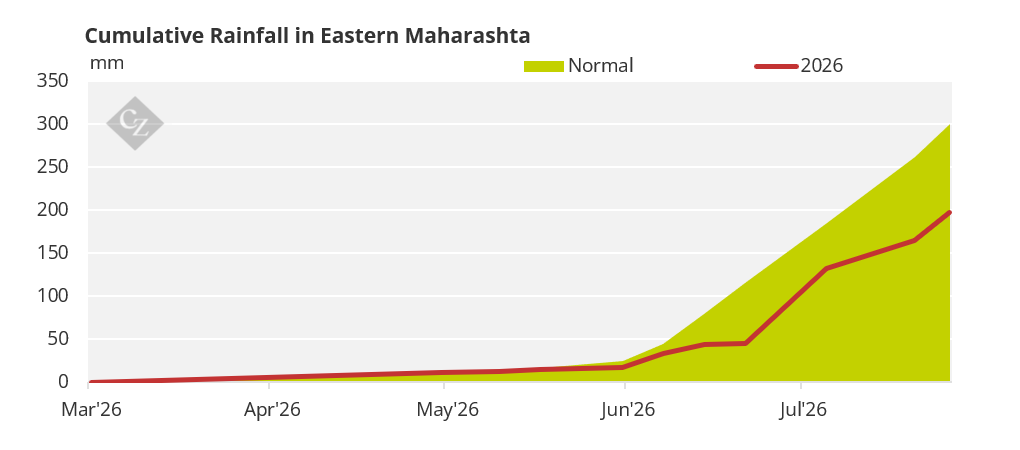
Eastern Maharashtra accounts for less than a third of the state’s sugar output. However it’s traditionally been a ‘swing region’ where farmers respond to water shortages by reducing sugarcane cultivation in favour of growing less water-intensive crops such as oilseeds, pulses and millets. The weather so far this year therefore sends an ominous signal that 2027/28 cane area could decline.
In other parts of the country, it’s notable that rainfall has been good in North Karnataka and West Uttar Pradesh, both of which are major sugar producers. Although weather has been drier in East Uttar Pradesh, this can sometimes benefit the crop in this part of the country as otherwise its prone to waterlogging during the monsoon.
The Indian Sugar Market Remains Tight
The Indian government is always under pressure to control food and fuel inflation. A poor monsoon and high world oil prices will add to the pressure this year.
The government has suspended sugar exports for the rest of 2025/26 (i.e. until September 30, 2026), and dry weather in Maharashtra reinforces our view that the government will be hesitant to permit sugar exports in 2026/27. The threat to 2027/28 production will add to the government’s concerns and it’ll want to ensure there’s sufficient sucrose available to meet domestic sugar and ethanol requirements.
Can Sucrose Diverted to Ethanol Increase?
India is seriously looking at ways to better utilise its substantial ethanol production capacity to reduce dependence on imported energy.
The measures include increasing ethanol’s blend in petrol, introducing flex-fuel vehicles, using ethanol in cooking stoves and exploring blending ethanol in diesel.
When it comes to higher ethanol blends and flex fuel vehicles, the government and industry are looking at ways to scale consumer adoption. This includes establishing competitive pricing and taxation, updating vehicles’ technical capacity to use higher blends, and investing in pump infrastructure.
However we’ve recently seen some resistance emerge. Consumers have raised concerns about ethanol providing lower mileage than gasoline. There’s also been complaints that higher blends have damaged car engines as older vehicles are not compatible. Additionally, critics of ethanol blending have highlighted the impact on food and water security that increasing sugarcane and grains cultivation for fuel could have.
As things stand, we’ve not yet seen an increase in the ethanol blend. Whether or not we see increased diversion of sucrose to produce ethanol this year could depend on two factors.
Firstly, what will be sugarcane ethanol share of the fuel ethanol market? Ethanol produced from sugarcane has been stuck at 3-4 billion litres for five years, despite there being capacity to make 9 billion litres. The grains sector has instead been supplying the growth in Indian fuel ethanol demand.
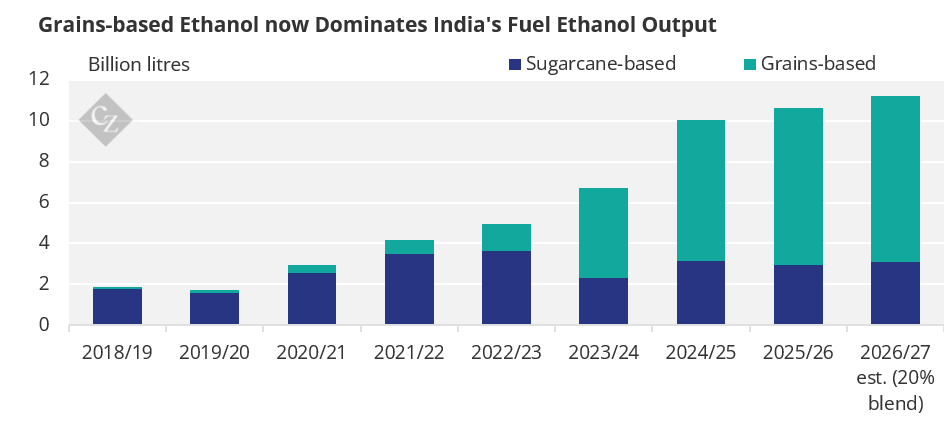
Farmers have planted 10% less area with corn so far this season compared to last year. Farmers had been rapidly expanding corn cultivation but then suffered crashing prices as corn ethanol consumption growth has been insufficient to absorb the additional supply. The poor monsoon could also impact corn yields this year, particularly as irrigation coverage is less extensive than for sugarcane.
In theory this could create more room for sugarcane ethanol this year. However, initial moves by the government suggest it may instead push for ethanol made from surplus rice to play a larger role in 2026/27. Unlike sugar, rice stocks in India are comfortable.
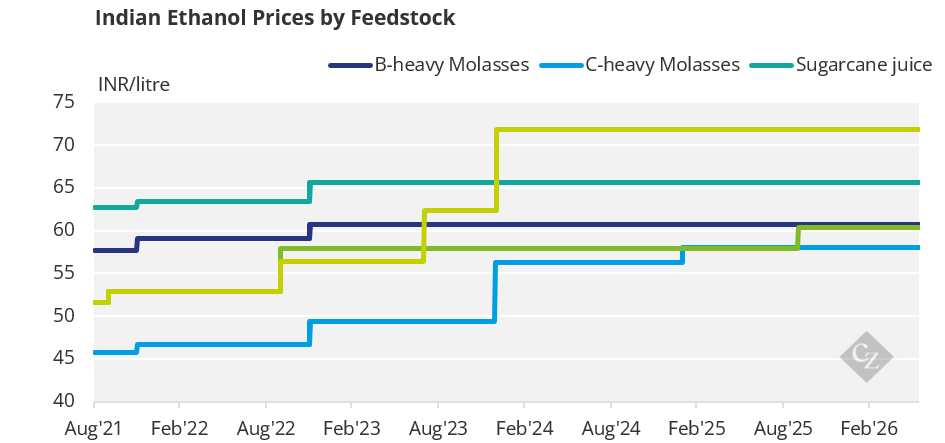
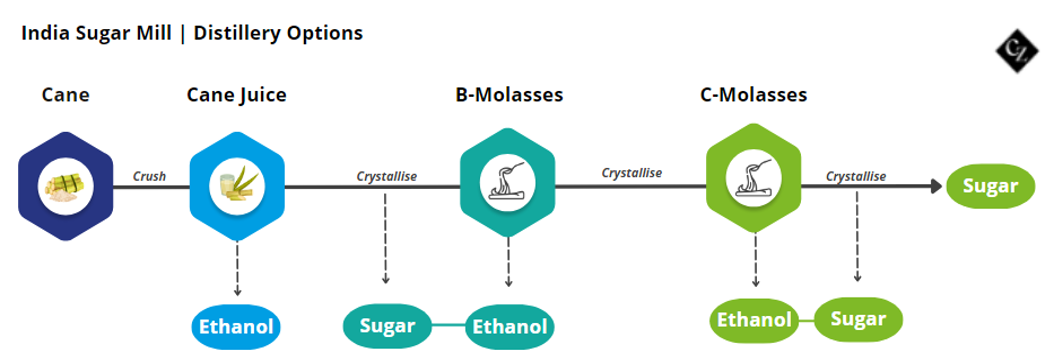
Secondly, will the government increase ethanol prices? It hasn’t increased the price of ethanol made from cane juice and B-heavy molasses for almost four years. As Indian sugar prices have been edging up during that time, mills have had little incentive to divert more sugar to ethanol.
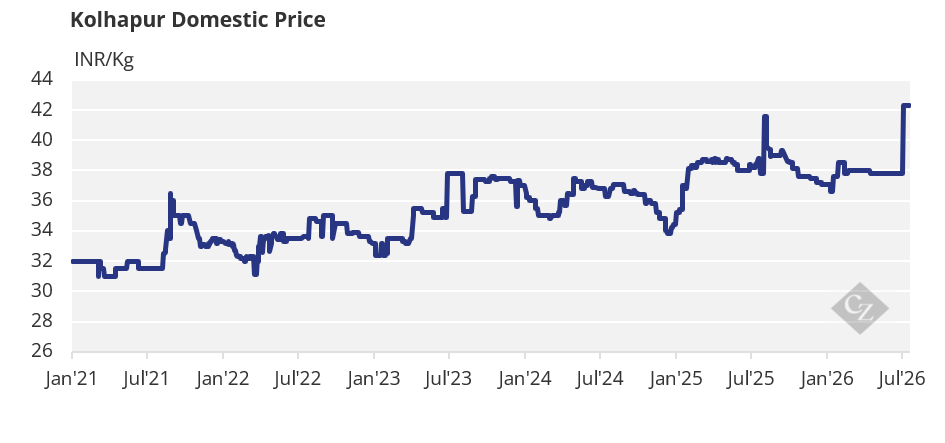
In fact sugar prices have increased 12% since last month in response to the tightening domestic market. They’re now above INR42,000/mt (ex-mill Maharashtra), which is the highest we’ve seen them.
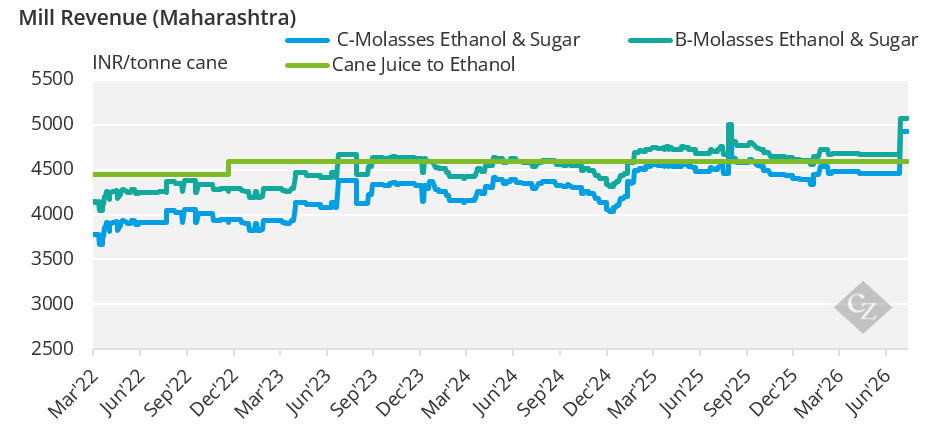
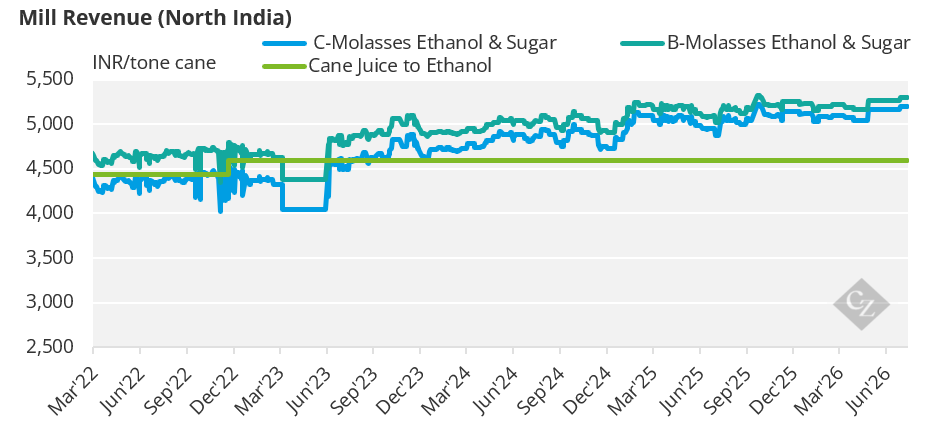
Sugar prices are higher In Northern India than in Maharashtra. The price of ethanol relative to sugar may therefore have to rise much more than today’s levels to encourage more diversion to ethanol in this part of the country.
Appendix
Our analysis considers the returns that mills earn from producing ethanol at the expense of sugar. Many mills/distilleries have a choice over which feedstocks they use to make sugar or ethanol based on the relative prices of ethanol paid by the oil marketing companies (OMCs), which is summarised below:
Proportion of Sugar to Ethanol: