Insight Focus
Brazil is an agricultural powerhouse and a leading exporter of grains and meat. But as its agricultural sector continues to grow, further expansion is threatened by ageing logistics infrastructure. The country urgently needs to invest to keep up with growing demand for its agricultural products.
Brazil Dominates in Agri Exports
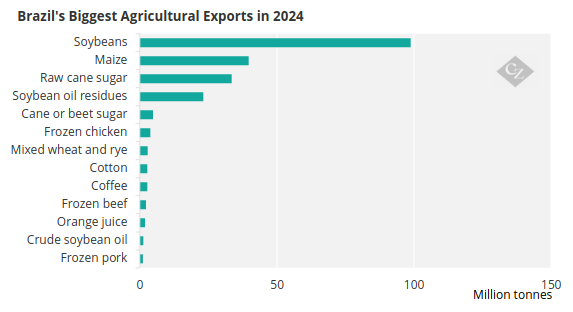
Brazil has been continuously investing in the shipping sector in recent years, achieving notable growth in its infrastructure, network and capabilities. The country plays a crucial role in global trade, especially in the agricultural sector, ranking first globally in sugar, soybeans and coffee exports, second in beef, and third in cotton, corn and chicken exports.
Source: Comex
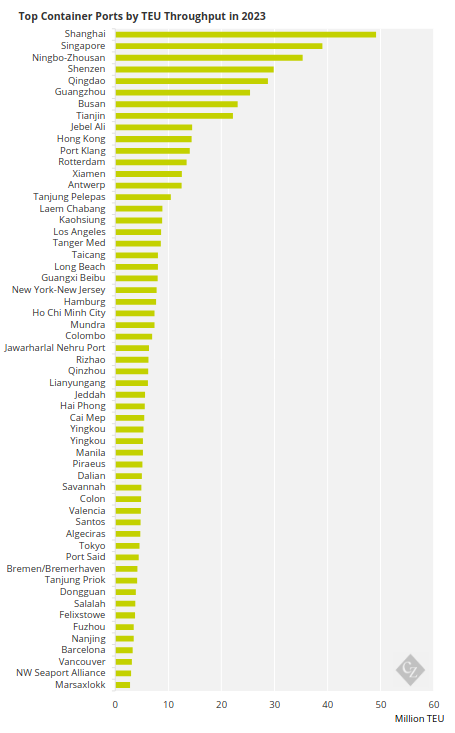
While Brazil has traditionally been a powerhouse in the agri sector, it has also been increasingly active in the container segment in recent years. The Port of Santos, the nation’s primary hub, is among the top 50 container ports globally. In 2024, it reached a significant milestone of handling 5 million TEUs for the first time in a single year, operating though at 100% of its capacity.
Source: World Shipping Council
But despite this, Brazil is losing billions of dollars each year due to long-standing bottleneck and congestion issues, caused by the inability of the Brazilian terminals to meet the growing demand expectations. With the increase in national demand becoming ever more pressing, Brazil’s situation could have catastrophic consequences if it does not make the necessary infrastructure investments.
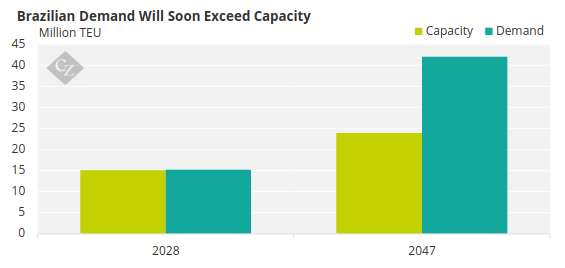
According to Brazil’s National Center for Transatlantic Navigation (Centronave), national demand is expected to reach 15.2 million TEUs by 2028, surpassing the operational capacity of Brazilian ports, which is projected to be around 15.1 million TEUs. By 2036, demand is expected to exceed installed capacity, and by 2047, national demand could climb to 42 million TEUs, nearly double the projected 23.9 million TEU capacity of Brazilian ports.
Source: Centronave
Port of Santos Faces Issues
The mismatch between growing demand and current capacity is more evident in Santos than at any other port in the country. Notably, the largest container ships that can dock at Santos terminals (and generally in the country) have a capacity of 13,000 TEUs, meaning Brazilian vessels lag five generations behind. The country’s port channels are too shallow to accommodate the world’s largest boxships, which can carry up to 24,000 TEUs.
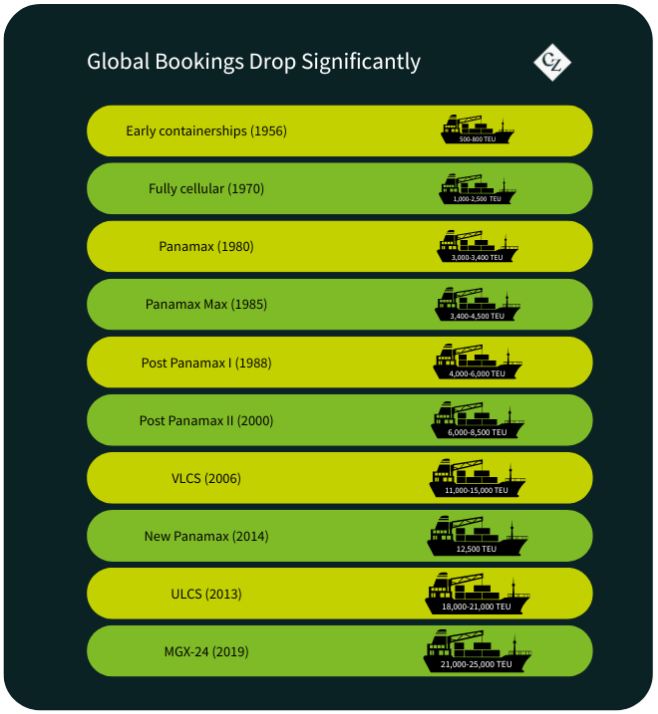
This is why the Port of Santos plans to deepen its channel to 16 metres by 2026 and 17 meters by 2031, allowing larger vessels with an 18,000 TEU capacity to dock at its terminals.
A chronic issue at the Port of Santos, and generally in Brazil, is delays. In 2024, only 23% of Brazil’s container shipments departed on time. In Santos, specifically, 55% of vessels faced congestion issues, with some waiting up to 10 days to berth. These delays are particularly costly for agribusinesses. For instance, in March 2025, bottlenecks prevented the export of 600,000 bags of coffee (1,932 containers), resulting in a loss of USD 1.57 million.
Apart from upgrading its current infrastructure, the Port of Santos also plans to use digital twin technology to address congestion challenges. A virtual replica of the port will allow real-time monitoring of vessel traffic and cargo flow, suggest potential solutions and improve overall scheduling efficiency. Similar digital systems in Rotterdam and Houston have reduced turnaround times by 15-20%, and Santos aims to reach similar levels.
Brazil to Attract New Foreign Investors
Several projects are underway across the country, including new terminals and terminal expansions, aimed at increasing national capacity to meet the expected demand surge. Maersk and DP World are among the leading industry players involved in expansion projects at the port of Santos, with the latter aiming to double its terminal’s container capacity.
However, the involvement of more foreign investors may be the key to Brazil overcoming its current severe challenges and preparing for future ones.
This seems to be the path Brazil is pursuing, judging by a recent case involving Maersk’s attempt to expand its network in Brazil, which ended up in court. In June 2025, the Danish shipping giant filed a lawsuit against Brazil’s marine transport authority (Antaq), calling for the suspension of the bidding process for the construction and operation of Tecon 10, a new mega terminal at the Port of Santos.
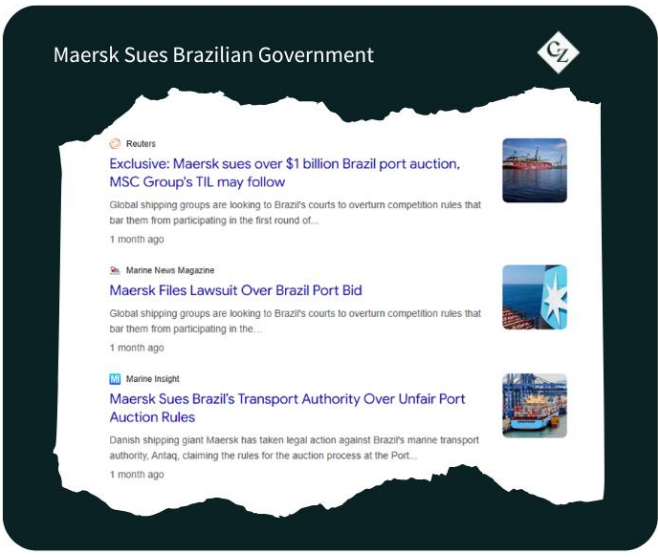
Maersk’s request was rejected by a Brazilian judge, who found no illegality in the process. According to Brazilian law, operators of existing terminals within a port are excluded from submitting bids in the first round for new terminals. Only if no new operator expresses interest in the first round can existing companies submit proposals.
Trade Decentralization
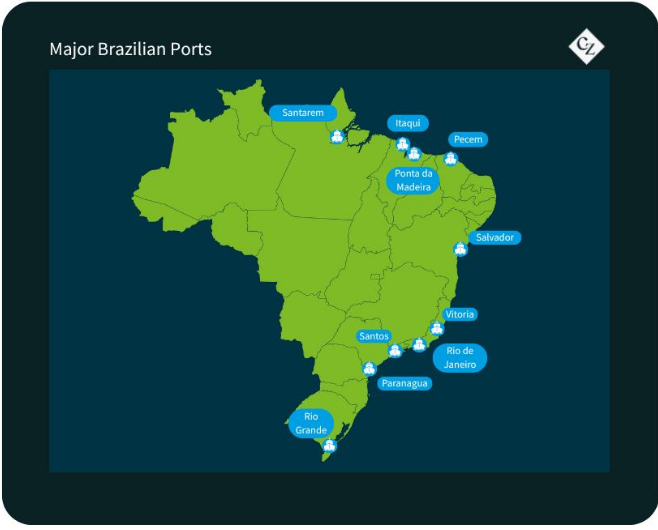
Another measure of the Brazilian government to relieve the nation’s shipping and port network is the New Growth Acceleration Program (Novo PAC). Aiming to reduce reliance on the Port of Santos, the government is incentivizing regional port development through the program that has already earmarked around USD 11 billion for 37 new port leases by 2026, with a focus on the North and Northeast regions.
Key projects include the Port of Pecém, now a hub for green hydrogen, which saw record cargo volumes in 2024 thanks to investments in renewable energy. Other important projects include the ports of Paranaguá and Rio Grande, which are critical for soybean and meat exports. Privatizing their navigation channels is expected to attract new dredging contracts, ensuring deeper drafts for Panamax vessels.
The Path Forward
Brazil is forced to proceed with significant and immediate development and expansion projects to avoid a catastrophic future scenario. The three pillars on which Brazil must base its efforts are infrastructure upgrades, technology adoption and public-private cooperation.
Terminals, yards, warehouses, and handling equipment must be modernized and updated to keep pace with industry trends and increase Brazilian port capabilities. New digital systems must support the entire shipping and port network of the country, accelerate processes, forecast issues and provide effective solutions to emerging challenges.
All of this will be possible only if the Brazilian public sector cooperates with foreign investors. The latter must bring the necessary expertise, know-how and capital to the Brazilian shipping puzzle, while the government and public authorities must remain vigilant to ensure that investments and projects align with the country’s national strategy and goals.