Insight Focus
The Indian industry is talking of more sugar imports in 2027. Domestic sugar prices would need to increase from today’s levels to make imports viable. Cane mills are unlikely to divert a lot of sucrose to make ethanol this year.
As the Indian monsoon ends and the start of the 2026/27 cane crush approaches, the sugar trade is already talking of India importing more sugar in 2027.
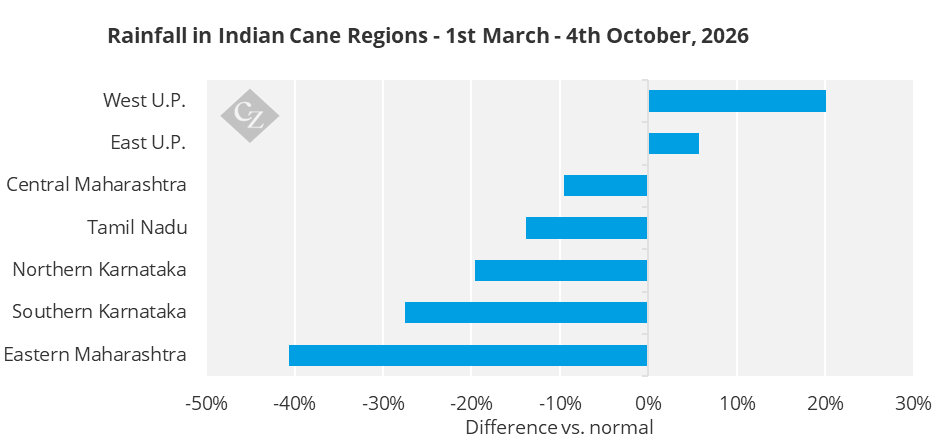
There’s been less than 100mm of rain since mid-August in the prime cane growing regions of Central Maharashtra and North Karnataka. Both regions have now received well below normal rainfall this year.
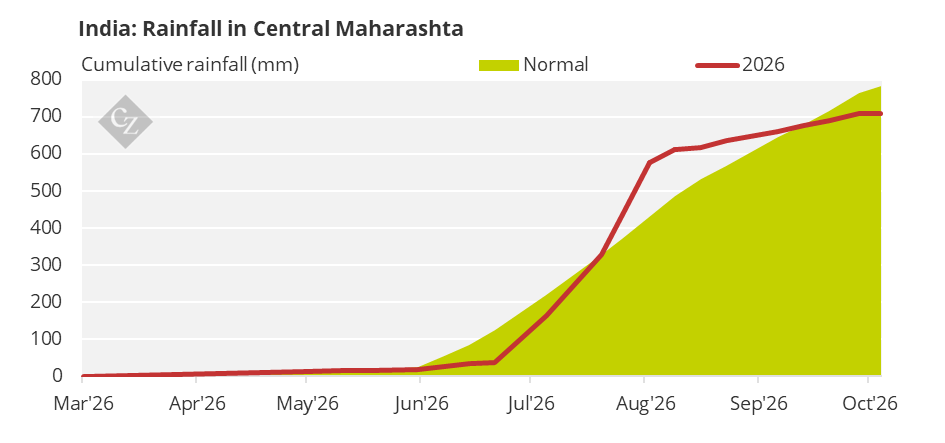
The situation is even worse in Eastern Maharashtra, which has received 40% below normal rainfall.
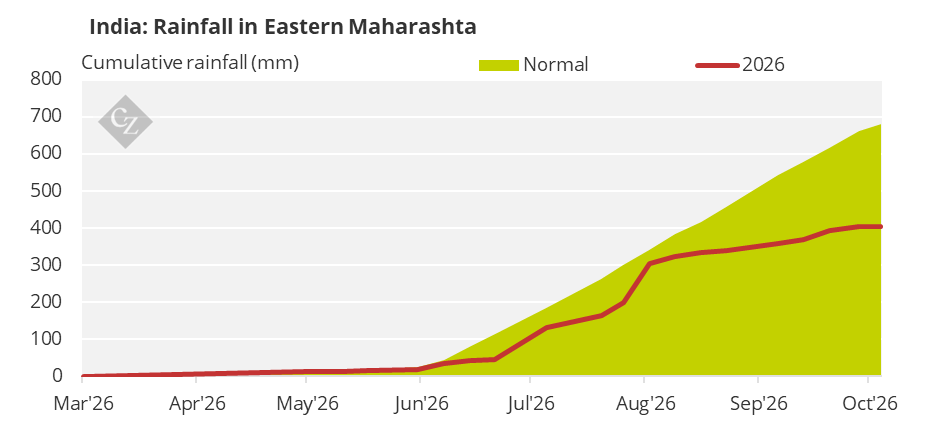
This has raised concerns for both this year and next year’s crop. We expect India will produce 28.5 million tonnes of sugar in 2026/27. This is broadly in line with annual consumption.
However we are more concerned for 2027/28 as history has shown that farmers in Maharashtra respond to dry weather by switching to less-water intensive crops such as oilseeds and pulses. The reduced planting has a knock-on impact on the age of the standing crop and, therefore, on yields.
To avoid a repeat of tight stocks in the lead up to next year’s festival season, the Indian industry expects the government to permit exports in the second half of 2027. However, opinions on volumes vary and range from a few hundred thousand tonnes to as much as 3 million tonnes. In practice, much will depend on how the crop turns out. We’re unlikely to have an accurate picture of this until early 2027.
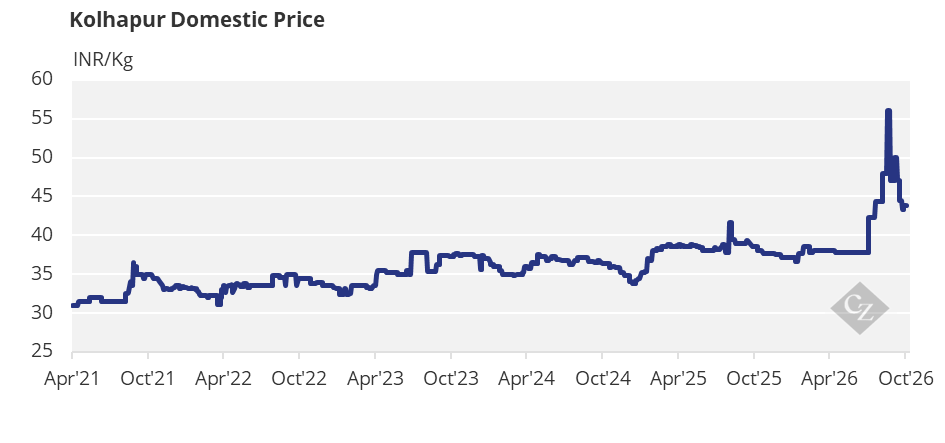
If India does import sugar, domestic prices need to be high enough to cover the cost of bringing in sugar from the world market. In August wholesale prices shot up 30% to reach record levels over concerns that supplies could get extremely tight during the upcoming festival season. The government subsequently announced a one million tonnes duty-free import quota as well as measures that restricted stocks that traders can hold. They’ve since set higher than normal monthly sales quotas for mills to ensure the market remains well supplied.
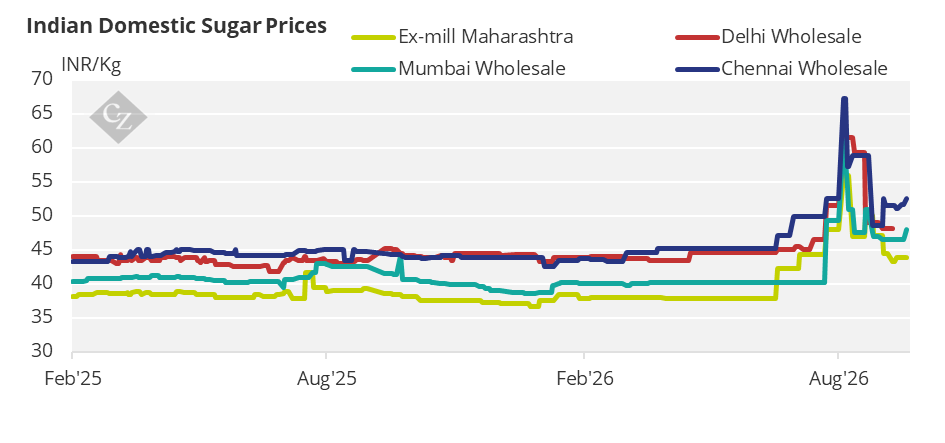
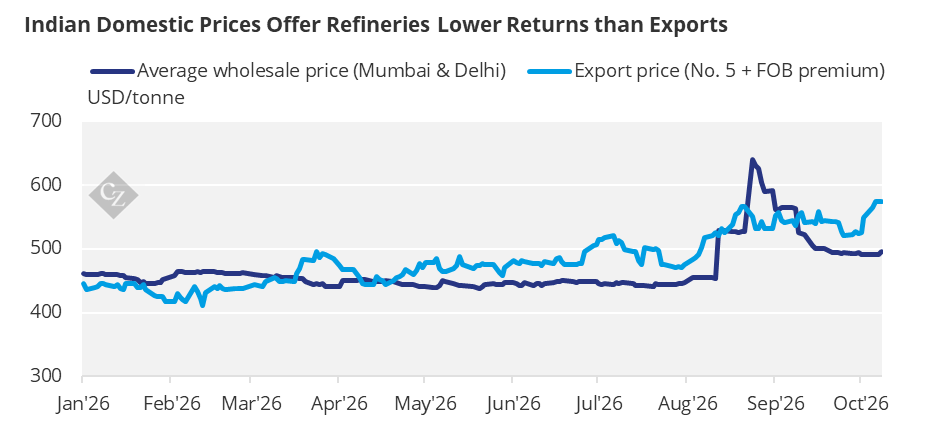
Prices have consequently eased off and, importantly, so has interest in imports. The import quota allows raw sugar to be imported, as well as permitting India’s stand-alone refineries to supply their sugar to the domestic market instead of exporting it like they usually do. However for refineries to do this, domestic prices need to be more attractive than returns from exporting sugar.
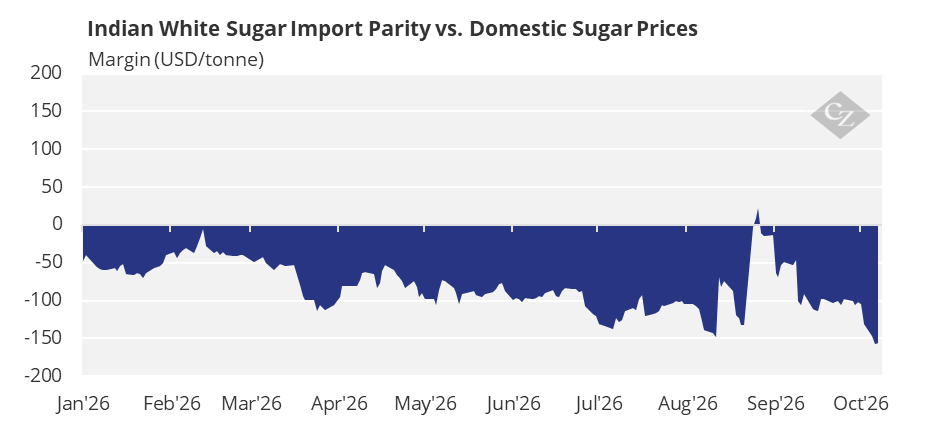
This was briefly the case in August and September. Lower domestic prices since then combined with the recent world price rally have changed the situation. At the time of writing Indian refineries would have to accept USD80/tonne lower returns if they supply the domestic market over exports.
So far the government has only allocated 300,000 tonnes to the refineries to sell to the domestic market under the monthly sales quotas for September and the first half of October.
The much lower import volumes than what was permitted in the August quota highlight the challenge for any volumes that may be allowed next year. Domestic prices are currently trading around USD100/tonne lower than the cost of importing and processing raw sugar. If imports are to be viable, either domestic prices will have to increase, or world prices will have to fall. The latter is unlikely to happen if the market knows India wants to import sugar.
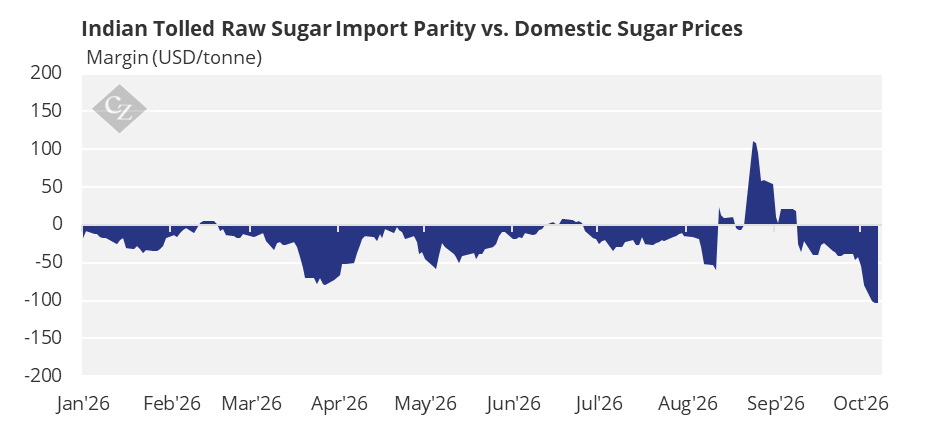
Traders are also talking of directly importing refined sugar. However, here the margins versus import parity are even weaker. Domestic wholesale domestic prices today are trading at USD150/tonne below the cost of refined sugar imports.
Latest Prospects for Diversion of Sucrose to Ethanol
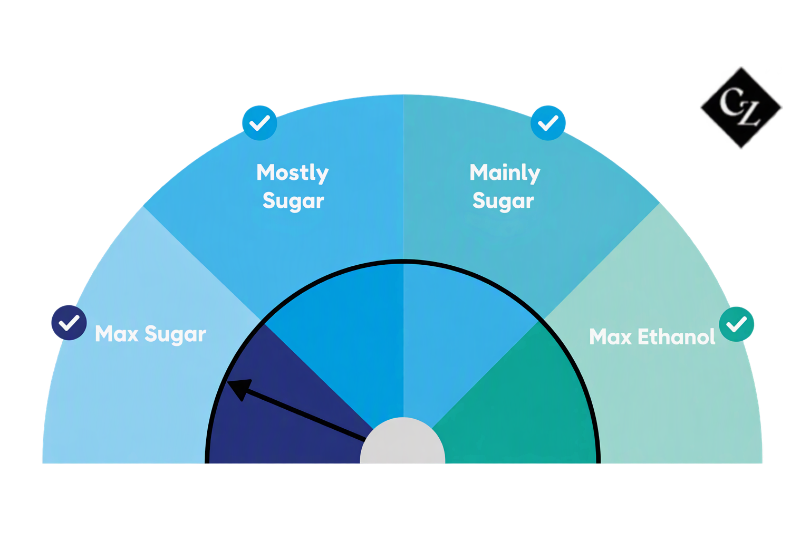
In light of the tight sugar market in India, the government is likely to restrict production of sugarcane ethanol this year. The consensus view amongst the industry seems to be that mills will only be able to make ethanol from C-heavy molasses.
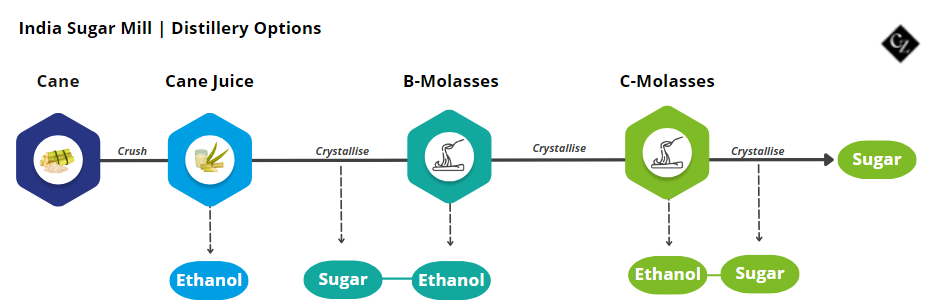
C-heavy molasses is the final molasses left behind once sugar has been extracted. This means it has less sucrose than cane juice and B-heavy molasses, which are intermediate products (see Appendix below). In other words, restricting ethanol production to C-molasses will reduce diversion of sugar to zero.
While this is the current sentiment within the industry, we are cautious about ruling out diversion altogether at this early stage of the season. The sharp turnaround in the political sentiment towards ethanol in the space of a few weeks shows us how quickly the situation can change.
As recently as June the Indian government was seriously looking at ways to better utilise India’s substantial ethanol production capacity to reduce dependence on imported energy, including increasing blend levels and introducing flex-fuel cars. The turn around since has been in response to consumers’ concerns about ethanol providing lower mileage than gasoline, damage to car engines, and the impact on food and water security.
The political and socioeconomic factors influencing the government’s decision could change in the coming months. For example, today there’s political pressure to keep sugar prices affordable for consumers during the festival season. However in the new year this could switch to ensuring farmers in Uttar Pradesh are paid well and paid on time ahead of states elections there. This is particularly so if the crop ends up being better than expected, which has happened in the past even during droughts.
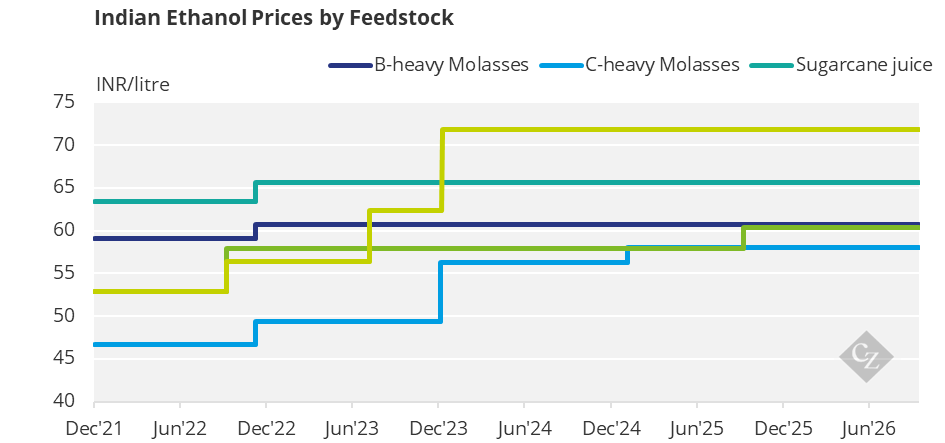
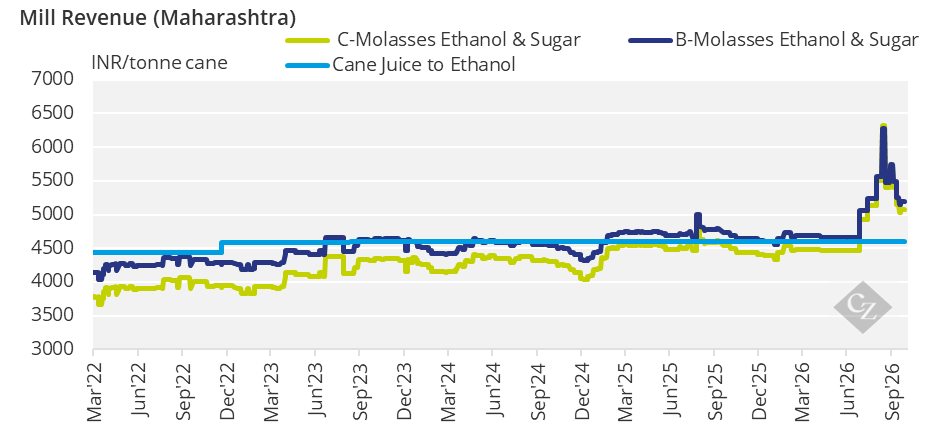
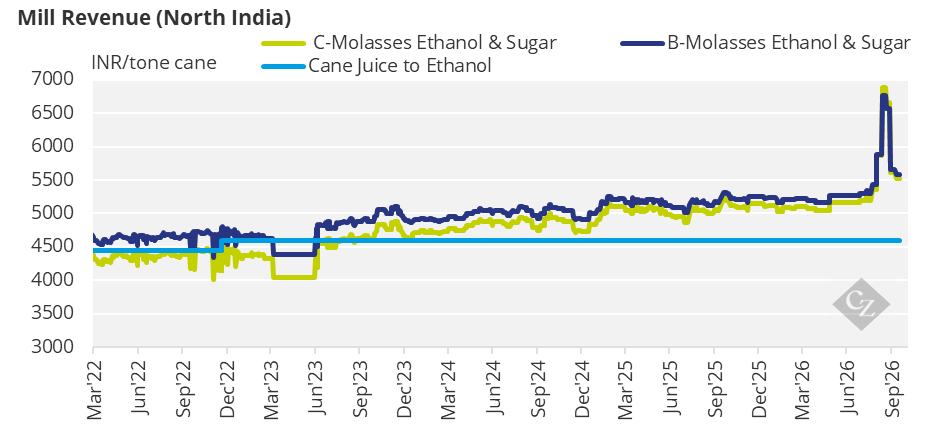
If, however, the government does permit some diversion to ethanol later in the year, Indian sugar prices may have to fall to make ethanol attractive to mills. This could be possible if the crop does surprise to the upside. Sugar prices currently are too high to encourage mills to divert cane juice to produce ethanol. There’s also not much difference between returns from making ethanol from B-molasses instead of C-molasses.
Alternatively the government may need to increase ethanol procurement prices.
Appendix
Our analysis considers the returns that mills earn from producing ethanol at the expense of sugar. Many mills/distilleries have a choice over which feedstocks they use to make sugar or ethanol based on the relative prices of ethanol paid by the oil marketing companies (OMCs), which is summarised below:
Proportion of Sugar to Ethanol: