Insight Focus
Maersk completes first US commercial ethanol bunkering of container vessel. The Houston operation used US-produced corn ethanol supplied by POET, marking the first commercial ship-to-ship ethanol bunkering of a deep-sea container vessel in the US. The trial provided valuable insight into the infrastructure, supply chain, and regulatory requirements needed to support bioethanol as a scalable marine fuel.
Maersk Completes First US Commercial Ethanol Bunkering
The critical infrastructure needed for the global adoption of ethanol-based sustainable marine fuel (SMF) is rapidly taking shape on several fronts.
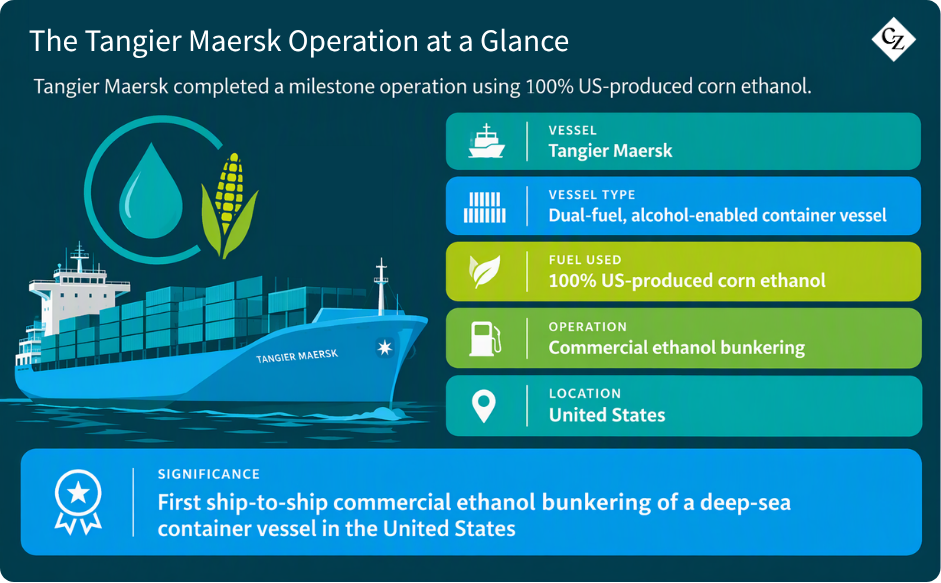
A.P. Moller – Maersk (Maersk) recently announced the successful bunkering of Tangier Maersk, a dual-fuel, alcohol-enabled container vessel, using US-produced corn ethanol.
The operation marked the first ship-to-ship commercial ethanol bunkering of a deep-sea container vessel in the US. The milestone is part of Maersk’s broader efforts to explore multiple potential fuel pathways for the future of shipping.
The operation provided valuable insight into the operational, infrastructure, sourcing, and supply chain considerations involved in using ethanol as a marine fuel. While ethanol benefits from an established production base, existing infrastructure, and compatibility with alcohol-enabled vessel technology, scalable future fuel pathways will also depend on fuel availability, regulation, and operational readiness across the maritime value chain.
According to Maersk, achieving lower-emission logistics requires turning new technologies into practical, scalable solutions. The bunkering operation aboard Tangier Maersk provides valuable real-world experience with alternative fuels in commercial shipping. The insights gained will help drive the development of more sustainable supply chains.
Maersk Regional President for North America, Ditlev Blicher, said the operation builds on previous ethanol trials aboard Laura Maersk and Antonia Maersk and reflects Maersk’s continued commitment to exploring and advancing credible pathways to drive progress within the shipping industry’s energy transition.
POET Demonstrates Ethanol’s Potential as a Marine Fuel
US-based POET, the world’s largest bioethanol producer, supplied the ethanol for the first 100% bioethanol bunkering operation in the US, marking a significant milestone in the development of bioethanol as a marine fuel.
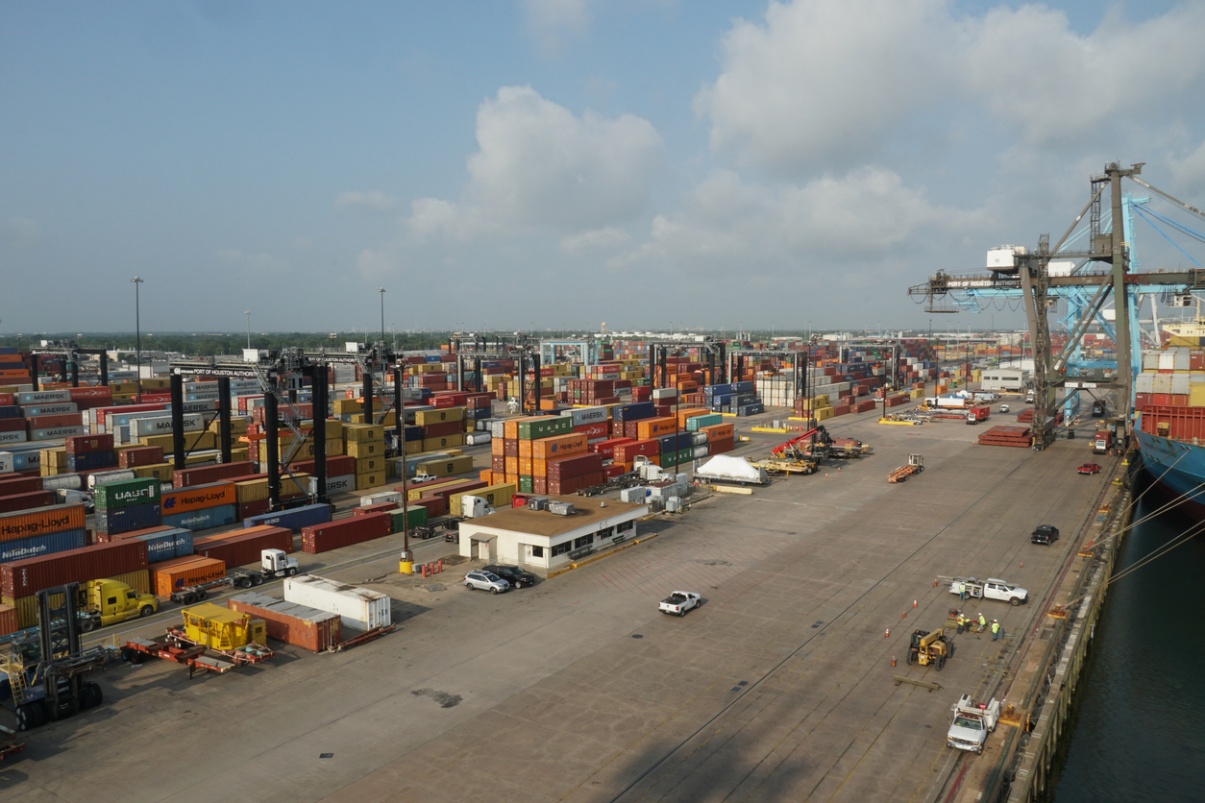
The successful trial with Maersk took place in Houston and demonstrated the potential for US-made ethanol to become a scalable fuel option for the global maritime industry.
“Seeing US-made ethanol move from the farm to a container ship in one of the nation’s largest ports is an exciting moment for our industry,” said Jeff Broin, Founder and CEO of POET. “Bioethanol is an abundant, affordable, and clean option for the marine sector. It demonstrates what is possible when partners across the value chain work together to open new markets for US agriculture.”
Kirby Corporation supported the marine bunkering operation and transportation of the fuel. The Port of Houston provided critical port coordination and infrastructure, while the US Coast Guard supported the regulatory requirements necessary to conduct the ethanol bunkering operation.
Port of Houston
“Bioethanol has the potential to contribute meaningfully to the future energy mix for shipping,” said Emma Mazhari, Maersk’s Vice President, Energy Markets. “[Bioethanol] can offer another scalable, lower-emission fuel option and greater flexibility in how the maritime industry approaches its transition to lower-carbon fuels. This operation with POET is an important step in exploring how bioethanol can be incorporated into marine fuel supply chains in the US.”
Connecting US Agriculture to Global Shipping Markets
The Houston operation also highlights the connection between American agriculture and global commerce. As the 11th-largest US container exporter, POET connects the value chain from American farms to international markets, helping feed the world with high-quality feed ingredients that are a co-product of the bioethanol process.
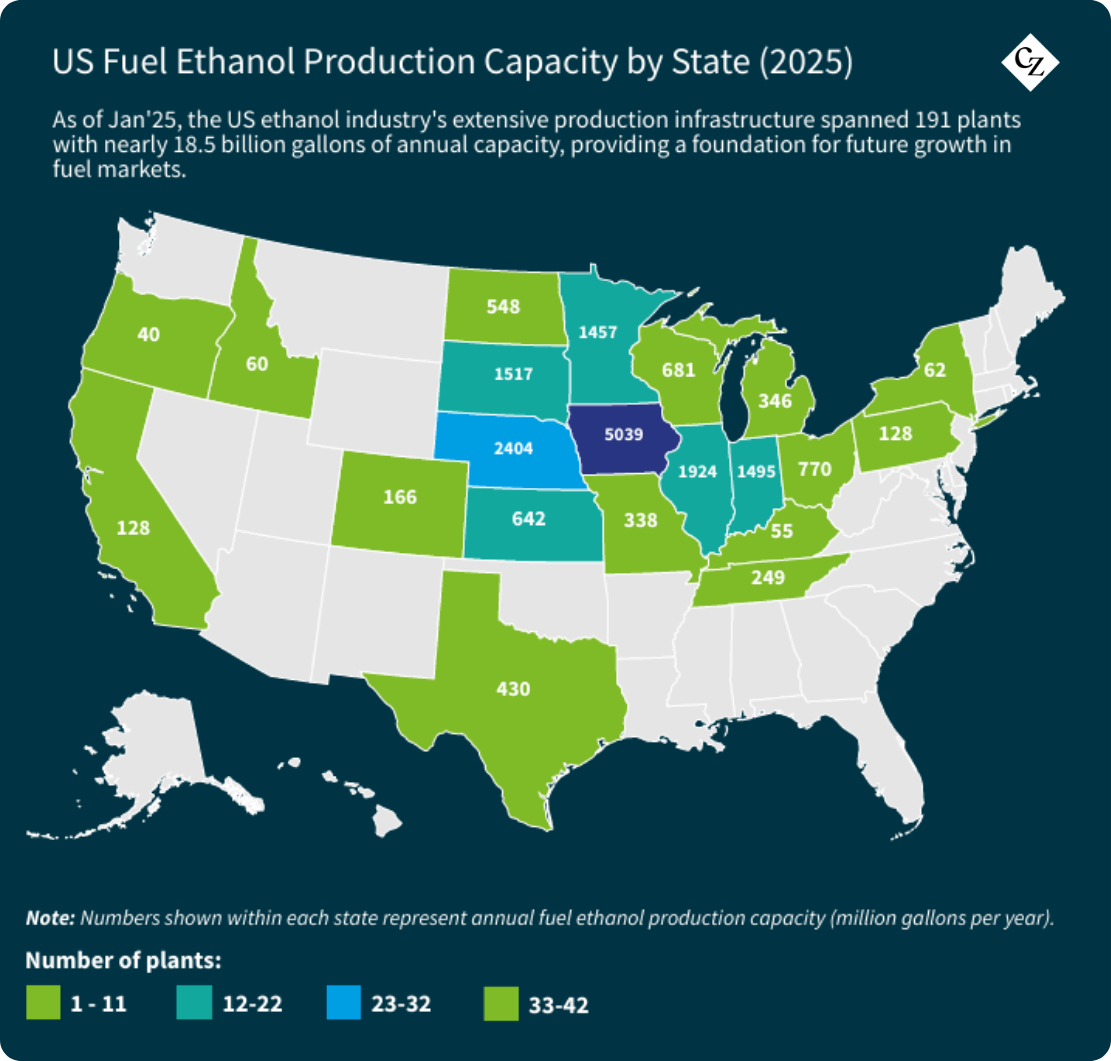
POET produces more than 3 billion gallons annually across its network of 35 bioprocessing facilities. The fuel is supported by established production, transportation, and distribution infrastructure and is available to markets worldwide.
Source: EIA
“Bioethanol has spent decades proving itself as a reliable, scalable fuel in the world’s largest transportation market,” Broin said. “Now we have an opportunity to take that same American-made fuel into a global maritime market. As the world looks for practical ways to reduce the carbon intensity and cost of transportation, we should be looking at every technology and every market where bioethanol can deliver value.”
The bunkering operation demonstrates that bioethanol can move beyond traditional road-fuel applications and into a new global market.