Insight Focus
Elections in the US and Brazil could provide fresh momentum for ethanol. Brazil’s E32 mandate and planned E35 feasibility testing underline its continued push towards higher ethanol use. In the US, control of Congress and state-level races could prove decisive for the future of year-round E15.
Elections Could Reshape the Ethanol Outlook
The upcoming mid-term elections in the US on November 3 and the recent election of a new president in Brazil could be an indication that the global ethanol market is about to get a significant upward jolt.
In the US, Democrats are projected to win a majority in the House of Representatives by replacing a number of Republicans strongly allied with the oil industry, who have been a roadblock to the adoption of year-round availability of E15.
In Brazil, the recent election of President Luiz Inácio (Lula) da Silva means the country will have a leader with a strong history of supporting ethanol as a key element of national energy policy.
For example, Brazil’s National Energy Policy Council (CNPE), under Lula’s leadership, temporarily raised the mandatory anhydrous ethanol blend in regular gasoline from 30% to 32% (E32) starting in August 2026, aiming to cut gasoline imports by roughly 900 million litres a year.
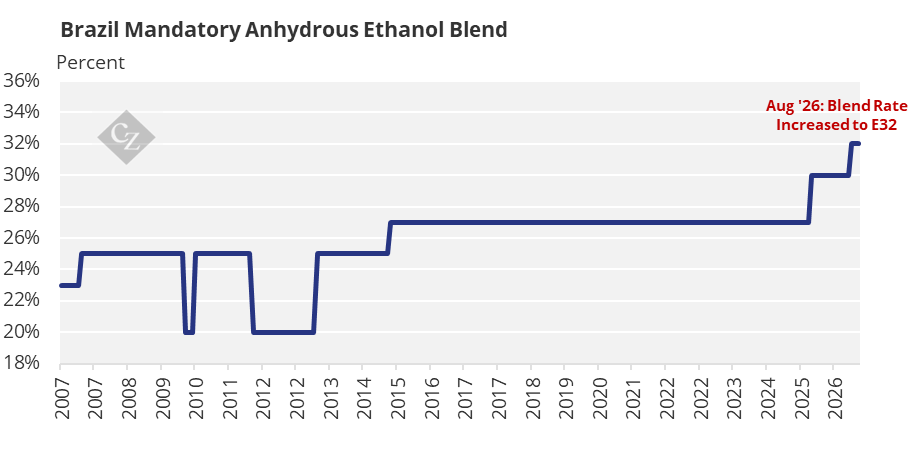
Note: Compiled from Brazilian government, UNICA data.
Also under Lula, the government approved the launch of feasibility testing for an E35 blending mandate under Brazil’s “Fuel of the Future” law.
Sources report that Lula signed emergency measures cutting or eliminating federal taxes on gasoline and ethanol to shield consumers at the pump. In addition, Lula has promoted a milestone Brazilian Air Force and ITA project to develop the world’s first 100% ethanol-powered turbine for military and civil drones and small aircraft.
Year-Round E15 Hangs in the Balance
In the US, the mid-term elections will determine control of Congress and could reshape federal policies affecting energy producers such as ethanol manufacturers. If Democrats gain control, they will be eager to bring stronger oversight of agency decisions concerning energy production and distribution.
If Republicans maintain their majorities in Congress, Senate Republicans will continue their push to include E15 ethanol provisions in the broader 2026 farm bill negotiations. Agricultural-state delegations, such as those from South Dakota and Nebraska, have made year-round E15 approval a central priority as farm bill talks continue.
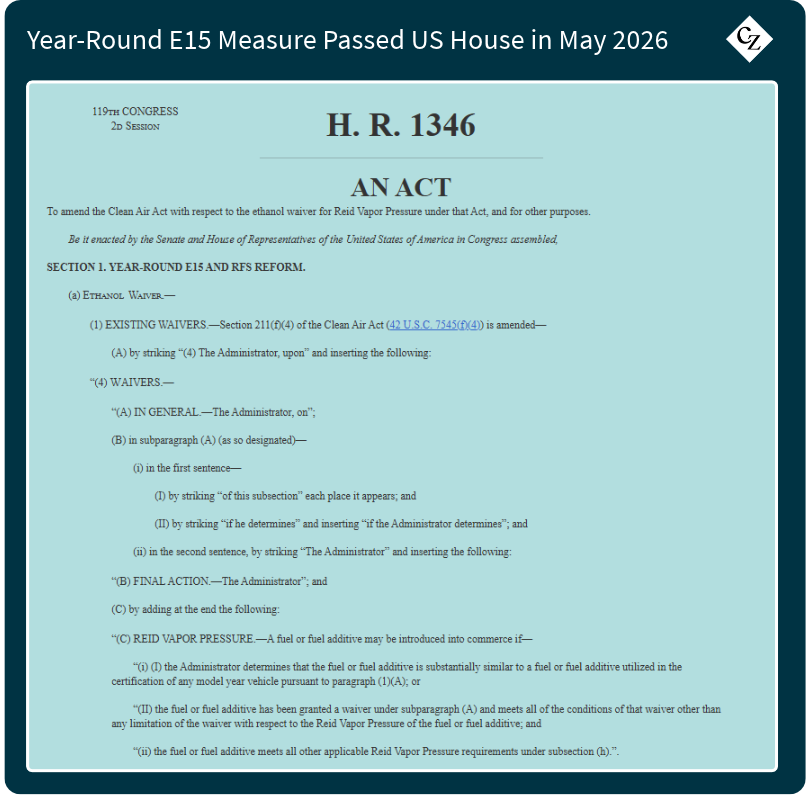
The US House of Representatives on May 13, 2026, passed a measure to allow E15 nationwide by amending the Clean Air Act.
The vote crossed traditional party lines. Lawmakers from top corn- and ethanol-producing states, including Iowa, Illinois, Nebraska and Minnesota, backed the measure across both parties to support local agriculture and lower pump prices. However, it drew opposition from certain free-market Republicans, the Freedom Caucus, and oil refiners concerned about compliance costs.
State-Level Elections Also Put E15 in Focus
Ethanol policy and corporate accountability have surfaced in state-level races as well.
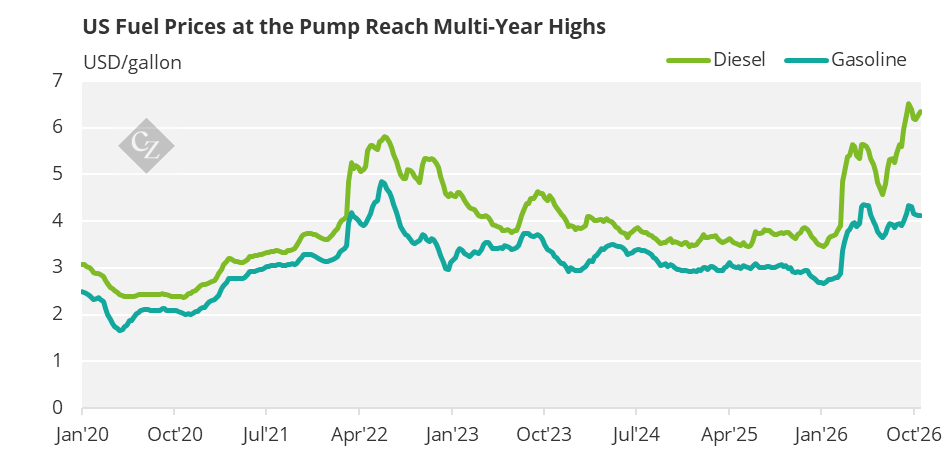
At a recent political rally, President Donald Trump announced USD 8 billion in aid to farmers struggling with high diesel prices, while also tying his support for increased ethanol content in gasoline, a boon to Midwest corn growers, to the re-election of Kansas Senator Roger Marshall.
“With Roger Marshall in the Senate, we will make year-round E15 permanent. But if Adam Hamilton (Marshall’s opponent) is in, I’m not doing it,” Trump said.
“That’s it. I’m only doing it for him.”
In Illinois, Representative Eric Sorensen said approving year-round nationwide use of E15 would help lower prices at the pump while reducing farmers’ operational expenses. “Increasing the level of ethanol could lower your cost by some 30 cents a gallon, and while we save money, it also helps our corn farmers. It is good for everyone in the state,” Sorensen said.
Source: EIA