
Insight Focus
The Trump-Putin-Xi summit offered limited relief for global trade. Since the meeting, new US tariff proposals have added uncertainty to US-China trade, despite improving agricultural purchases. Black Sea grain disruption, weaker Middle Eastern oil flows and a strengthening El Niño add further risks heading into 2027.
Summit Offers Limited Relief for Global Trade
The world watched in November as the leaders of three of the biggest global powers, Presidents Donald Trump, Vladimir Putin and Xi Jinping, met for a historic trilateral summit in Shenzhen, China. The meeting concluded with a joint “peace declaration”, with the three leaders calling for greater cooperation and global stability, including a commitment to maintaining stable energy flows.
Despite this, many had hoped for more concrete breakthroughs on the geopolitical tensions continuing to shape global trade. For agriculture, relations between these three powers remain particularly important, with their policies, trade relationships and wider geopolitical disputes continuing to shape some of the key risks facing global agricultural markets.
Black Sea Disruption Threatens Grain Exports
One of these risks is the continued disruption to Black Sea grain exports caused by the Russia-Ukraine conflict. Despite the summit’s calls for peace, the export corridor faced further disruption in November.
On 16 November, the Betul 8 sank off Bulgaria while carrying 3,000 tonnes of Romanian wheat to Egypt after its crew reported being struck by two sea drones. This followed drone strikes against vessels near Sulina, Romania, a key route for Ukrainian grain exports through the Danube.
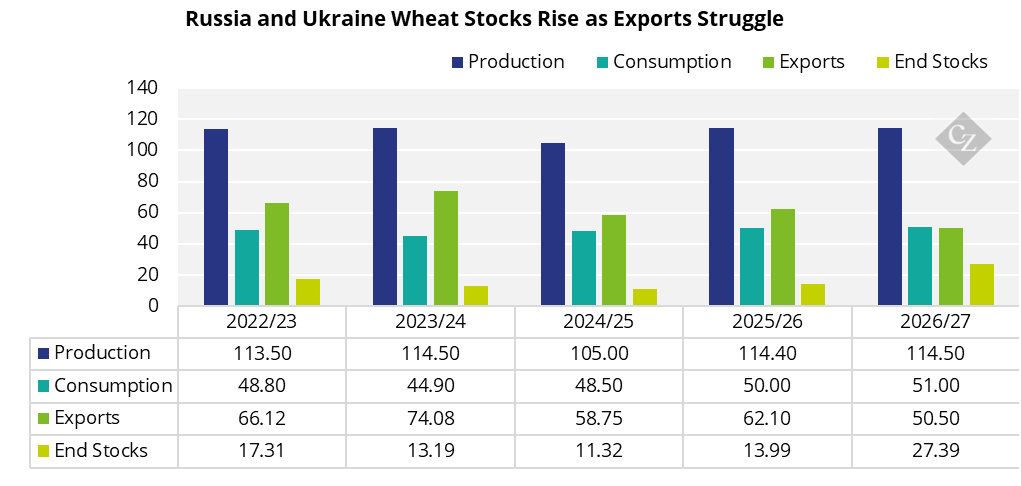
By mid-October, wheat and maize vessel traffic through the Turkish Straits was 63% lower year on year. The World Food Programme warned that continued disruption could prevent around 10 million tonnes of Russian and Ukrainian wheat from reaching global markets.
The USDA subsequently cut its 2026/27 wheat export forecasts for Russia and Ukraine by 1 million tonnes each, to 39 million and 11.5 million tonnes, respectively, citing conflict-related constraints on shipments.
Source: USDA
Middle East Oil Flows Weaken Despite Lower Prices
A key theme of the summit was stabilising global energy flows, which remain disrupted by the US-Iran war. Falling crude prices suggest conditions improved in November, with Brent dropping more than 20% from the start of the month to around USD 90/barrel as Middle Eastern supply recovered.
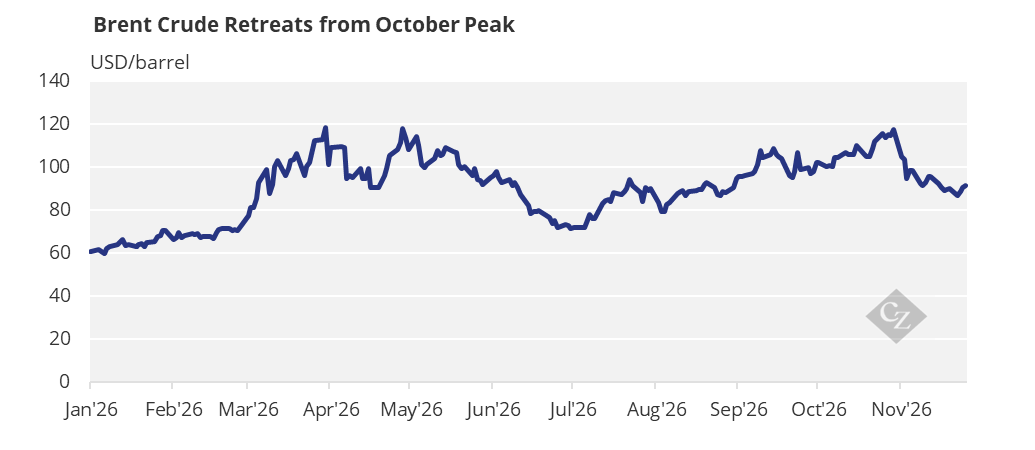 However, physical oil flows have been on a downward trajectory since mid-October. According to Kpler, Middle Eastern crude exports fell from 20.86 million barrels/day in the week beginning October 12 to 13.96 million barrels/day in the week beginning November 16. Separately, the International Energy Agency reported that oil flows through the Strait of Hormuz averaged 9.5 million barrels/day in the 10 days to November 19, down from 12.2 million barrels/day in October.
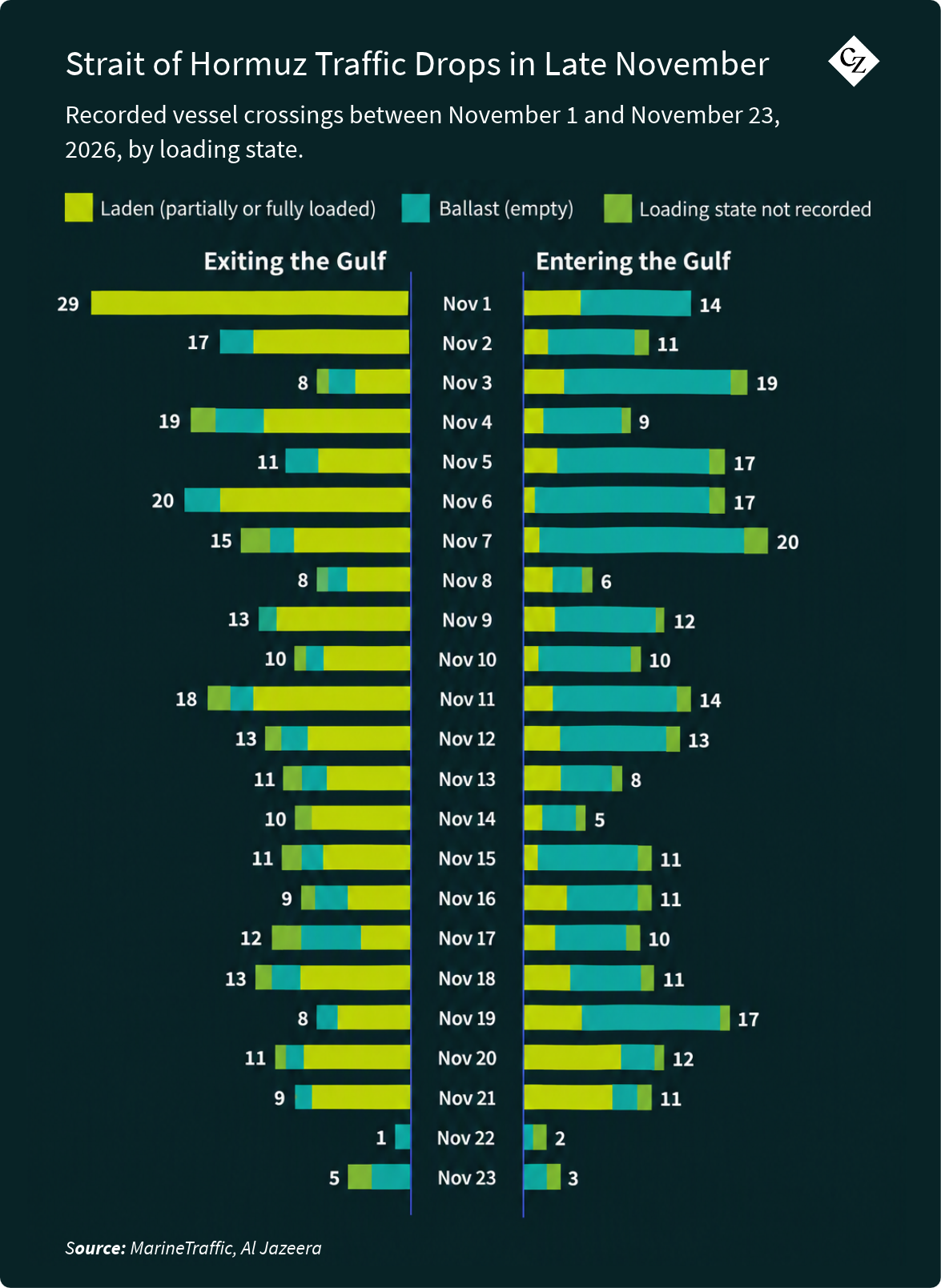
The outlook remains uncertain. The summit did not resolve the US-Iran conflict, while Trump has pushed a decision on renewed major strikes into 2027, saying, “We’ll see what happens after January 1.”
For supply chains, falling crude prices offer some relief, but other fuel costs remain elevated. European diesel futures have fallen around 25% from their September peak but remain almost twice their level at the start of 2026. With diesel widely used in agricultural machinery and freight, continued tightness keeps costs elevated for producers and agricultural supply chains.
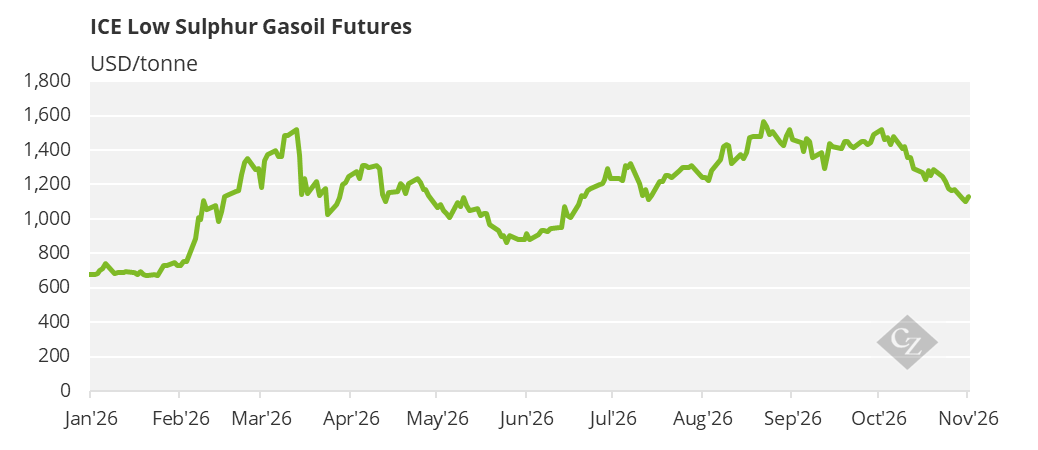
Note: ICE Low Sulphur Gasoil futures are a key benchmark for European diesel prices.
US-China Trade Progress Faces New Tariff Risk
The summit also put renewed focus on US-China trade, where agricultural purchases have shown signs of improvement. China’s purchases of new-crop US soybeans were approaching 20 million tonnes by mid-November, against a target of 25 million tonnes. If reached, US ending stocks could remain particularly tight at around 8.2 million tonnes, providing further support to prices.
However, progress outside soybeans has been much slower. China imported just USD 7.2 billion of other US agricultural products between January and September, with purchases on track for their lowest level in seven years and well behind its wider USD 17 billion annual commitment.
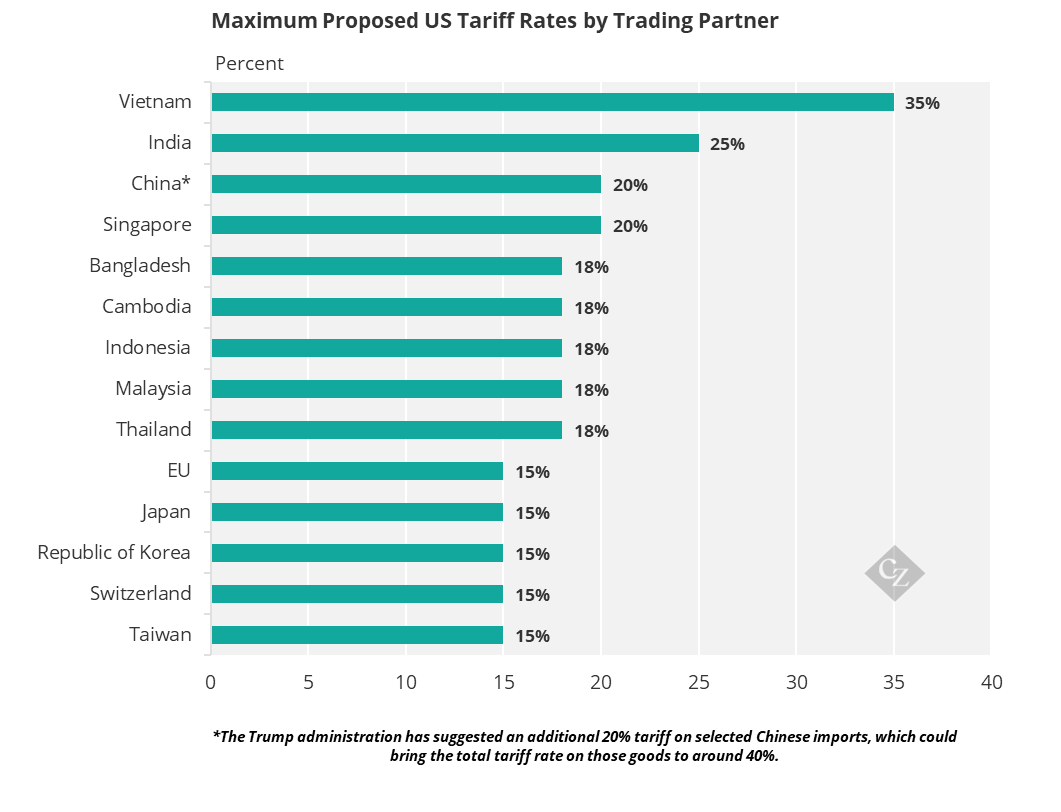
And since the summit, there has been a fresh development in US trade policy. The US has now proposed new tariffs covering 14 major trading partners, including China, where selected goods could face rates of up to 40%. The measures are expected to take effect next year following public consultation and could further strain US-China relations, complicating efforts to expand bilateral trade and agricultural purchases.
El Niño Strengthens as COP31 Ends Without Agreement
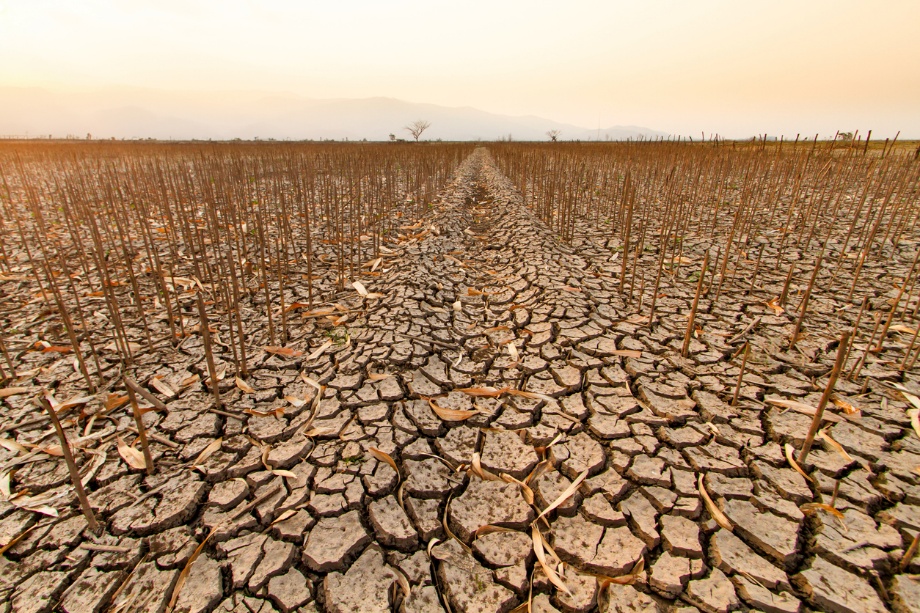
El Niño strengthened further in November, with NOAA reporting on 12 November that Pacific Ocean temperatures had reached levels associated with a very strong event. NOAA expects El Niño to peak around the end of 2026 or early 2027, with a greater than 79% chance of strong-to-very-strong conditions continuing through January-March. Conditions are then expected to weaken, with a return to more neutral conditions favoured between April and June.
However, the effects could extend beyond the event itself. The World Meteorological Organization expects El Niño to increase the risk of extreme heat, drought and heavy rainfall well into 2027, meaning weather-related disruption is likely to remain an important risk for agricultural markets even as El Niño weakens. The scale and type of impact will vary significantly by region.
Against this backdrop, COP31 in Antalya, Türkiye, ended without an overarching climate agreement. Around 130 governments backed explicit language on moving away from fossil fuels, but consensus could not be reached on including it in the final pact.
Climate finance was another sticking point, with developing countries calling for more support from wealthier nations to help them adapt to climate change. For agriculture, FAO warned that funding to help farmers and food systems prepare for drought, extreme heat and flooding is already declining, just as El Niño is increasing the risk of these conditions into 2027.
FAO Releases Biannual Food Outlook
While the FAO expects cereal stocks to rise by the end of 2027, it also thinks world trade (particularly in wheat) will contract by 3.3%. This is due primarily to the Russia-Ukraine war, where production is still ongoing, but export logistics are becoming increasingly challenging.
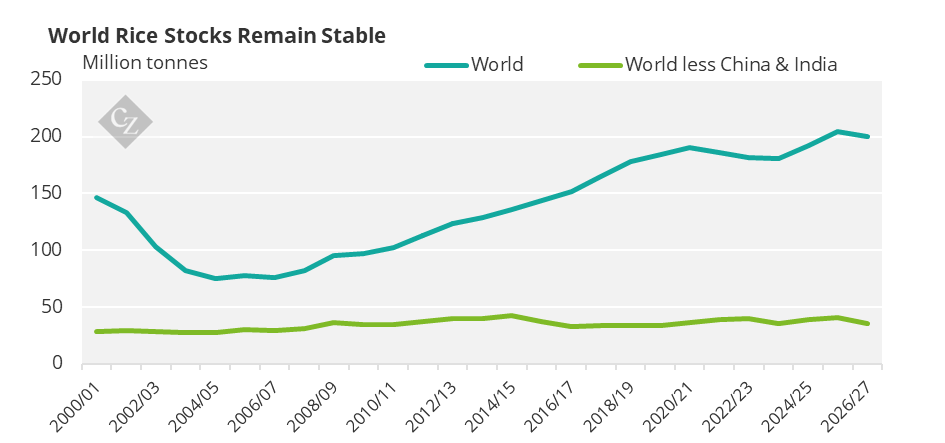
The report also warns that world rice production will fall, primarily as a result of adverse weather and poorer producer margins. However, existing plentiful stocks should help keep reserves high, potentially averting any supply issues that could impact the staple food for half of the world’s population.
Source: USDA
Other key takeaways from the report include an expansion in oilseeds as the biofuel sector continues to grow, a “modest” expansion in global meat production and an increase in global milk production. Meanwhile, sugar production is set to decline to levels below global consumption in 2026/27.
In Other News…
-
The EU Deforestation Regulation starts applying to large and medium operators on 30 December 2026. For covered soy, palm oil, coffee, cocoa and cattle products, traders should check whether suppliers can provide the origin evidence needed for EU-bound shipments.
-
Next year, China’s Lunar New Year falls on Saturday, February 6, 2027 – 11 days earlier than 2026. This means agricultural exporters should start planning now and lock in critical shipments in December. Mainland China’s official break runs 5–13 February, while Vietnam’s public-sector Tết break is 4–10 February.
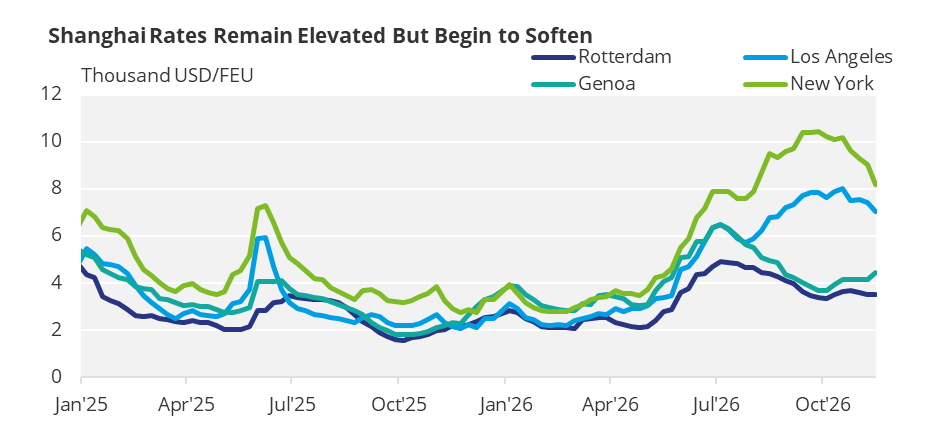
Source: Drewry