This update is from Sosland Publishing’s Sweetener Report. For more information and subscription details, CLICK HERE.
Insight Focus
US sugar holds steady despite weak global market values. Tariffs helped offset pressure from falling world prices, while buyers with remaining coverage gaps stayed largely hand-to-mouth. The USDA revised sugar stocks across crop years and a widespread freeze posed limited risks to late-season beet and cane fields.
Tariffs Help Steady US Sugar Amid Weak World Market
The US cash sugar market was slow but steady in the week ending November 14. Prices were unchanged. While the majority of contracting for 2025-26 was completed earlier, there still were several large-volume buyers with coverage gaps to fill.
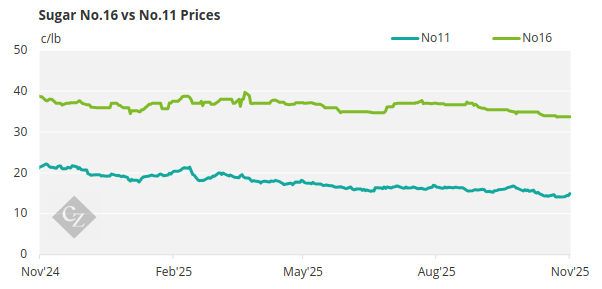
Ideas were that these users may remain hand-to-mouth for the remainder of the period, as carryover amounts from 2024-25 seemed sufficient to meet immediate needs, and forward demand remained uncertain. Interest in 2027 contracts was minimal.
One refiner said domestic cane prices, which have not changed in about four and a half months, were starting to feel some pressure from the recent sharp drop in world market values. But tariffs—especially the 50% tariff on imports of Brazilian cane sugar—were helping stabilise the domestic market. There also were ideas that the world market will eventually balance itself out. “Nobody in this world is making money selling cane sugar at 13c/lb,” the refiner said. “Long-term contraction should happen at these prices. But how that happens and how long it takes, I don’t know.”
The decision by some countries, including Brazil and India—the top two sugar-producing countries—to increasingly prefer corn as an ethanol feedstock over sugar cane was one factor contributing to surplus cane sugar supplies in the world. And similar to the US, demand for sugar in some countries is expected to decline.
USDA Revises Sugar Stocks Across Crop Years
In the latest WASDE report, released November 14, the USDA raised its estimate for 2024-25 ending stocks but cut its forecast for 2025-26. For the current year, lower domestic sugar production and higher deliveries more than offset higher beginning stocks and higher imports, dropping the ending stocks-to-use ratio to 15% from 16.2% in September.
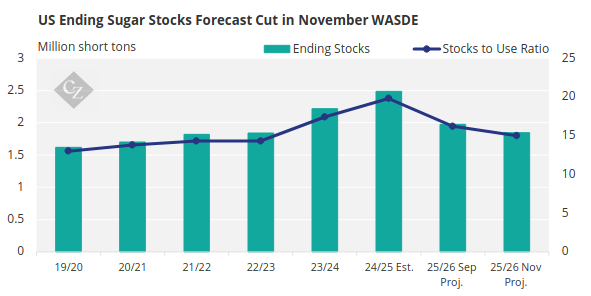
For 2024-25, higher beginning stocks, higher production and higher imports, along with a large negative “miscellaneous” number, more than offset sharply higher deliveries, resulting in a modest uptick in ending stocks and an unchanged ratio of 19.8%. The USDA also lowered deliveries for 2023-24, boosting ending stocks and raising the stocks-to-use ratio to 17.4% from 16.6% in September.
Freeze Threatens Remaining Beet and Cane Fields
Harvest activities were wrapping up. A blast of cold weather stretching from the Canadian border to the Gulf Coast and across the entire eastern half of the country brought snow to several northern states and freezing temperatures to nearly the entire affected area. While the sharp drop in temperatures was ideal for sugar beets already in outdoor piles, the freeze may have damaged sugar beets not yet lifted.
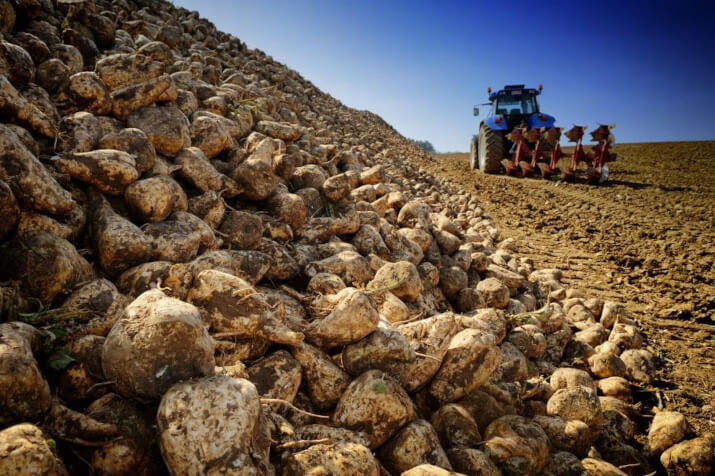
Estimates were that about 4% to 5% of the Michigan beet crop was still in the ground, and producers were assessing potential damage. Ideas were that the damage may not have been severe enough to significantly alter yields, at least at this point, and thus prices were not affected.
Freezing temperatures in Louisiana also may have impacted parts of the state’s sugar cane crop, but prior reports indicated the crop was in excellent shape and likely resilient enough to handle a single and short-lived freeze event. Temperatures in Florida also dropped but were not a threat to its sugar cane crop.
Annual corn sweetener contracting for 2026 was ongoing and was expected to extend well into December. In its November 14 Crop Production report, the USDA lowered its forecast of 2025 US corn production, but the adjustment was less than the trade expected and still record high.