Insight Focus
PET recyclability depends on the system, not just the bottle. While PET bottles can be designed for recycling, outcomes vary by local collection, sorting and reprocessing infrastructure. True circularity requires both recyclable packaging and systems that ensure it is actually recycled.
Recyclability is not a static concept. Seeing ‘100% recyclable’ on a bottle is practically meaningless in terms of circularity if the consumer doesn’t know (or doesn’t care) about how to recycle it. A clear PET bottle can be designed to tick every recyclability box… mono-material, compatible label and closure, and made from a polymer with an established recycling stream.
But what happens next? The answer depends not only on the bottle, but on where that bottle is sold, used and ultimately discarded. The same pack can have very different outcomes in different markets.
Dr Vicky Lofthouse, founder of EN:ABLE Sustainability, argues that understanding this wider system is essential if we want to move from packaging that is theoretically recyclable to packaging that is actually recycled.
“Design for recyclability is important, but it only ensures a bottle has the potential to be recycled,” she explains. “It has little bearing on the end-of-life system that exists in the market where the bottle is sold and used.”

Dr Vicky Lofthouse, Photo Courtesy of EN:ABLE Sustainability
Design Alone Doesn’t Guarantee Circularity
PET has an obvious advantage in that it is an established and highly recyclable packaging material. There’s an awful lot of excellent infrastructure built around supporting the circularity of PET packaging. But we all know that designing a good bottle is only one part of creating a circular material flow.
Collection rates and methods, the sophistication of local sorting, and access to food-grade reprocessing can all change the outcome.
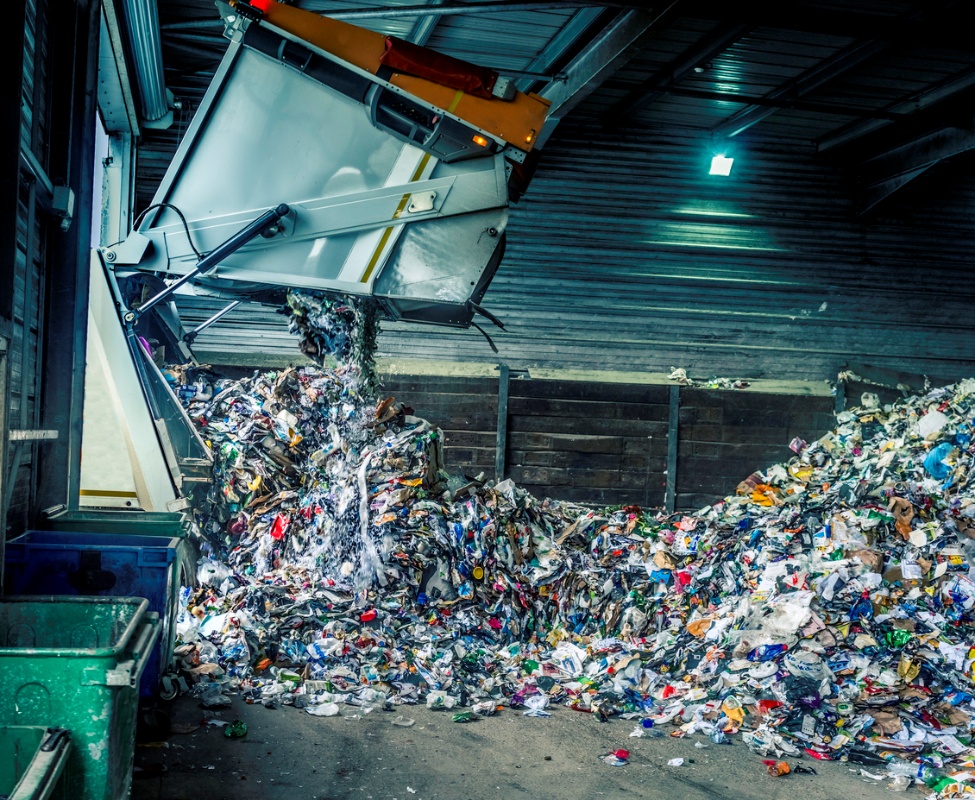
I asked Dr Vicky if the exact same PET bottle could be a strong circular solution in one country and a much weaker one somewhere else.
She says, “Absolutely. Put it into a market with convenient collection, high-quality sorting and local food-grade reprocessing, and it has a good chance of becoming a bottle again. Move it somewhere with lower collection participation or less sophisticated sorting, and it may instead be downcycled, exported for reprocessing or lost from the system altogether. Success is entirely a function of the system it’s dropped into.”
Sustainability Strategies Don’t Always Travel
For an international packaging industry, this means sustainability strategies can’t necessarily just be copied and pasted from one market to another.
Standardisation has obvious benefits, and established design-for-recycling principles are hugely valuable for cost and practicality reasons. The challenge comes when we accept that a technically recyclable PET bottle is not the same thing as designing the system it will actually travel through.
Local infrastructure, regulation, consumer behaviour and even culture all influence what happens next. There are good reasons to believe these systems will improve, as legislation and awareness influence behaviour at all levels. Recycled-content requirements, EPR schemes and deposit return systems are creating stronger demand for high-quality recovered PET.
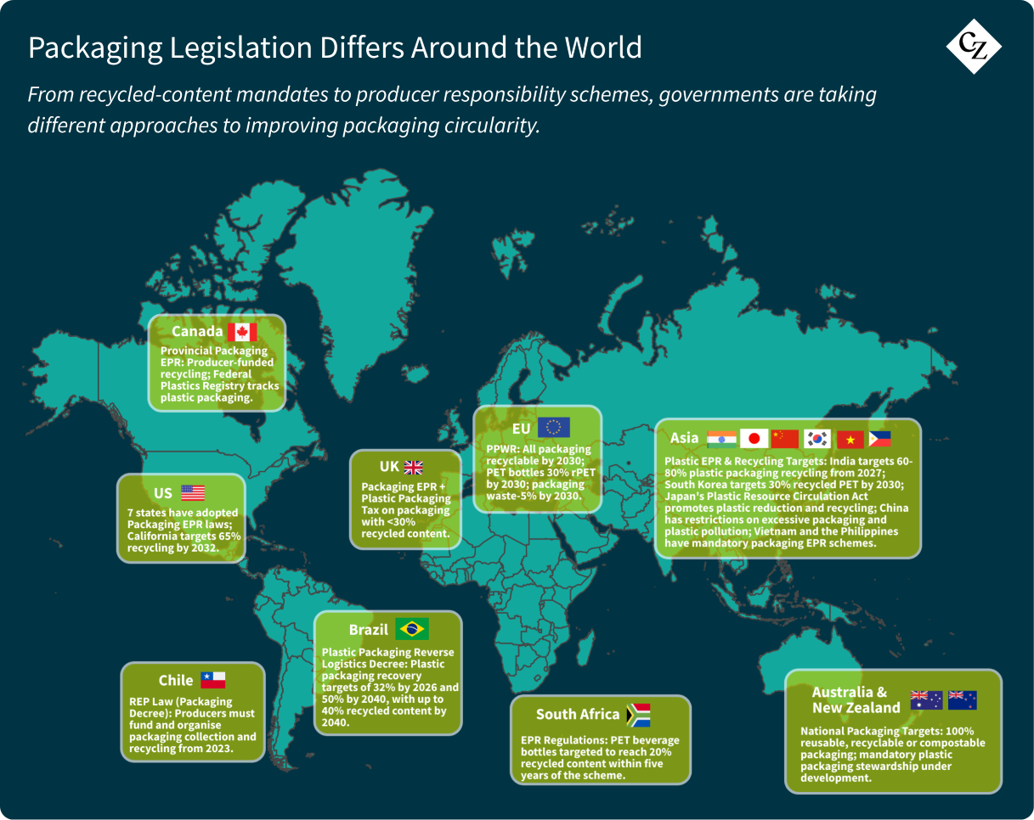
Dr Vicky notes, “Almost overnight, high-purity rPET becomes a ‘resource’ with real financial value that’s worth investing in.”
Technology helps, too, with increasingly sophisticated sorting improving the potential to capture PET and maintain the purity needed for bottle-to-bottle recycling. For PET producers and users, the opportunity comes from both the design of the bottle and a clear understanding of the market it will enter.
All this points to the smart question for PET circularity being less about whether a bottle can be recycled and more about making sure that it actually is recycled. The bottle can be the same. The outcome doesn’t have to be.