The Basics
Indonesia is one of the world’s largest sugar consumers, and one of the world’s largest importers of raw sugar.
It has a long history of sugar cane production, dating back to the Dutch colonization in the 1800s. However, the cane industry has struggled to modernise and expand in recent years, meaning sugar consumption has outstripped production; the country is in sugar deficit.
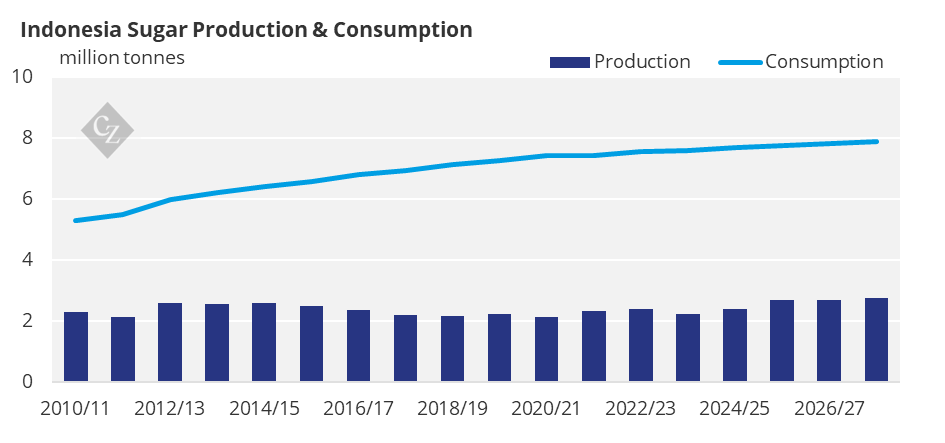
The inability of local sugar mills to meet consumption has created a space for the sugar refining sector, which supplies high-quality white sugar to the processed food sector.
This means the Indonesian sugar market is split into two distinct parts:
-
The sugar refiners supply refined sugar, made from imported raw sugar to food processing companies.
-
Cane mills make white sugar for direct human consumption – commonly referred to as the ‘wet market.’
The two are segregated. Refiners are not allowed to sell into the wet market. However, in practice there is sometimes illicit crossover between the refined sugar market and the wet market.
Wet Market White Sugar Production
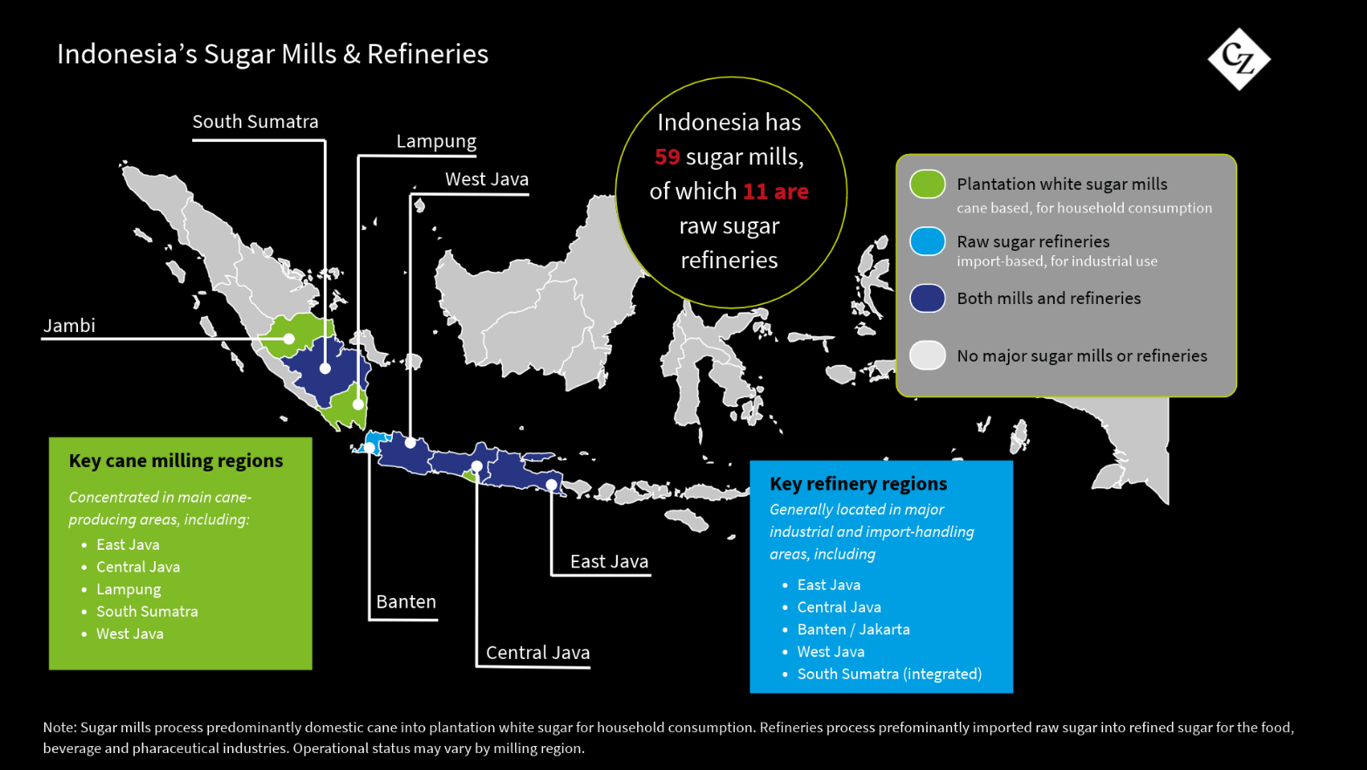
White sugar for the wet market is produced by domestic cane mills. Many of these mills fall under larger state-owned plantation groups (PTPNs).
Currently 59 sugar mills are in operation in Indonesia, of which 19 are privately-owned. A vast quantity of state-owned mills was built during the Dutch colonial times and are aging; operational inefficiency combined with high government-set prices make producing white sugar for domestic consumption very expensive.
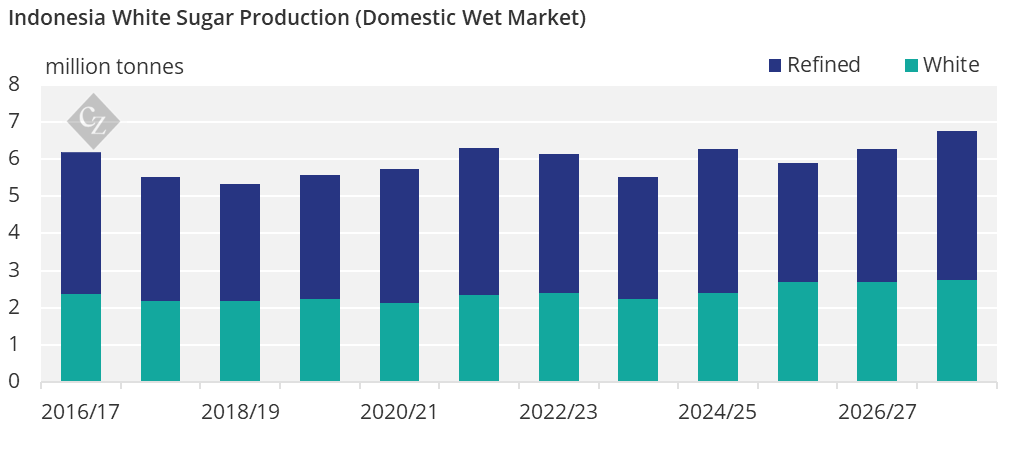
For the past two decades the country has aimed at becoming self-sufficient in wet market sugar.
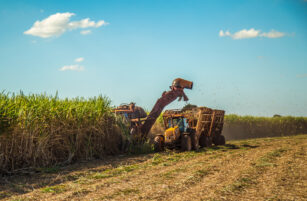
As a result, successive Indonesian governments have tried to modernize existing cane mills and to expand production outside Java, which accounts for more than half of the cane area.
The sector needs heavy investment for it to modernise and to bring its cost of production to competitive levels. This investment will probably be directed at existing mills and plantations rather than new ones.
Sugar Industry Expansion in Papua
Despite the slow growth in the sugar industry, the government has identified 2m h/a of land in Merauke, South Papua province for an industrial estate for sugarcane plantations, mills, a bioethanol plant and a biomass power plant.
Under the expansion plan, sugar and bioethanol production will be spread across 2 million h/a in the Merauke regency. The project has been divided into 4 clusters, with cluster 3 providing over 500k h/a of land ready for planting.
The government is aiming to increase production to 3m tonnes a year by 2027. If this plan is successful, Indonesia will theoretically have more than enough land required for their self-sufficiency target for the wet market only.
Although land development has begun in Merauke, South Papua, a meaningful increase in sugar cane production does not seem viable in the near term. Expansion is complicated by the presence of pristine forests and peatlands, inadequate infrastructure, uncertain land rights and concerns surrounding the displacement of Indigenous communities.
Refined Sugar Production
The raw sugar refineries were principally built to cater to industrial demand from food and beverage companies located in Java, specifically near Jakarta, meaning most refineries are located near the port of Cigading in Banten province.
However, the latest refineries built have been located away from the main concentration of existing operations to meet demand in other parts of the country.
Indonesia’s refineries operate in a protected environment:
-
Government licences are required to build a refinery,
-
A refinery must be at least 5% domestically owned,
-
The owner of a refinery must create a new sugarcane plantation alongside any new refinery,
-
Permits are needed to import raw sugar once the refinery is operational.
The Ministry of Trade is responsible for issuing raw sugar import permits and managing the overall sugar market to ensure sufficient supply.
The Ministry of Trade also grants raw sugar import licences to lysine and MSG (monosodium glutamate) manufactures though these firms do not compete in the white sugar market.
Although the refineries operate in a protected environment, their aggregate refining capacity exceeds their sales volumes, meaning the sector doesn’t operate as efficiently as it could.
However, given the poor operational efficiency of the local cane sector, the refining sector has a clear advantage. The Indonesian domestic sugar price also remains higher than the world market price and offers refiners a reasonable margin, which is further supported by the fact that the entire Indonesian sugar sector is protected by high import duties.
Sugar Imports
Indonesia gives preferential access to Thailand, Australia and India who can export sugar to Indonesia with a 5% duty on raws and 10% on whites. All other sugar from other countries pay duty at 550IDR/kg (USD 35/tonne) for raw sugar and 790IDR/kg (USD 50/tonne) for white and refined sugar.
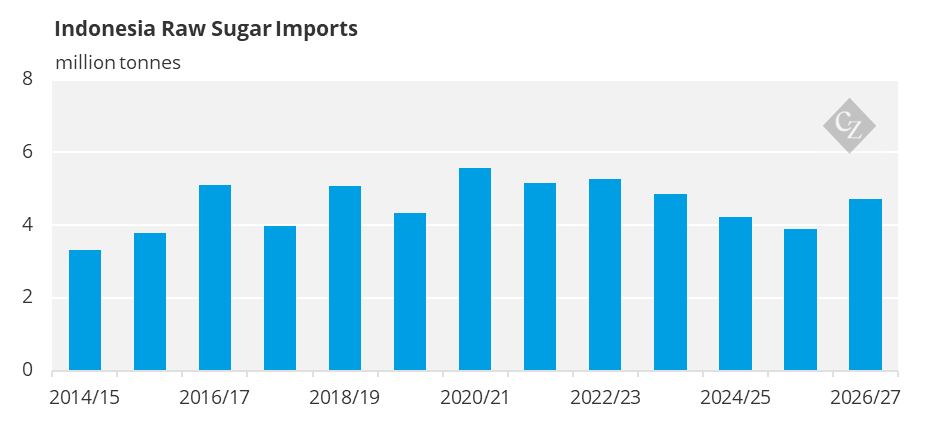
Indonesia usually imports the bulk of its raw sugar from Thailand, although Brazilian sugar imports dominated in 2024. Since then, there has been an uptake in Thai raw sugar again in 2026, as it is the cheaper source of raw sugar in the region, supported by low physical values and slow demand in the region overall.
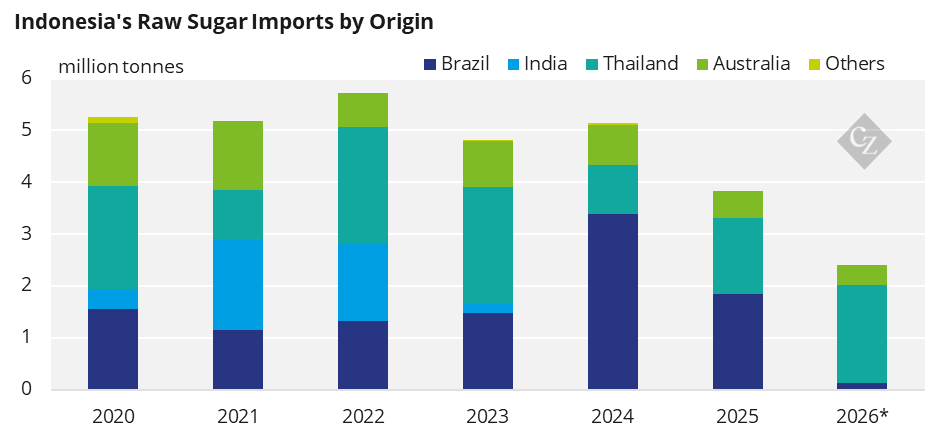
Data representative of imports between January – August 2026*
Imports of white sugar are at times also permitted. This is often to make up for wet market shortfalls following a poor cane crop.
Sugar Consumption
Indonesia’s economy has expanded substantially over the past two decades, with GDP levels growing from USD 95.5 billion to USD 1.45 trillion (current USD) in 2025. Population growth has been slower in comparison, increasing income on a per capita level and supporting the expansion of manufactured food and beverages.
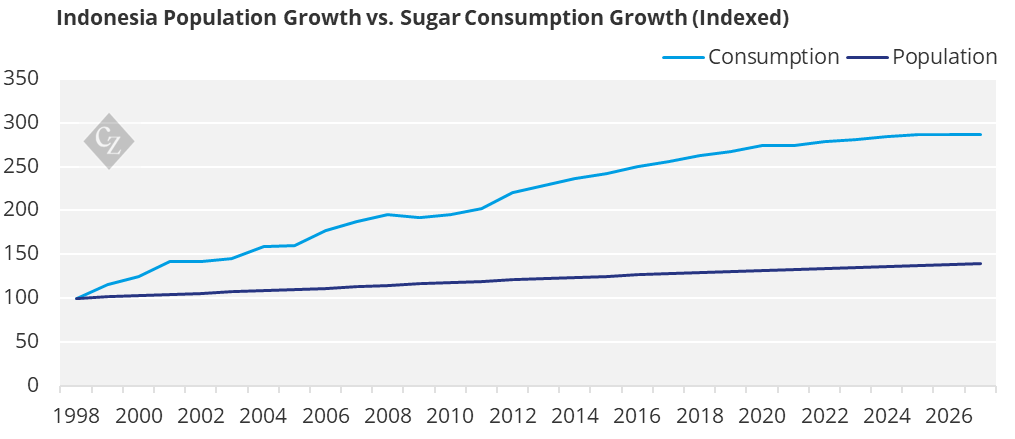
Indonesian sugar consumption has therefore grown much faster than its population and world sugar consumption over the period shown. However, the trend has stagnated in recent years, and growth is likely to be smaller in the future. Currently we estimate that total consumption is around 7.7 million tonnes in 2026.
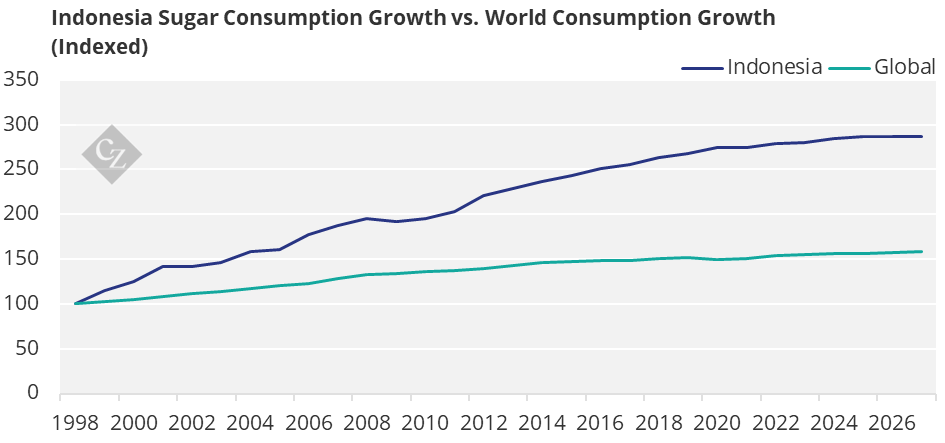
Much of the earlier expansion came from industrial users, including food and beverage manufacturers supplied by Indonesia’s raw-sugar refineries. The refining sector therefore benefited from the long-term shift towards sugar consumed indirectly through processed products. More recently, however, weaker industrial demand and tighter raw-sugar import allocations have lowered refinery utilisation.
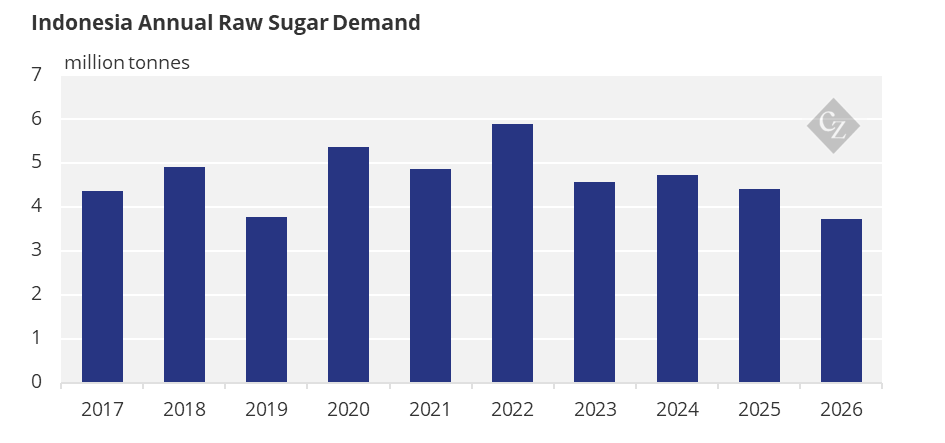
The country typically imports 4.5-5 million tonnes of raw sugar annually but import permits have been severely restricted in 2026 by the government, bringing annual raw sugar demand down to 3.7 million tonnes.