Insight Focus
Global grain markets faced mounting geopolitical, weather and demand uncertainty in August. Black Sea disruption constrained wheat and barley trade, while European heat damaged crops and increased feed risks. US yield concerns and weaker French conditions lifted corn prices. Soybeans remained supported despite record production forecasts. El Niño risks in Australia, Argentina and Brazil now shape the outlook, alongside shifting global trade flows.
Black Sea Disruption Keeps Wheat on Edge
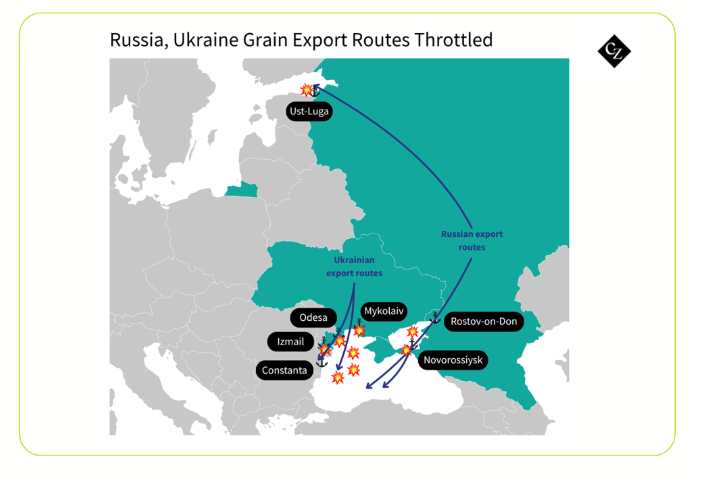
Black Sea export disruption dominated global wheat markets in August. Escalating Russian and Ukrainian attacks on ports, terminals and logistics infrastructure continued to restrict grain flows, raising concerns over the reliability of supplies from two of the world’s largest exporters. Shipping costs increased sharply, Russian export volumes slowed and traders remained alert to the risk of further disruptions, despite reports of diplomatic efforts to stabilise trade routes.
Extreme heat and drought across Europe further tightened the outlook. The European Commission reduced its 2026/27 wheat production forecast, while poor harvest conditions were reported across parts of the UK, France and Germany. Attention also shifted to the Southern Hemisphere, where a strengthening El Niño continues to threaten production prospects in Australia and Argentina ahead of harvest.
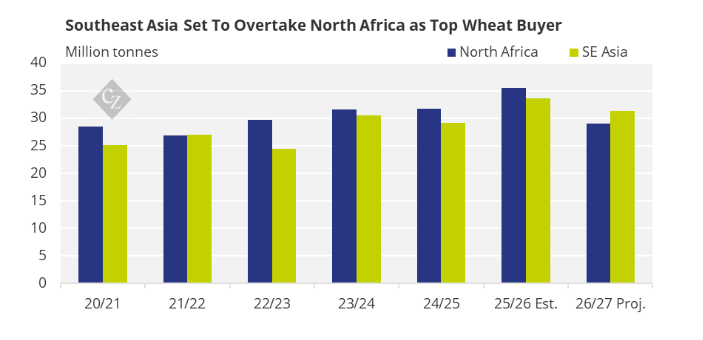
Although global wheat stocks remain relatively comfortable, analysts are increasingly questioning demand forecasts. Severe forage shortages across Europe could force livestock producers to substitute more wheat into feed rations, potentially increasing consumption beyond current projections. Meanwhile, Southeast Asia is forecast to overtake North Africa as the world’s largest wheat-importing region.
Barley Market Caught Between Weak Demand and Black Sea Risk
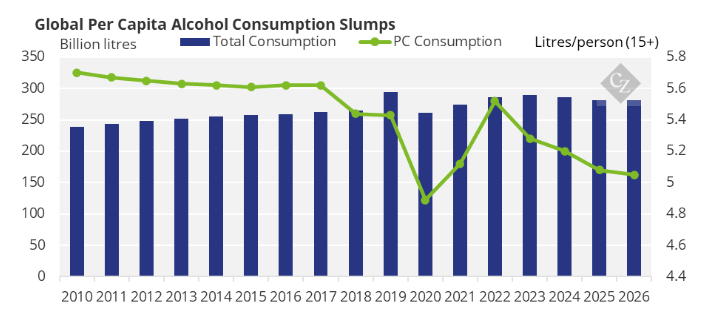
Global barley markets spent the past month balancing weakening demand signals against mounting supply and trade risks. In the malt sector, rising grain, energy and transport costs pushed malt values higher, while beer consumption in many developed economies continued to stagnate, limiting demand growth. However, developing markets remain a key source of long-term consumption expansion.
Trade attention remained firmly focused on the Black Sea. Escalating attacks on Russian and Ukrainian port, logistics and energy infrastructure raised concerns about grain export flows, even as many major barley importers, including China and Saudi Arabia, maintained a cautious buying stance. Better harvests in North Africa and Türkiye reduced immediate import requirements, helping to offset some of the disruption risk.
Global barley production prospects improved slightly during August and remain above 150 million tonnes, although output is still expected to fall short of last year’s crop. Europe experienced mixed harvest results after severe summer heatwaves, with quality concerns emerging for malting barley in parts of the UK and France, while Denmark reported stronger quality and export potential. Conditions in Canada and the US remain broadly favourable. Looking ahead, traders are closely monitoring El Niño developments, frost risks in Argentina and dryness concerns in Australia, all of which could reshape 2026/27 supply expectations.
Corn Rally Gains Momentum as Yield Concerns Deepen
Global corn markets strengthened over the past month as deteriorating crop conditions in key producing regions heightened supply concerns. The biggest catalyst was the US, where the Pro Farmer Crop Tour projected yields at 173.2 bushels/acre, well below the USDA’s August WASDE estimate of 180.7 bushels/acre. US crop conditions fell from 67% good-to-excellent at the end of July to 60% in August, while flooding across parts of the eastern Corn Belt raised additional concerns over yield potential.
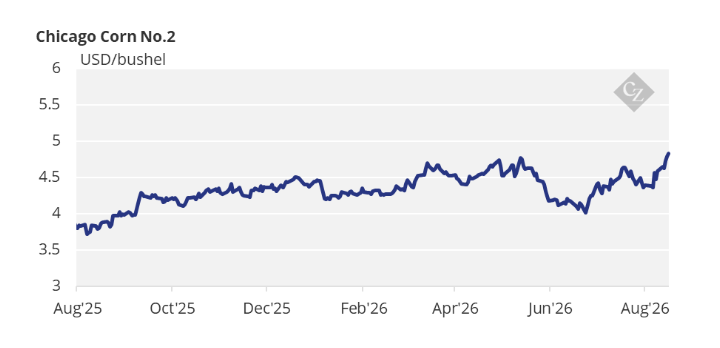
The USDA’s August WASDE report tightened the global outlook, lowering world corn stocks by 600,000 tonnes and reducing EU production by 3.6 million tonnes, largely reflecting worsening conditions in France. French corn ratings fell and lower US stocks and strong export demand pushed the US new-crop stock-to-use ratio down, adding further support to prices.
Outside the Northern Hemisphere, Brazil’s safrinha harvest neared completion, while attention increasingly shifted to weather risks and Black Sea disruptions, which continued to underpin broader grain markets. Traders are now focused on whether the September WASDE confirms lower US yields, a development that could tighten supplies further and extend the recent rally.
Record Supply Meets Resilient Soybean Demand
Global soybean markets remained broadly supported during August despite expectations for record production, driven primarily by larger crops in the US and Brazil.
Despite ample supplies, soybean prices strengthened through mid-August as robust demand offset bearish production forecasts. US soybean futures climbed above USD 12/bushel, supported by strong crush margins, rising biodiesel demand and improving export sales.
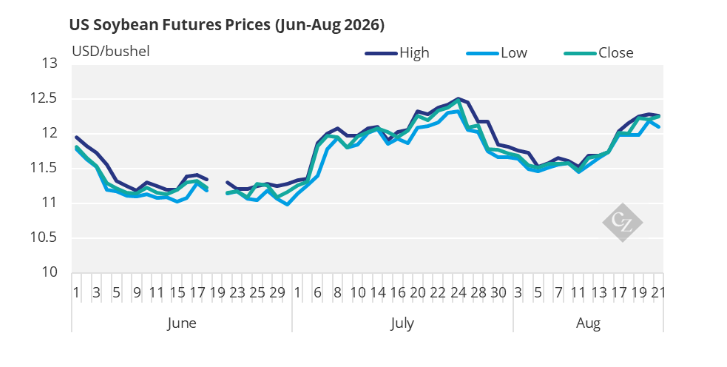
The USDA increased forecasts for both US domestic soybean consumption and exports in 2026/27, reflecting continued growth in global demand for soybean products.
Chinese buyers accelerated purchases of new-crop US soybeans and continued importing large volumes from Brazil, while reserve auctions signalled preparations for additional purchases later in the year. Meanwhile, Brazil’s exports increasingly diversified beyond China, with shipments to the EU, Turkey, Bangladesh and other destinations growing strongly.
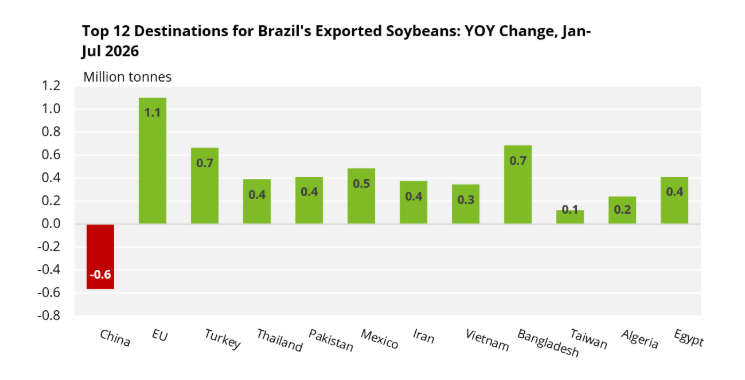
Soybean meal trade also expanded, with Brazil and the US continuing to gain market share through rising crush volumes and export growth. Weather risks linked to a strengthening El Niño remain the key uncertainty for the months ahead.