Insight Focus
Shipping through Hormuz remains heavily constrained despite diplomatic efforts. Vessel traffic remains far below pre-war levels, while security threats and soaring insurance costs continue to deter a broader return of commercial shipping. Although Iran and Oman have proposed a framework to restore trade flows, wider geopolitical tensions between Tehran and Washington remain the biggest obstacle to reopening the Strait.
As the conflict in the Middle East has reached the six-month mark, the commercial shipping landscape in the Strait of Hormuz remains caught in a volatile waiting game. Despite brief blips in vessel movement and ongoing talks between neighbouring Iran and Oman, a true return to normal operations is nowhere in sight.
And over the weekend, the conflict has escalated. After a US military strike on an island in the Strait of Hormuz, Iran then retaliated by firing missiles at US camps in Jordan. Many believe the conflict is bound to escalate.
Hamidreza Azizi, senior Iran analyst at The Crisis Group told AP News that “at some point, one of the sides may see a need to escalate in order to break this cycle.” He referred to the cycle of a spate of attacks followed by a usually short-lived truce. “That could bring the two sides to a point that they have been trying to avoid until now, which is a full-scale war,” he added.
Shipowners, ocean carriers and global energy markets are stuck in limbo amid skyrocketing insurance rates, new security incidents and a complete breakdown in broader diplomacy between Washington and Tehran.
Shipping Traffic Remains a Fraction of Pre-War Levels
Any improvement in vessel traffic has been intermittent and modest, with commercial shipping volumes through the Strait of Hormuz remaining heavily suppressed.
While intelligence firm Kpler recently tracked a slight uptick in visible commodity transits through Hormuz, ranging between 8 and 15 vessels per day, overall activity remains heavily constrained and stands at only a fraction of the pre-war baseline of 130 daily transits.
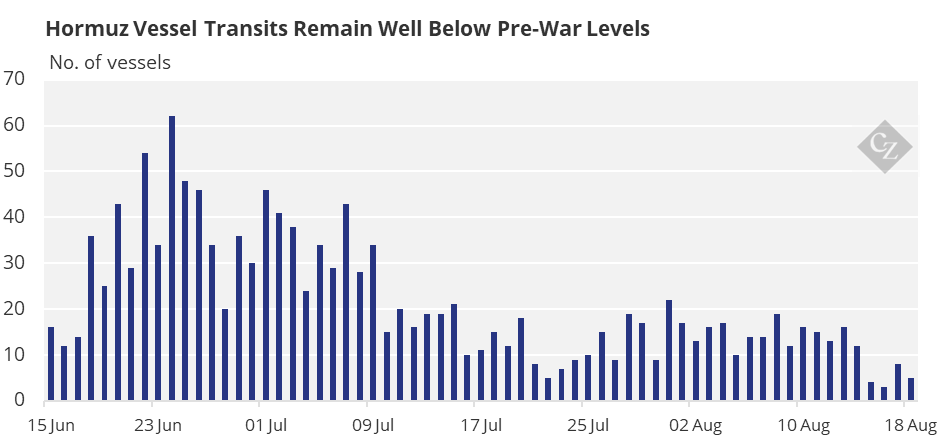
Source: Kpler
The current transit profile across the region reflects a highly fractured trade flow.
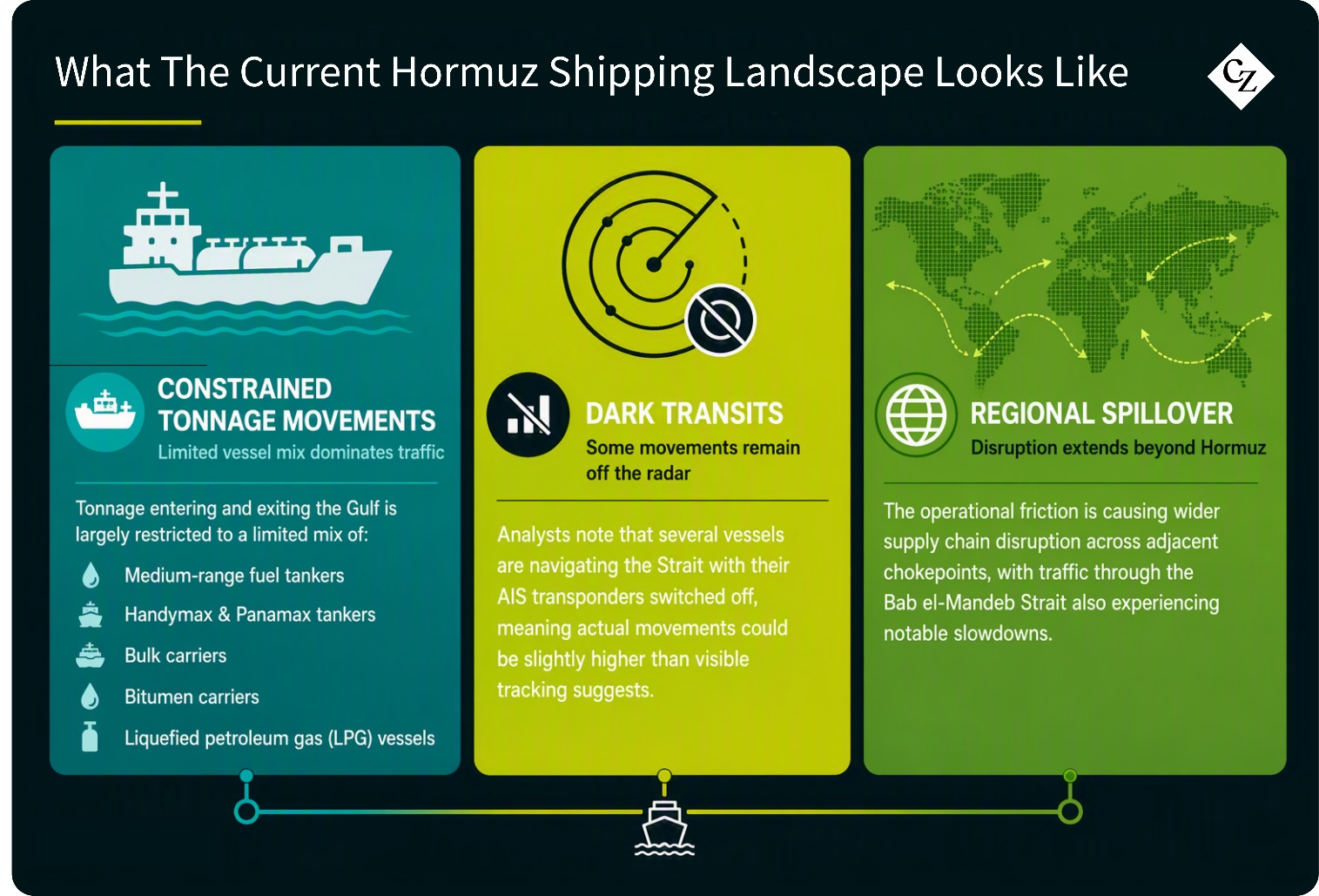
For shipowners, the economic reality of operating in the region remains severe. According to S&P Global data from July, war-risk insurance premiums for passing through the Strait have surged from a pre-war range of 1% to 3% of a ship’s hull value to a punishing 7.5% to 10%. With projectile attacks ongoing and mine-related risks unresolved, insurance costs are expected to remain sky-high, giving most global fleets little incentive to return to the Strait anytime soon.
Political Claims Contrast with Conditions on the Water
Right now, what political leaders are saying about the Strait stands in sharp contrast to what is actually happening on the water. US President Donald Trump publicly claimed that the US Navy has successfully cleared or detonated all sea mines in the chokepoint, declaring that “the Hormuz Strait is open and operating” while threatening to destroy any Iranian boat attempting to lay new mines.
Tehran, however, was quick to push back. Iranian Deputy Foreign Minister Kazem Gharibabadi insisted the strait remains firmly closed, dismissing Washington’s statements as cheap rhetoric “only aimed at calming the markets”.
Gharibabadi added that “no one except Iran knows the location of these mines” and warned that any US mine-clearing vessels entering the area would make “very good targets”.
While the US may have cleared heavily monitored primary lanes, that does not mean the waterway is safe for merchant shipping. Stray or drifting mines can easily float into open waters, and Iran still retains the ability to deploy more. More importantly, sea mines are only part of the danger.
Highlighting the ongoing threat on the water, the UK Maritime Trade Operations (UKMTO) agency reported on August 27 that a commercial tanker in the Strait was hit by an unknown projectile, starting a fire on board that crew members managed to extinguish.
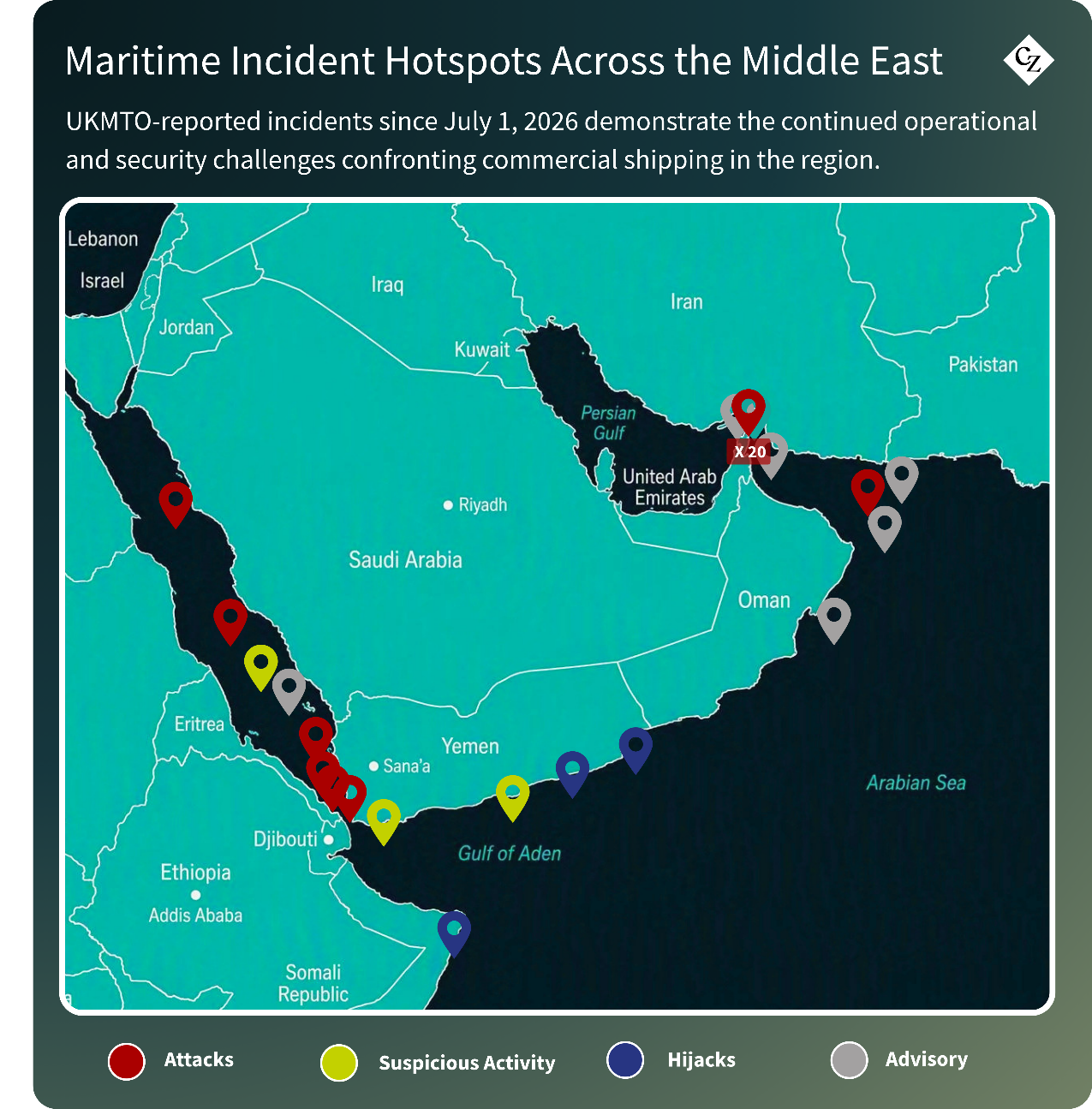
Source: UKMTO
Oman and Iran Seek a Path to Reopening Hormuz
With direct US-Iran negotiations stalled, diplomatic efforts to safely restart commercial traffic have largely fallen to Iran and Oman. Both countries border the narrow passage, which saw roughly 130 ships pass through daily before the war, moving nearly 20% of the world’s oil and gas, before traffic ground to a halt following US-Israeli strikes in late February.
Following meetings in Tehran between Iranian and Omani foreign ministers, both sides outlined a framework aimed at getting ships moving again.
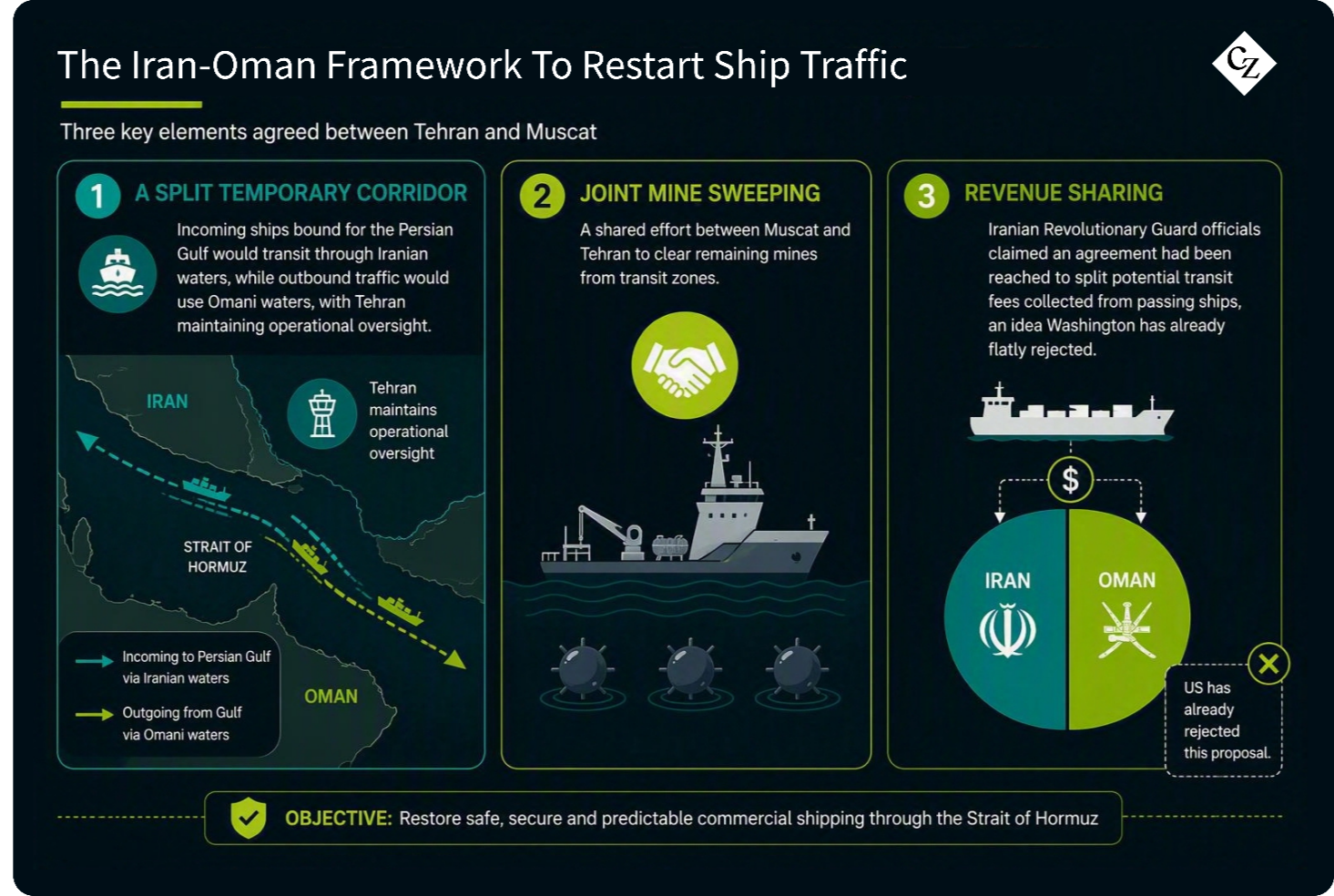
Omani Foreign Minister Badr Albusaidi hopes that practical steps for safe passage will be announced “soon,” with a permanent management plan to follow. Omani researchers note that Muscat wants to bring more Gulf states into the discussions to build a collective regional safety net, avoiding a setup where either the US military or Iran holds complete control.
Still, moving from a framework to actual implementation is proving slow. An earlier mid-June US-Iran Memorandum of Understanding tasked Oman and Iran with establishing maritime services, but that broader deal has since collapsed. While Oman wants to isolate shipping safety from the wider war, Tehran views the chokepoint as its primary bargaining tool.
US-Iran Standoff Remains the Main Obstacle
The biggest barrier to reopening the Strait remains Tehran’s strategy of linking freedom of navigation to the broader geopolitical crisis. Secretary of Iran’s Supreme National Security Council Mohsen Rezaei confirmed that while a central corridor has been temporarily opened, future traffic depends entirely on progress with the US.
Rezaei noted that mediators had requested Iran’s terms for reopening the waterway, stating that Tehran’s top priority is an immediate end to all Middle East conflicts, specifically those in Gaza and Lebanon.
Deputy Foreign Minister Gharibabadi warned that a full reopening will only happen if the US lifts its counter-blockade on Iranian ports, ends the war across all fronts, and resolves the conflict in Yemen.
On the US side, Washington is pushing back by announcing an “economic D-Day” of heavy sanctions against Iran. President Trump has even threatened Oman with potential military strikes if it obstructs US shipping, leaving Muscat in a delicate position as it tries to keep communication channels open without angering Washington.