Insight Focus
Soybean prices have fallen sharply since early October. Improving global supply prospects and Brazil’s weaker currency have weighed on prices, even as exports remain strong. Softer Chinese demand could add further downside pressure.
Larger Crops Add to Soybean Price Pressure
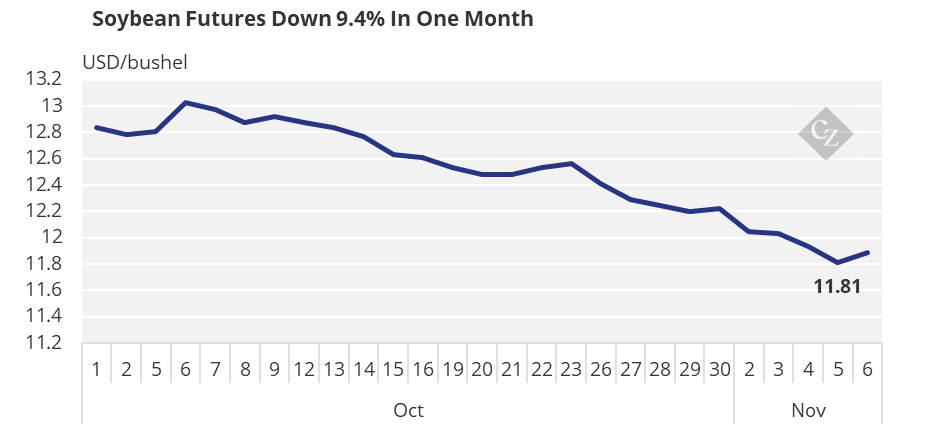
Chicago soybean futures dropped to USD 11.80/bushel in the first week of November, down 9.4% from early October, when prices were still above the USD 13 level they had held through most of September. Stronger supply expectations, a falling Brazilian currency, and tumbling prices for soybean meal and oil lined up to put downward pressure on soybean prices.
Source: CME
Improved weather during the peak harvest month bolstered estimates of the US soybean crop. The US soybean harvest was 88% complete by November 1, 4 percentage points ahead of the five-year average. The USDA’s National Agricultural Statistics Service estimated US soybean production at 4.93 to 4.71 billion bushels, a range that exceeds the previous year’s production. The November WASDE report raised its estimate of soybean yield by 0.2 bushels to 53.3 bushels/acre and estimated output at 4.574 billion bushels, or 124.48 million tonnes.
Soybean planting in Brazil was ahead of schedule, with planting 64% complete by early November. CONAB projects Brazil’s 2027 soybean crop at 181.6 million tonnes, while USDA projects 186 million tonnes. South American weather during the growing season remains highly uncertain in view of this year’s super El Niño weather pattern. Rainfall has been spotty across Brazil, and there are concerns about below-normal soil moisture in some areas, especially Mato Grosso, Brazil’s top production region.
As Argentina entered its peak October-November planting season, the USDA’s Argentina post projected an increase in the country’s 2026/27 soybean output, based on expectations of expanded planted area due to favourable prices. Soybean prices in Argentina peaked in September at values about 30% higher than the previous year and fell about 5% during October and early November. Diversion of more area to soybeans due to a plant disease affecting corn will also increase soybean area. The report anticipates improved yields due to rainfall attributed to this year’s El Niño weather event, while acknowledging that there is also downside risk if excessive rainfall leads to waterlogged fields.
Weaker Brazilian Real Pushes Soybean Prices Lower
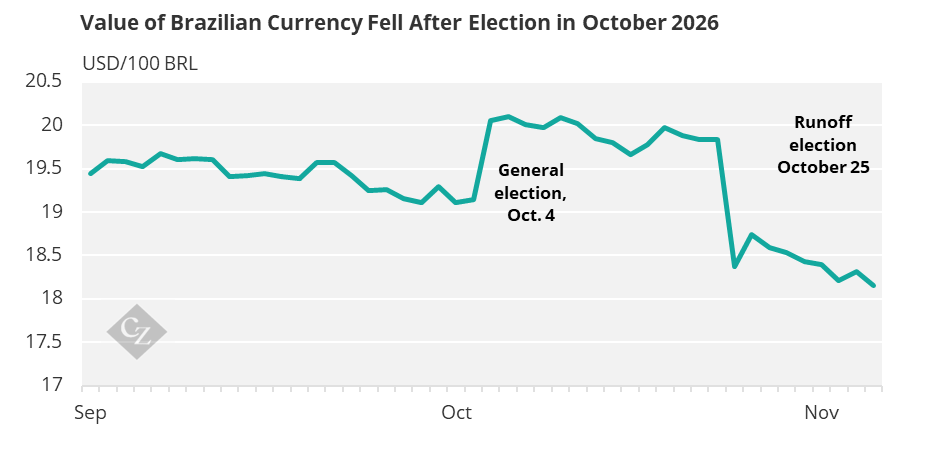
A decline in Brazil’s currency following the country’s presidential election added downward pressure on soybean prices in global markets. Challenger Flavio Bolsonaro won a plurality of votes over Brazilian President Luiz Inacio (Lula) da Silva in the October 4 election, resulting in an immediate appreciation of the Brazilian currency against the dollar. However, a depreciation wiped out those gains after Lula’s unexpected victory in the October 25 runoff. By the first week of November, the currency had fallen to USD 18.15/BRL 100, a net decline of about 7% since September.
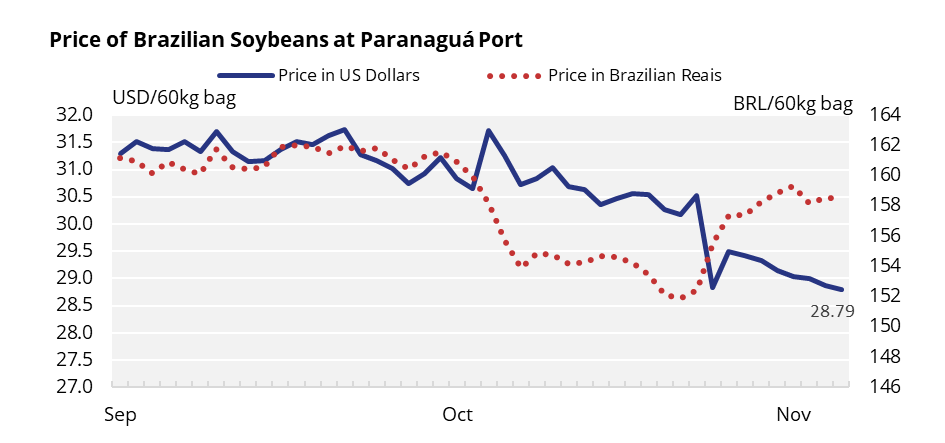
The currency depreciation aided Brazilian export sales, but it also made imported fuel and farm chemicals more expensive for Brazilian farmers. Soybeans at the Paranaguá port fell in price from about USD 31.50/60kg bag in September to USD 28.79/60kg bag in early November, a net decline of about 8.6%.
Soybean prices in Brazilian currency held their value to a greater degree. The price in BRL dropped sharply with the currency’s appreciation after the October 4 election. But prices rebounded in late October as currency depreciation stimulated demand from foreign buyers. The price at Paranaguá fell from about BRL 161 during September to BRL 159 during the first week of November. Reports from Brazil indicated that the decline in US futures prices prevented Brazilian prices from rising further.
Source: Brazil CEPEA
Soybean Exports Remain Strong Across Major Producers
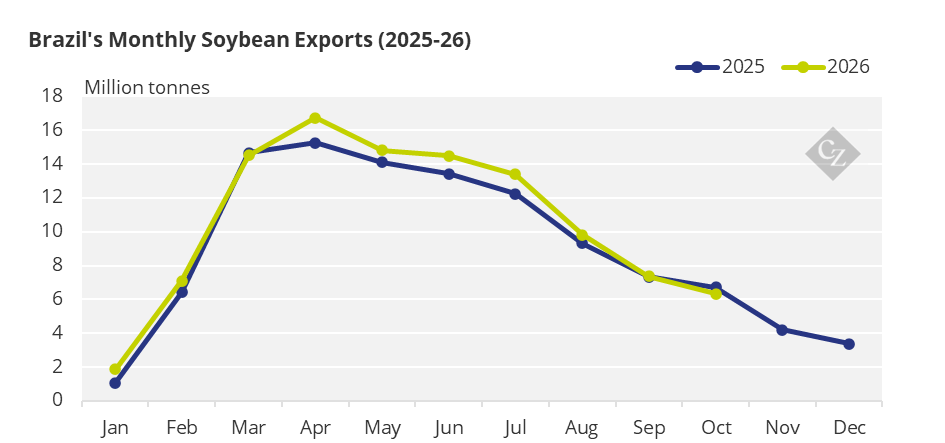
The impact on Brazilian exports during the current market year is limited, since most exports of this year’s soybeans have already been shipped, but some farmers made advance sales of their 2027 crop. Brazil’s soybean exports during October totalled 6.3 million tonnes. That brings Brazil’s cumulative January-October soybean export total to 106.5 million tonnes. Additionally, Brazil exported 28.5 million tonnes of soybean meal and 2 million tonnes of soybean oil in the first 10 months of 2026. The USDA estimates that Brazil produced 180.5 million tonnes this year.
Source: Comex
Argentina’s cumulative soybean exports for January-September 2026 totalled 4.2 million tonnes of whole soybeans, 20.8 million tonnes of soybean meal and 5 million tonnes of soybean oil. The USDA’s WASDE forecasts Argentina’s 2026/27 soybean exports at 6.75 million tonnes, soybean meal exports at 30 million tonnes and soybean oil exports at 6.75 million tonnes. USDA’s Buenos Aires post noted strong foreign demand for Argentine soybean oil in Europe and Canada as a biodiesel feedstock, with some of that oil ultimately shipped to the US for biodiesel use.
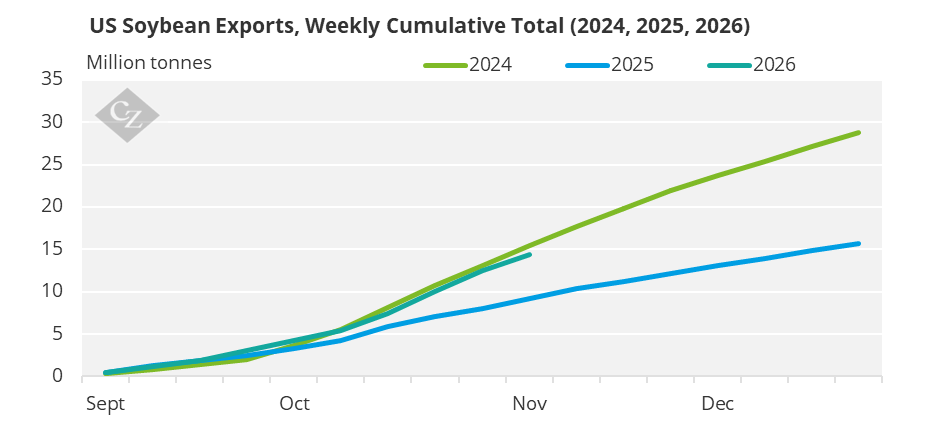
October is the peak month for US soybean export shipments. The US exported 9.4 million tonnes of soybeans during October 2026, bringing cumulative exports for the 2026/27 marketing year so far to 14.4 million tonnes. Both numbers are far ahead of volumes in September-October 2025, when China was not buying US soybeans. But the cumulative export total this year is very close to the pre-trade-war level in 2024. The USDA’s WASDE projected 2026/27 US soybean exports at 46.81 million tonnes.
Source: USDA
Slowing Chinese Demand Adds Further Pressure
China is still the top destination for both Brazilian and US soybeans, and crushing remains relatively strong. But there are signs of a moderate slowdown in Chinese demand.
The decline in US soybean futures has carried over to the Chinese market. Futures prices for soybeans, meal and oil trended down on the Dalian futures exchange. Even spot prices for domestic soybeans in China’s northeastern region reversed their bullish trend as traders became cautious in their buying. Consumer demand in China is generally weak, with most livestock products showing low prices and farms experiencing negative returns. Demand for soy-based food products is also lacklustre.
China’s soybean imports during October totalled 7.35 million tonnes, down from 11.88 million tonnes the previous month. Soybean inventories at Chinese ports fell by 1.2 million tonnes during October as crushing plants resumed operations after the October 1 Chinese holiday week, but demand for soybean meal was sluggish. Soybean meal inventories rose by about 300,000 tonnes during October to 1.39 million tonnes, the highest level since August. A small 50,000-tonne monthly increase is expected for November. Crush volume is expected to remain at 8-9 million tonnes during November and December.