Insight Focus
MPC Is Emerging as a Lower-Cost Alternative to WPC. WPC prices have surged as demand for protein-rich foods continues to grow, while tightening supplies have pushed some whey protein products to record levels. Although MPC cannot directly replace WPC in every application, it may offer a cost-effective alternative where whey-specific functionality is less critical.
Whey protein has become one of dairy’s most valuable ingredients, with applications across sports nutrition, functional foods, dairy products and beverages. Manufacturers use it to add protein to everything from supplements and shakes to snacks and ready-to-drink products.
However, growing demand has coincided with tightening supply, making whey protein concentrate (WPC) increasingly expensive and difficult to source.
This is encouraging buyers to consider other dairy proteins. Milk protein concentrate (MPC) offers similar protein levels to some WPC grades at a considerably lower price, but can it provide a viable alternative?
Why Has Whey Become So Expensive?
Whey protein has expanded far beyond its traditional role in sports nutrition. It is now commonly used in snack bars, breakfast cereals, baked goods, dairy products and ready-to-drink beverages.
Reflecting the wider demand for protein-rich foods, the average US supermarket now stocks more than 38,000 products advertising their protein content, according to AP News. This growing focus on protein is helping support demand for whey ingredients across multiple end markets.
Demand is also being supported by interest in active lifestyles, healthy ageing and weight management. The growing use of GLP-1 weight-loss drugs has added another driver, as users are often encouraged to prioritise protein to help preserve muscle mass while losing weight.
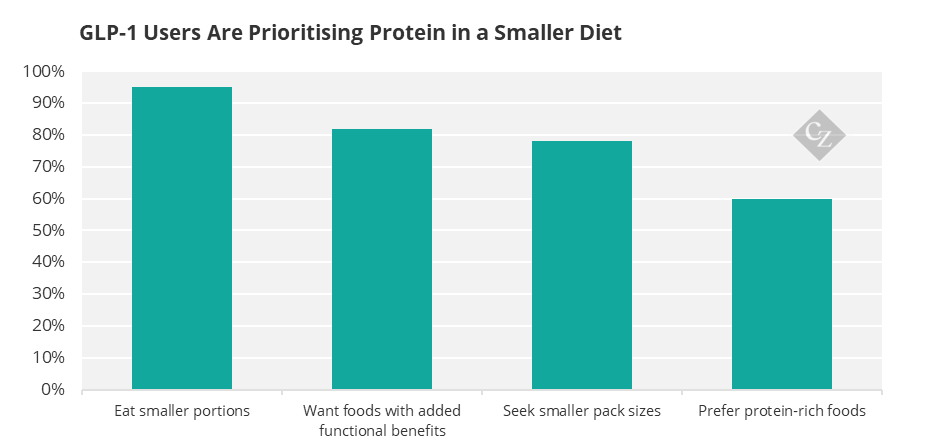
Source: AMC Global and OpinionRoute (2024), reported by Nutritional Outlook, July 2026
Supply has struggled to keep pace. Whey is generated during cheese production, but converting it into protein concentrates requires specialised filtration and drying equipment. Existing capacity limits how quickly processors can increase output, while building new facilities requires considerable time and investment.
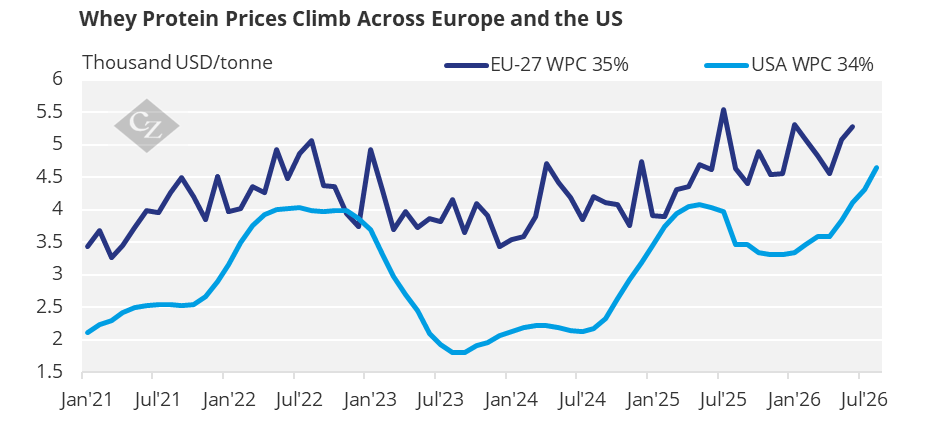
These pressures can be seen across the whey market. The chart below compares EU-27 export prices for WPC35 with wholesale prices for WPC34 produced in the Central and Western US.
Source: CLAL
US WPC34 prices rose from around USD 2,100/tonne in early 2021 to more than USD 4,600/tonne by August 2026, while EU WPC35 export prices increased from around USD 3,400/tonne to more than USD 5,000/tonne, according to CLAL. The rise in both series shows that the pressure extends across different products and regions
However, it is WPC80, a high-protein whey concentrate containing around 80% protein, that has experienced the most dramatic price increases. According to AP News, US WPC80 prices exceeded USD 13/lb (equivalent to almost USD 29,000/tonne), around 250% higher than a year earlier, while European WPC80 values reached record levels above EUR 26,000/tonne.
Additional production capacity is planned, but it will take time to become operational. In the meantime, buyers are securing available whey supplies while examining whether MPC, protein blends or other ingredients could reduce their reliance on WPC.
Could MPC Provide an Alternative?
The widening price gap has made MPC increasingly attractive.
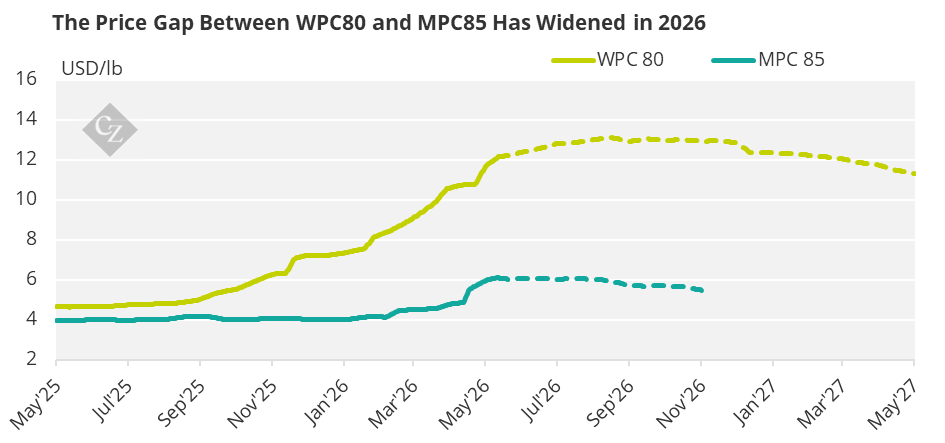
The chart below compares price forecasts for US WPC80 instant and MPC85. Both products increased sharply during 2025 and early 2026, but MPC85 remained considerably cheaper. By May 2026, WPC80 had climbed above USD 12/lb, compared with approximately USD 6/lb for MPC85.
Source: Vesper
In its May 2026 outlook, Vesper forecast MPC85 prices to flatten and then ease through the third quarter. WPC80 prices were also forecast to decline from their highs, but remain substantially above MPC85 as tight whey supplies continued to support the market.
The forecast suggests that the discount offered by MPC could remain significant even if both markets soften. However, similar protein levels do not make MPC and WPC interchangeable.
The Differences Between MPC and WPC
MPC and WPC are both protein-rich dairy ingredients produced using membrane filtration, but they come from different raw materials and contain different protein profiles.
MPC is produced directly from skim milk. Ultrafiltration removes water, lactose and some minerals while retaining the milk proteins. The resulting ingredient therefore preserves milk’s natural protein balance of approximately 80% casein and 20% whey. Common grades include MPC70 and MPC85, containing around 70% and 85% protein respectively.
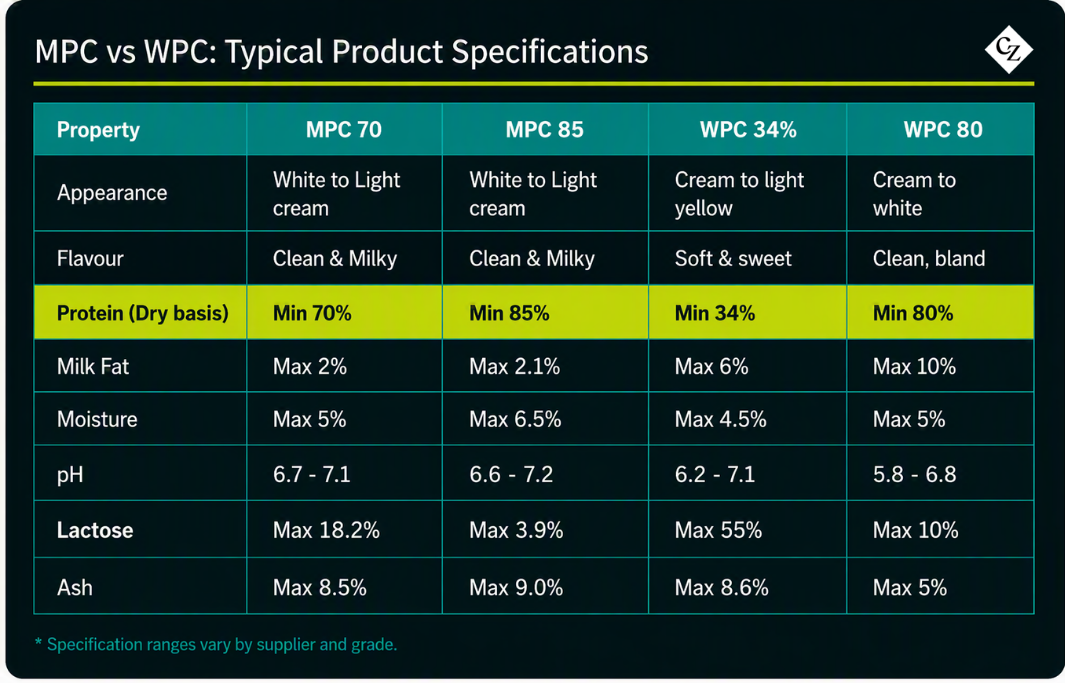
WPC is produced from the liquid whey separated during cheese manufacture. Filtration removes lactose and other non-protein components, producing a powder made up of whey proteins without casein. Common grades include WPC34 and the higher-protein WPC80. Instant WPC80 undergoes an additional processing step to help it disperse in cold water.
The main difference is therefore not simply protein concentration, but protein type. MPC85 and WPC80 both contain high levels of protein, yet MPC85 is predominantly casein while WPC80 consists of whey proteins. This affects how each ingredient is digested and how it behaves during food processing.
Consequently, similar protein content does not guarantee similar performance.
Can MPC Deliver the Same Functionality?
MPC can serve as an alternative to WPC in some applications, but rarely as a direct one-for-one substitute. Its suitability depends on the role the protein plays in the finished product.
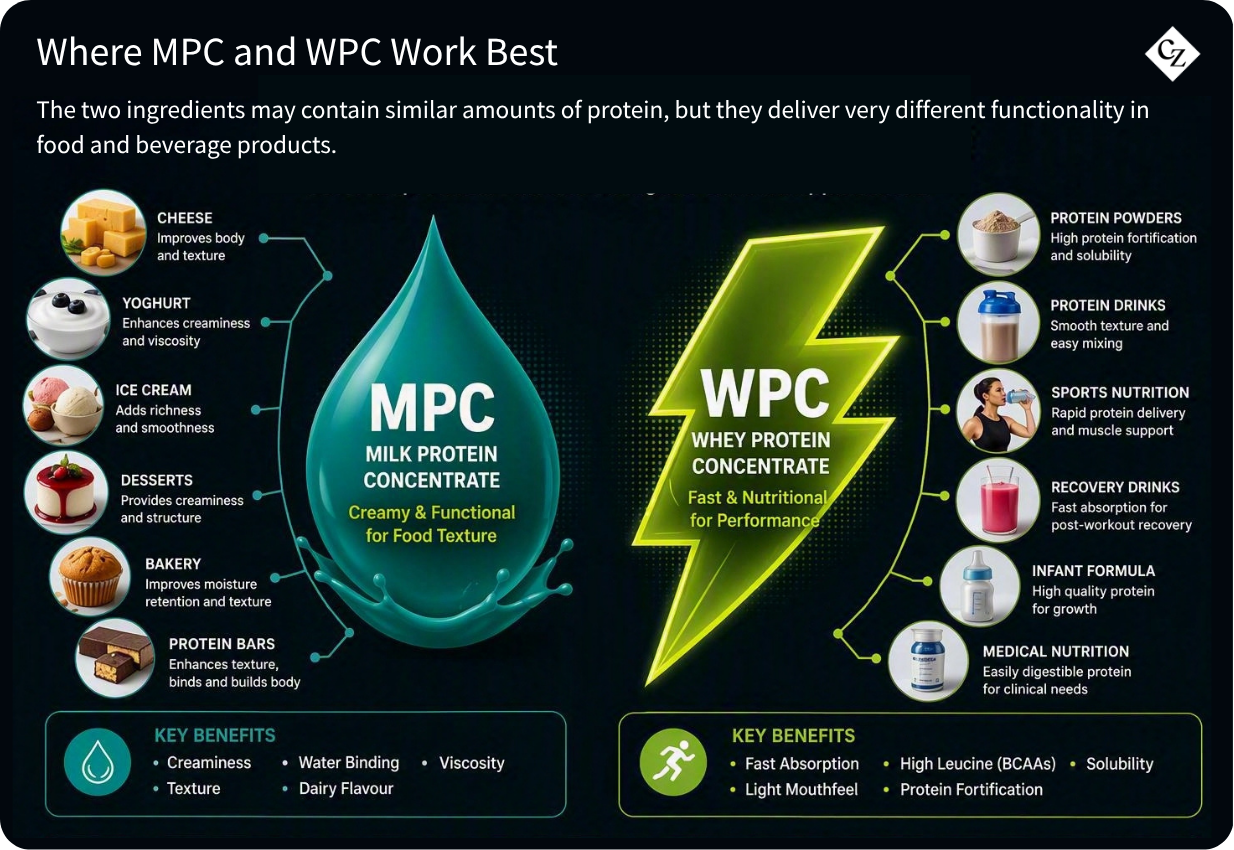
MPC’s casein content contributes water binding, viscosity, structure and a fuller dairy mouthfeel. These properties make it well suited to high-protein milk drinks, yoghurts, dairy desserts, ice cream, processed cheese and some bakery products. MPC may also work in protein bars and fortified cereals where body and moisture retention are important.
WPC has different strengths. Whey protein is digested rapidly and provides a concentrated source of branched-chain amino acids, including leucine. Instant WPC80 also disperses easily in cold water, making it particularly suitable for sports nutrition powders, shaker products and recovery drinks.
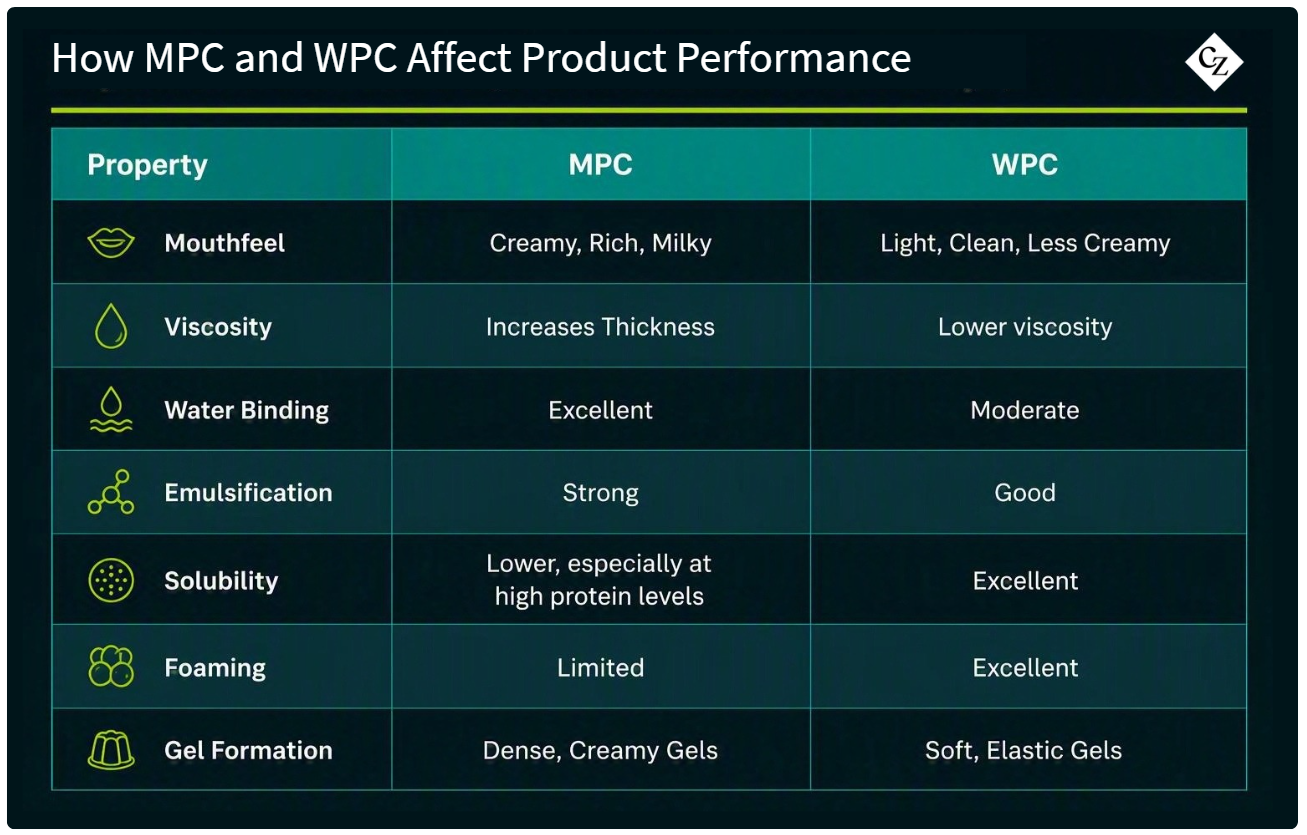
Replacing WPC with MPC can affect solubility, viscosity, flavour, heat stability and shelf life. MPC’s higher casein content can increase body and gelation, while its poorer cold-water dispersion may lead to clumping unless formulations are adjusted.
As a result, WPC remains difficult to replace in clear protein drinks, instant powders and applications where rapid protein uptake is important. Medical nutrition is more application-dependent, with some products favouring whey for rapid digestion and others using casein-rich MPC for slower protein release.
Partial substitution may offer a practical compromise. Manufacturers are increasingly considering blends containing 10-20% MPC in applications previously based on WPC80, reducing whey usage without requiring MPC to replicate all of WPC’s characteristics.
Ultimately, the opportunity depends on the application. WPC remains preferred where cold-water dispersion, light mouthfeel or whey-specific nutrition is essential, while MPC is often better suited to products requiring structure, creaminess and water binding.
Does Substitution Make Economic Sense?
Whether MPC makes sense as a substitute ultimately depends on the balance between functionality and cost. Even when a product can technically be reformulated, manufacturers must decide whether the potential ingredient savings justify the time, testing and development work required.
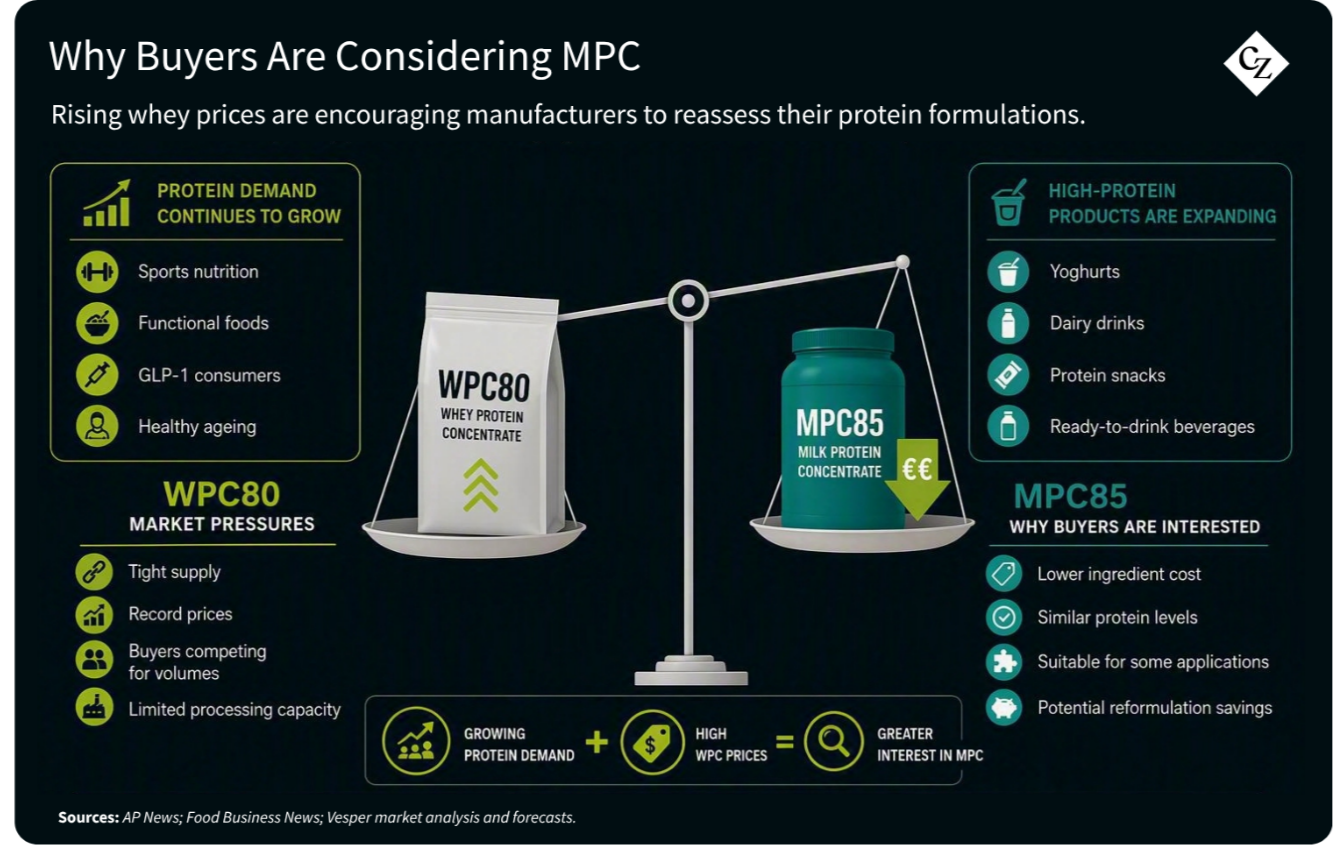
The current market environment is making that calculation increasingly attractive. High-protein product demand continues to grow, while whey protein supplies remain tight and prices elevated. At the same time, MPC often offers a considerably lower-cost source of dairy protein. Under prevailing market conditions, replacing 1kg of WPC80 with MPC85 could save approximately EUR 15, creating a strong incentive for manufacturers to explore substitution opportunities.
However, reformulation is rarely free. Product testing, processing adjustments, shelf-life validation and nutritional reviews can all add cost and complexity. The question for manufacturers is therefore not whether MPC is identical to WPC, but whether it can deliver sufficient functionality at a lower total cost.
In many cases, the answer may be yes. Where whey-specific properties such as rapid protein delivery, high solubility or cold-water dispersion are less critical, MPC may provide an attractive balance between performance and economics. Rather than replacing WPC entirely, many manufacturers are exploring partial substitution or blends that reduce ingredient costs while maintaining product quality.