Insight Focus
Welcome to our monthly overview of the soybean, corn and wheat markets. Here, we provide a summary of key events that happened in September and provide some details on what to look out for this month.
Forward View
-
Wheat and barley markets are likely to remain supported by Black Sea disruption and weather-related quality risks, with export flows, El Niño developments and planting intentions key market watchpoints.
-
Corn prices are expected to remain rangebound but volatile, as weaker European supplies and lingering US yield uncertainty compete with harvest pressure and the potential reopening of Black Sea export routes.
-
Soybean sentiment remains broadly bullish, supported by strong US crush and Chinese demand, although South American crop development, El Niño risks and US-China trade relations could increasingly influence price direction.
Wheat Supply Concerns Remain Elevated
Throughout September, wheat markets were pulled between bearish government forecasts and increasingly bullish geopolitical risks. The month began with prices rallying as escalating attacks on Russian and Ukrainian export infrastructure disrupted Black Sea shipments and raised doubts over future supplies. Importers increasingly sought alternative origins, with buyers turning to EU, Baltic and US wheat as concerns over Black Sea reliability grew.
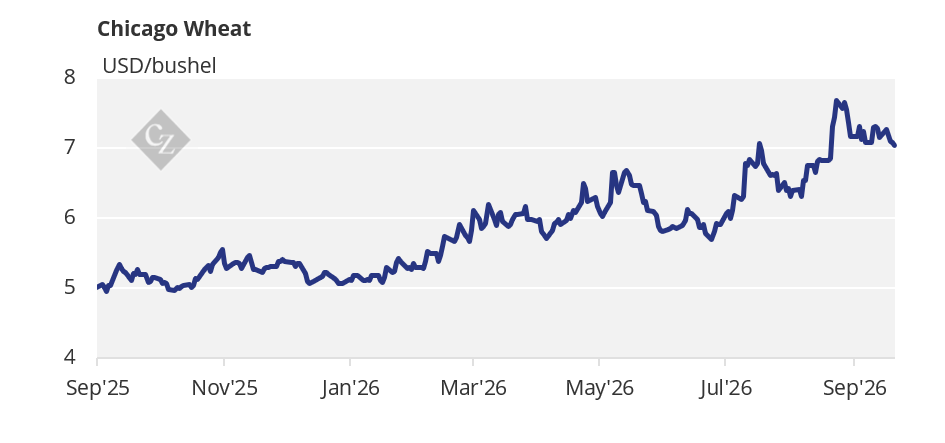
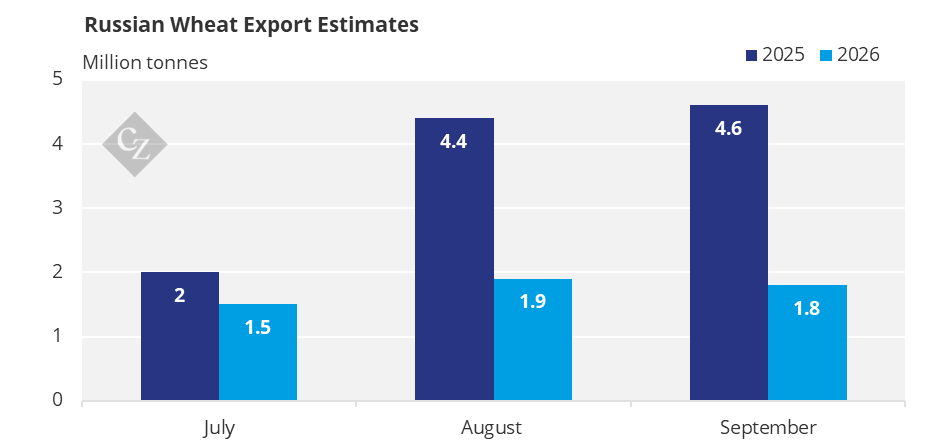
Sentiment shifted after the USDA’s September WASDE report increased global wheat production and ending stocks estimates, triggering a sell-off in wheat futures. Yet many questioned whether official export forecasts fully reflected the severity of disruption in the Black Sea. Russian and Ukrainian exports remained well below year-ago levels, reinforcing concerns over tightening global trade flows.
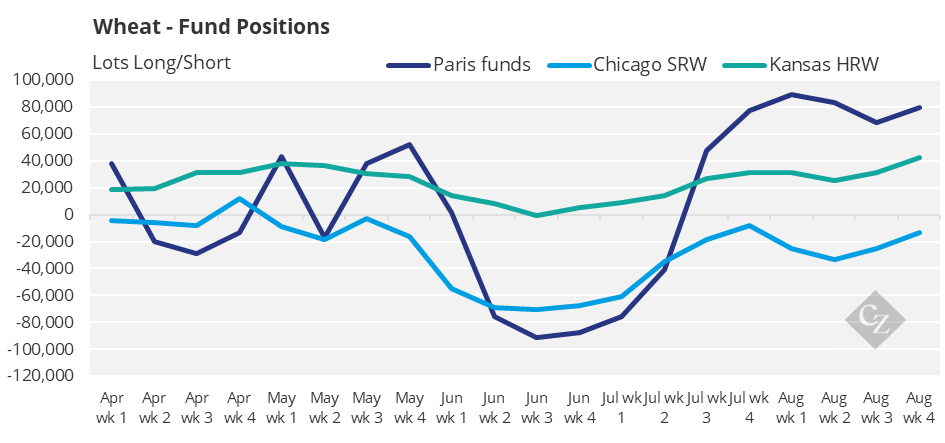
Despite weaker prices, underlying fundamentals stayed supportive. Investment funds maintained their largest bullish wheat position since 2022, reflecting expectations that export disruptions would outweigh short-term bearish influences.
Towards month-end, attention turned to weather and future production. Concerns over Canadian wheat quality, El Niño risks in Argentina and Australia, and the possibility of reduced 2027 plantings due to profitability and logistics constraints left the market viewing global wheat supplies as increasingly vulnerable.
Quality Risks Overshadow Barley Supply Outlook
Barley markets remained closely tied to wider grain markets during September, with prices retreating after earlier speculative buying pushed values sharply higher. Despite the pullback, feed barley remained competitive in livestock rations, supported by firm corn markets and uncertainty over European maize supplies.
The main concern was crop quality rather than production. Persistent rainfall across Canada and the northern US slowed harvest progress and increased the risk of sprouting, threatening malting barley quality and export specifications. Traders closely monitored whether Canadian supplies could continue meeting requirements for key buyers such as China and Saudi Arabia.
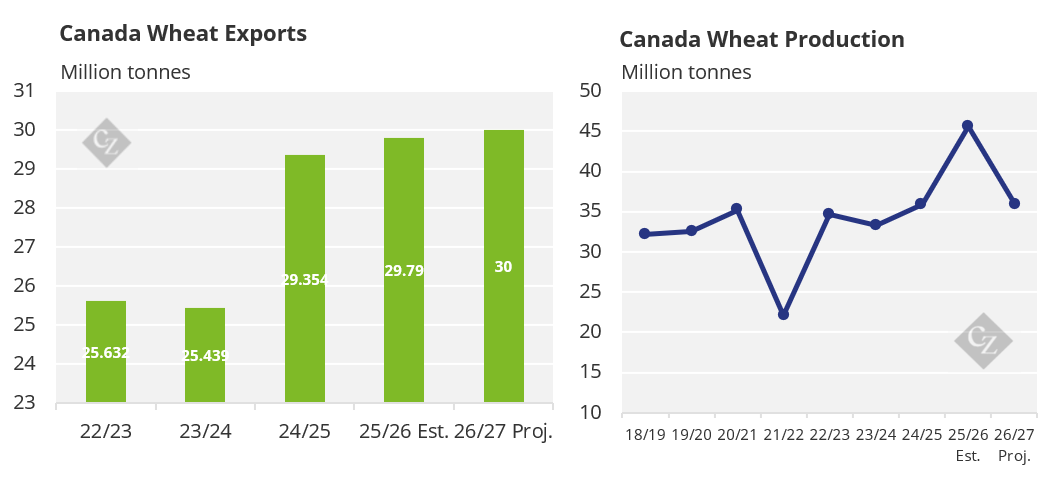
Attention also focused on the Southern Hemisphere, where rainfall improved crop prospects in Argentina and Australia, although El Niño remained a key risk. Meanwhile, continued disruption in the Black Sea and Middle East added pressure to logistics, energy markets and farm margins. As a result, barley markets ended September balancing quality concerns and geopolitical uncertainty against improving Southern Hemisphere crop prospects.
Corn Balances Supply Concerns and Harvest Pressure
Corn markets spent September balancing tightening supply concerns against harvest pressure and geopolitical developments. The month began with support from expectations of lower US yields, following concerns raised by hot weather and the Pro Farmer crop tour. Attention quickly turned to the September WASDE report and the prospect of tighter stocks.
The USDA lowered projected US corn yield to 178.5 bushels per acre, largely matching expectations and triggering profit-taking rather than a fresh rally. Nonetheless, tightening US and European balance sheets continued to support expectations for Chicago corn around USD 5.00-5.50/bushel.
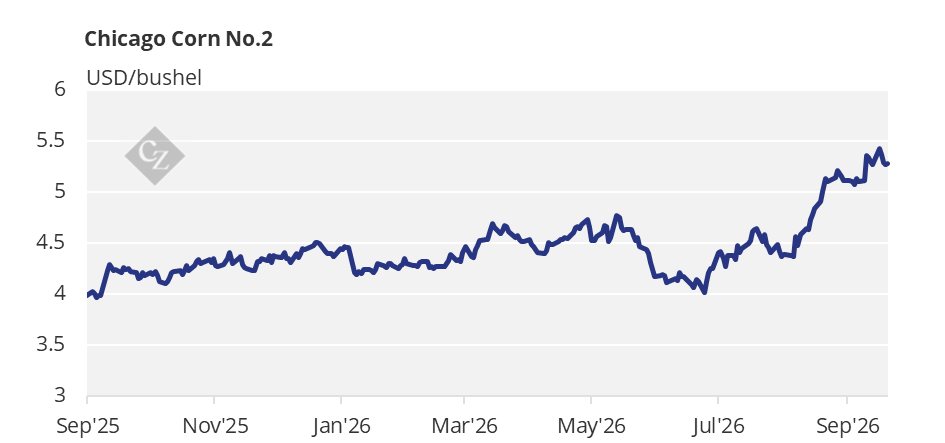
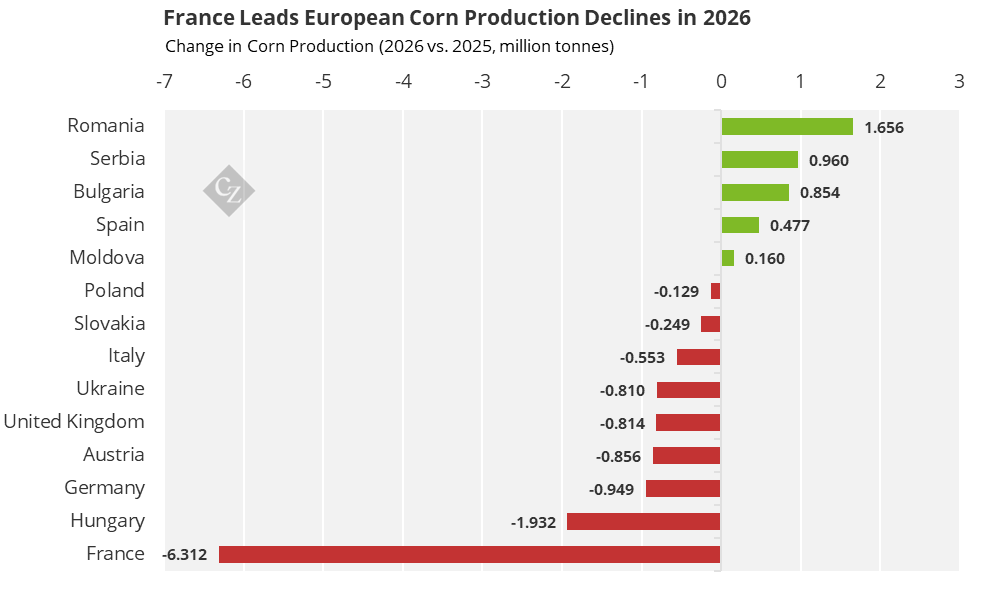
Supply developments diverged sharply across regions. France faced one of its worst corn crops in decades, with wider EU production forecasts repeatedly lowered, while Brazil and Argentina increased output forecasts and planting progressed well. Analysts also warned that final US yields could still disappoint as harvest data emerged.
Geopolitics remained a major driver, with developments surrounding Ukraine-Russia negotiations and potential Black Sea export corridors repeatedly influencing grain markets. By month-end, strong US harvest progress and commercial hedging were capping gains, although reduced European supplies and lingering yield concerns continued to provide support.
Strong Demand Fuels Soybean Market Rally
Soybeans were among the strongest-performing agricultural markets in September, with prices reaching their highest levels in nearly three years.
The rally was driven by strong demand, weather-related production concerns and continued Chinese buying. US soybean futures traded above USD 13/bushel as robust crushing activity and export demand outweighed expectations for larger global supplies.
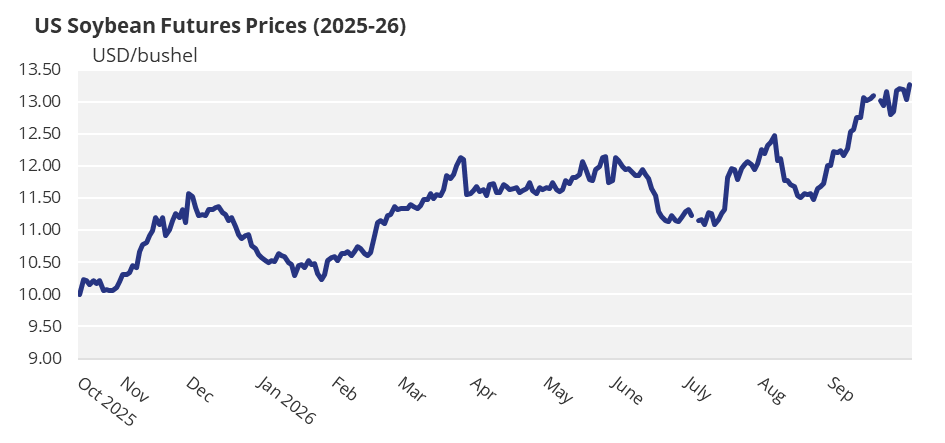
Demand remained a central theme. The US crush industry continued to expand, supported by soybean oil demand from biodiesel production, while NOPA reported record August crush volumes. Export demand also stayed firm, with China accounting for a large share of early-season US sales and purchases exceeding 10 million tonnes for the 2026/27 marketing year.
Meanwhile, markets closely monitored China and South America. China’s import outlook remained uncertain, while Brazil began planting its new soybean crop under the shadow of a potential “super” El Niño. Rising Brazilian prices, strong exports and weather concerns added further support to global markets.
By the end of September, soybean markets were balancing strong demand against the prospect of larger South American supplies. However, record US crushing, resilient Chinese demand and uncertainty surrounding weather and trade policy kept sentiment broadly bullish throughout the month.