Insight Focus
Public coverage has brought 700,000 new US seniors onto GLP-1 treatments since July, according to Eli Lilly. As access expands, food-sector analysts are trying to quantify the commercial impact. A new estimate identifies USD73 billion of global food-brand value as exposed, with snacks and confectionery facing the greatest pressure.
US Public Coverage Brings New Users
Lower prices and wider healthcare coverage continue to make GLP-1 treatments easier to access. David Ricks, chief executive of Eli Lilly, said 700,000 US seniors had started GLP-1 treatments since a temporary Medicare coverage programme began in July.
Through the programme, eligible patients can access Wegovy, Zepbound or Foundayo for a USD 50 monthly co-payment. Ricks said Eli Lilly medicines accounted for around 70% of the new patients, with its injectable treatment Zepbound attracting most users. Foundayo, its once-daily pill, accounted for around one-third of new oral GLP-1 patients. These are figures provided by Eli Lilly, rather than published Medicare data, but they offer an early indication of how strongly uptake can respond when treatment becomes more affordable.
This supports the pattern covered in our previous updates. Uptake has been limited partly by high patient costs, but government support and greater competition are steadily lowering that barrier.
Wegovy Pills Reach the EU
Oral GLP-1 treatments are also reaching more European consumers. On 1 September, Wegovy tablets became available in German pharmacies, making Germany the first EU market to sell the oral treatment.
The tablets cost around EUR 170 to EUR 280, depending on dose, and patients must currently pay privately. The same treatment had already launched in the US and UK. The German launch does not remove the cost barrier, but it broadens the availability of a daily pill that does not require refrigeration or weekly injection.
The launch adds to the evidence that pills are becoming an important route into GLP-1 treatment. They may attract people who do not want injections, while being easier to store and distribute. If more European markets follow Germany, the number of consumers whose food choices are affected could continue to rise.
Food Brands Put a Price on the Exposure
As access expands, the food industry is starting to quantify what GLP-1 use could mean commercially. A new analysis from Brand Finance estimates that USD 73 billion of the value represented by the world’s 100 most valuable food brands is exposed to GLP-1-related changes in eating behaviour. The brands assessed have a combined value of USD 278 billion.
The exposure is concentrated in indulgent categories. Confectionery, chocolate and savoury snacks account for 53% of the value considered at risk, despite representing only 30% of the brand value assessed. Lay’s was identified as the most exposed individual brand, with USD 6.8 billion of its USD 15.1 billion value in potentially affected categories.
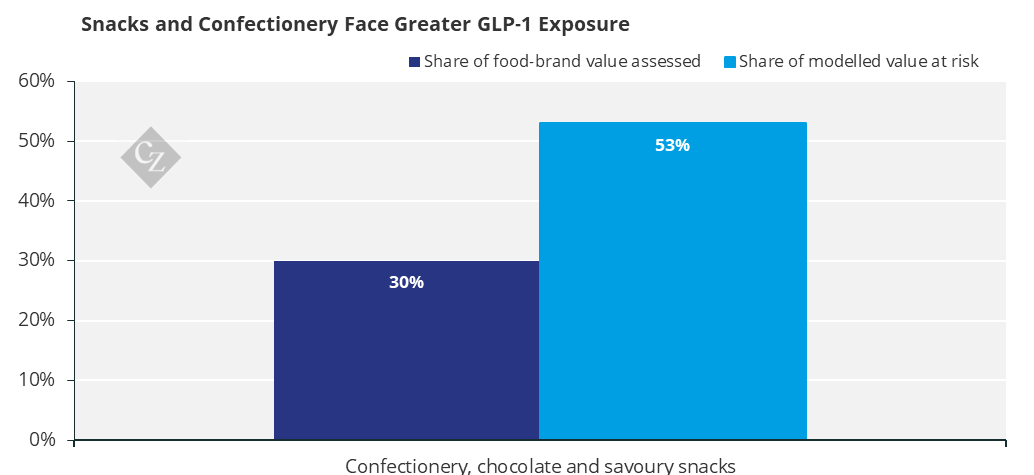
Source: Brand Finance, as reported by Food Dive, September 17
These figures should not be seen as a forecast that USD73 billion of brand value will disappear. Brand valuation depends on assumptions about future sales, consumer loyalty and long-term growth. However, the analysis shows where investors and food companies currently see the greatest exposure.
The concern is that millions of purchases may become smaller or less frequent, while some spending moves towards products with more protein, fibre or nutritional value.
Dairy Protein Prices Rise
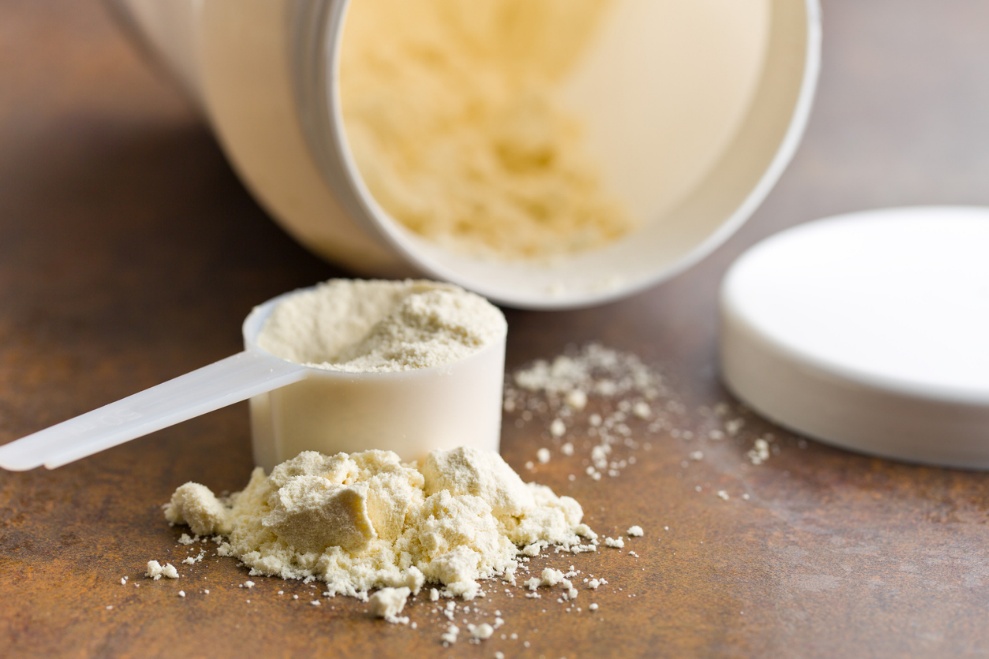
Intriguing news has emerged in the UK this month too. The BBC has run a news story about the 60% increase in the price of whey protein in the past year. They had unattributed claims that GLP-1 receptor agonist drugs might be leading to increased protein demand and so be responsible for some of the price rise, which then knocks onto things like infant formula.
We’ve been unable to find any rigorous data that the growth in whey protein consumption in the UK is partially due to increased GLP-1 uptake, though we suppose it may be possible. The other possible factors such as a lack of dairy processing capacity to make whey or increased Chinese dairy demand might be too abstract and so receive less attention.