Insight Focus
Grain prices are falling, but supply remains fragmented. Large harvests in the Americas are easing global supply pressure, while Black Sea disruption and uneven crops are reshaping trade. Regional shortages, quality differences and logistical constraints mean buyers must look beyond headline prices to secure suitable grain at competitive delivered costs.
Global Grain Supply Looks Comfortable
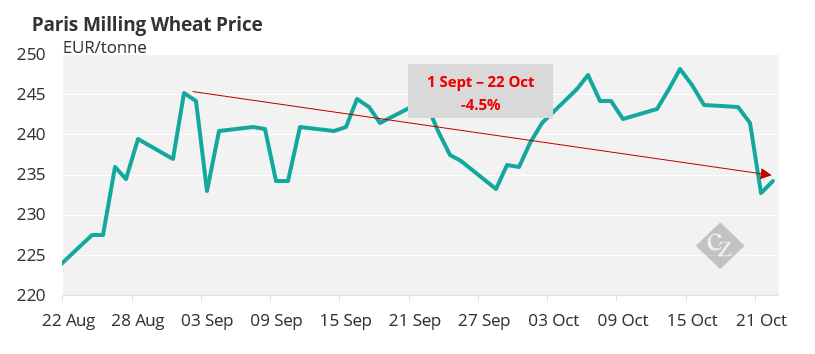
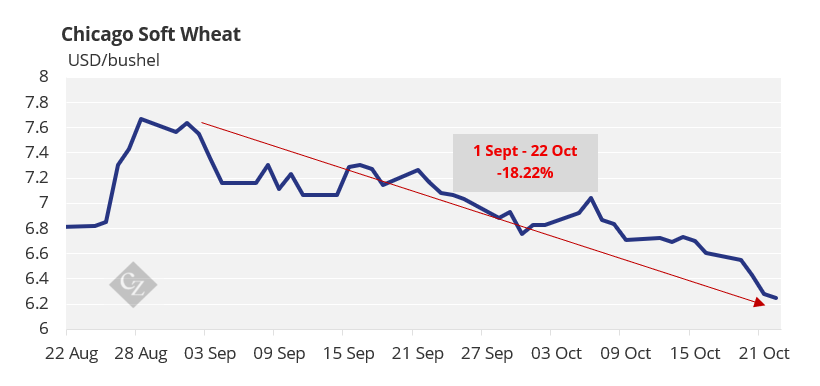
Grain markets came under broad pressure during October as improving harvest prospects and larger crops reinforced expectations of comfortable global supply. In the US, particularly, stronger corn and soybean production weighed on prices, while wheat also struggled as buying remained cautious.
Yet this apparently bearish picture masks considerable regional differences. European grain markets have generally been better supported where local production has disappointed, while quality issues have created additional premiums in some wheat and barley markets.
Black Sea Disruption Is Reshaping Trade
The most consistent source of uncertainty remains the Black Sea. Disruption to Russian and Ukrainian infrastructure has restricted grain movements and encouraged importers to look elsewhere. European exporters have been among the main beneficiaries, particularly in wheat and barley, while alternative suppliers including Australia, Argentina, Canada and potentially the US are competing to fill gaps depending on price, quality and destination.
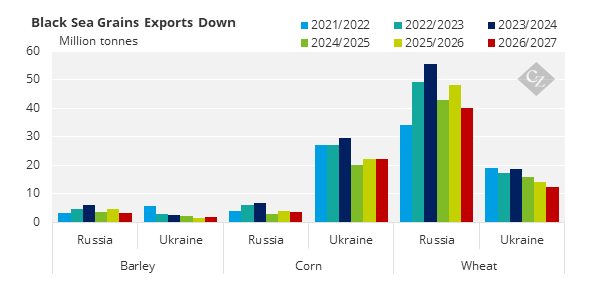
This has created an important disconnect between futures markets and physical trade. Prices may be falling overall, but grain is not necessarily available where buyers need it, in the quality required or at the most competitive delivered cost.
In wheat, Europe has held up better than the US partly because of its proximity to markets traditionally supplied through the Black Sea. Similar regional divergence has emerged in corn, with abundant US supplies contrasting with much tighter European availability.
Quality Matters as Much as Quantity
Weather has added another layer of fragmentation. European heat affected corn production and barley quality, while wet conditions complicated Canadian barley and wheat harvests. By contrast, favourable conditions improved prospects elsewhere, particularly for South American soybeans and Australian barley. The result is a market in which aggregate tonnage can appear comfortable while particular grades or specifications remain tighter.
That distinction is especially important for malting barley and higher-quality milling wheat, where supplies cannot always be replaced directly by lower-grade material. Feed markets have greater flexibility, allowing wheat, barley and corn to compete more directly where economics permit.
Buyers Have More Choice, but Origin Matters
Changing regional competitiveness is consequently redirecting trade. Lower US prices improve the potential competitiveness of American grain after earlier strength restricted export sales, while reduced Black Sea availability has opened opportunities for European and other exporters.
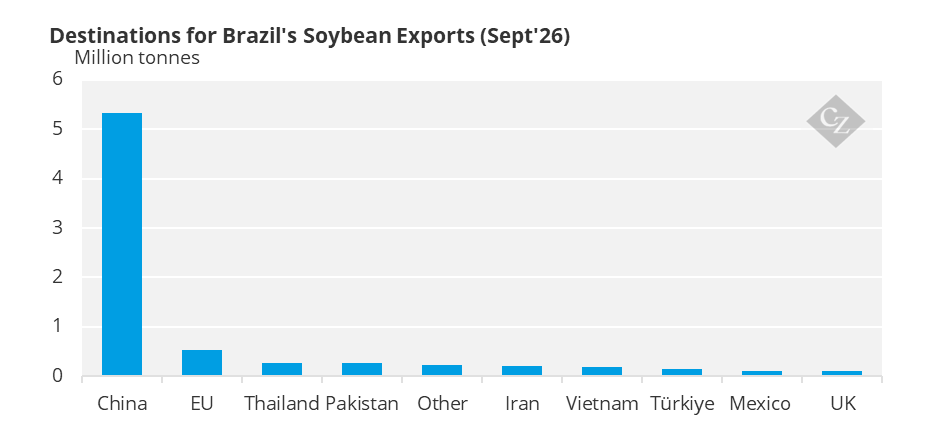
Soybeans tell a slightly different story: US shipments strengthened following renewed Chinese buying, but Brazil remains deeply embedded in Chinese supply and South America’s expanding crops continue to weigh on the longer-term outlook.
Supply Pressure Meets Geopolitical Risk
The overall message is therefore more nuanced than the recent fall in grain prices suggests. Large crops and improving harvest availability are creating downward pressure, particularly in the Americas, but geopolitical disruption, regional crop problems and quality differences are preventing that supply from translating evenly across the world market.
The grain market is becoming less about whether the world has enough grain in aggregate and more about where that grain is located, whether it can move freely, what quality it offers and whether it is competitive when it reaches the buyer. That tension between comfortable headline supply and constrained physical availability is the clearest theme running across wheat, barley, corn and soybeans.