Insight Focus
Brazil’s bean exports are booming, driven by strong demand from India. Exports jumped 91% in 2025 to more than 500,000 tonnes, and another 256,000 tonnes had already been shipped by July 2026, keeping Brazil on course for another strong year. To meet growing demand, particularly for black gram used widely in Indian cuisine, producers are expanding cultivation in key agricultural states such as Mato Grosso and Tocantins.
After setting a record for bean exports in 2025, when shipments reached 533,200 tonnes, nearly twice the 2024 level, Brazil is poised to achieve another strong result this year. Between January and July, exports reached about 256,000 tonnes, a 17% increase compared to the same period last year, according to Comex.
“It is possible to reach a significant volume again, but we cannot guarantee a new record. That depends on various factors, such as supply, demand and international price trends,” says Marcelo Lüders, president of the Brazilian Institute of Beans and Pulses (Ibrafe), in an interview with CZapp.
India is expected to remain the top destination for Brazilian exports. The country is one of the world’s largest consumers and producers of beans, followed by Brazil and Myanmar.
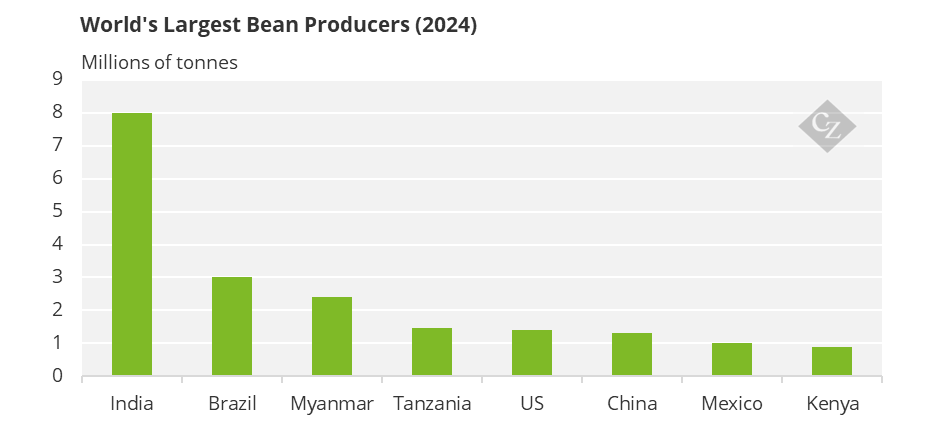
Source: FAOSTAT
In 2025, Brazil shipped approximately 318,500 tonnes of beans to Indian ports, equivalent to nearly 60% of total exports, marking a 91% increase compared to 2024. This result was driven by factors ranging from crop failures in India to increased supply in Brazil.
In recent years, Brazil has begun investing more in varieties such as black gram, for which there is strong demand in India. This crop is widely used in cooking, including in batters and stews, and in the production of flour.
In Brazil, black gram production is expanding in states such as Tocantins and Mato Grosso. It is cultivated during the second harvest season, alongside crops like corn, sesame and sorghum.
International market prices make it a profitable venture. On average, the beans are shipped at more than USD 800/tonne, nearly three times the price paid for corn. With supply limited to a few global agricultural hubs and demand rising, driven by the grain’s high nutritional value and growing appreciation for plant-based protein sources, prices have remained at relatively high levels.
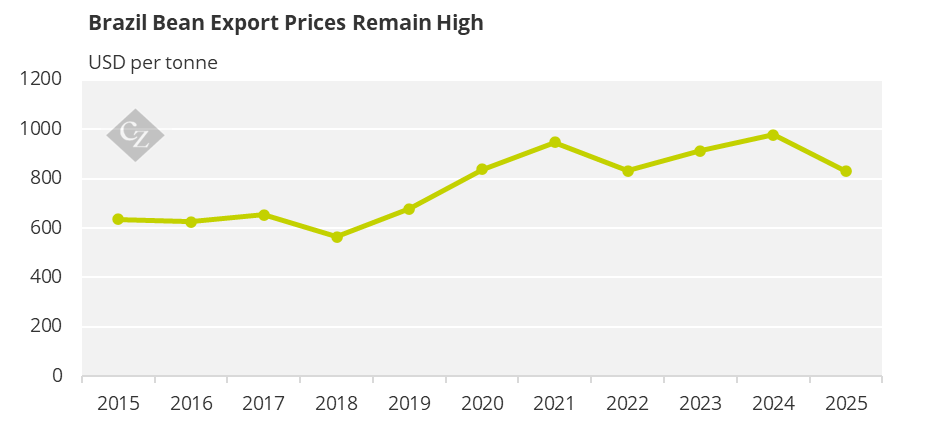
Source: Comex
Rising demand for pulses, high-protein, nutrient-rich grains such as beans and chickpeas, also helps keep prices high despite fluctuations over the years. Brazilian pulse exports grew by 30% in 2025 compared to the previous year, reaching approximately USD 448.1 million, according to Comex.
Beans, rich in protein and iron, are driving this trend. “Brazil has been directing part of its production to the international market,” says Lüders.
We spoke with him about the export boom, key markets and what could come next for Brazil’s bean industry.

Marcelo Lüders, photo courtesy of Ibrafe
Why did bean exports increase so much in 2025?
The primary factor was the strong growth in black gram shipments to India. Brazil rapidly established a significant position as a supplier, benefiting from Indian demand, product availability and the ability to produce during windows that differ from those of other countries.
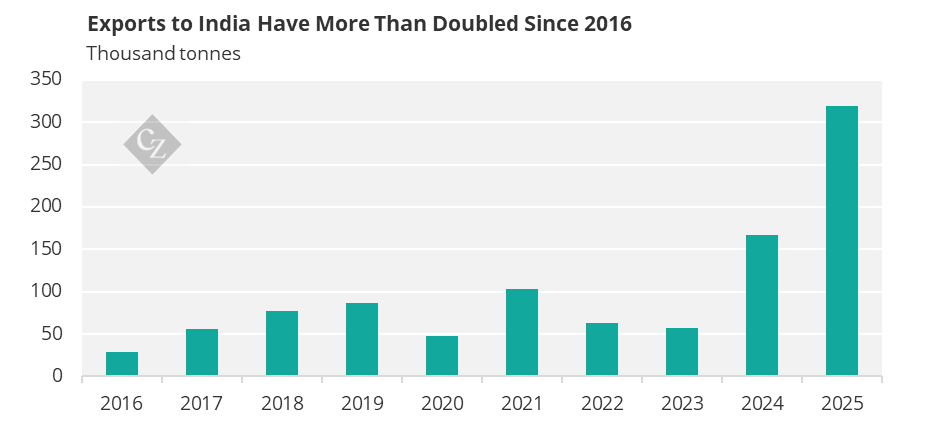
Source: Comex
In 2025, Brazilian bean exports reached more than 500,000 tonnes. This marked a significant shift: Brazil moved beyond exporting occasional surpluses and began developing a portion of its production specifically for the international market.
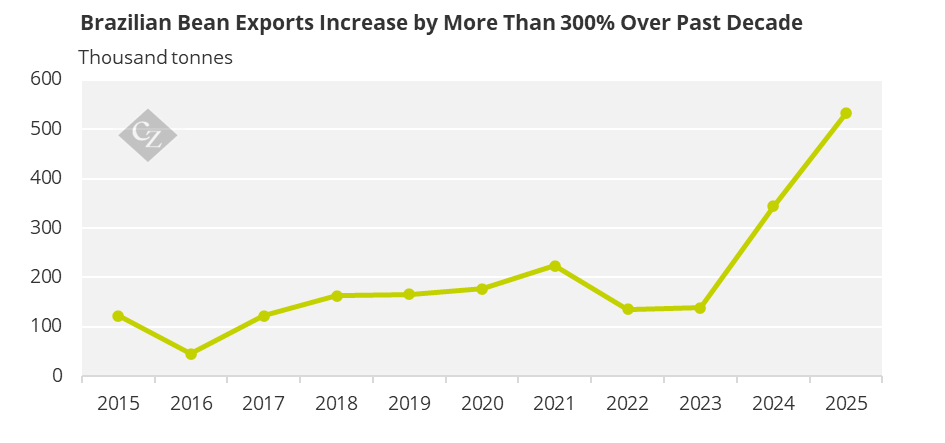
Source: Comex
This result also reflects a transformation built over the last 15 years. During this period, Brazil went from having approximately three varieties with a significant presence in the international market to more than 20 exportable varieties. In a short time, we could reach 25.
Is Brazil expected to repeat its 2025 export performance this year?
It is possible to achieve significant volumes again, but it the 2025 record will not necessarily be repeated. Ibrafe’s estimate for 2026 is closer to 420,000 tonnes, although the final outcome depends primarily on purchases by India, international prices, supply from competing countries and the pace of shipments during the second half of the year.
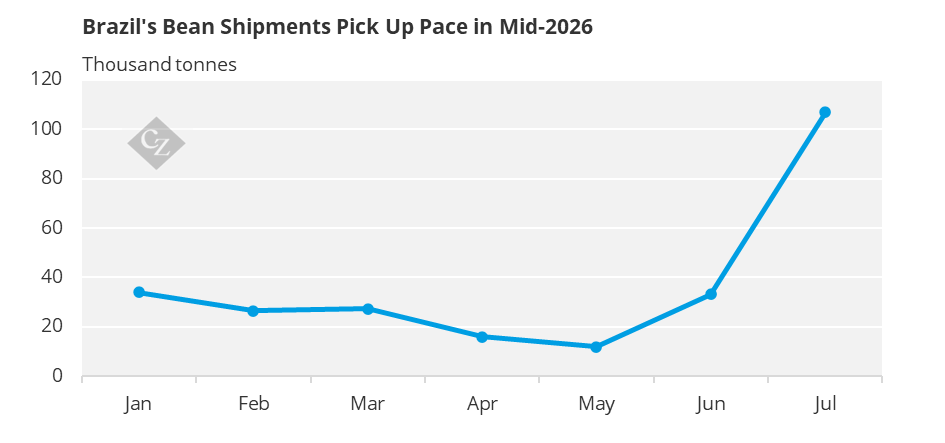
Source: Comex
The Indian market can rapidly alter tariffs, import regulations and purchase decisions. Therefore, the 2025 outcome should be viewed as an important benchmark rather than a guaranteed volume for subsequent years.
Over-reliance on a single destination also poses a risk. Brazil needs to maintain India as a strategic partner while simultaneously developing markets such as China, Pakistan, the EU, Latin America, the Middle East, Southeast Asia and North Africa.
Earlier this year, Brazilian and Indian officials discussed a phytosanitary agreement that could open the Indian market to Brazilian pigeon peas. Have those negotiations advanced?
Not yet. The matter is still being negotiated between the Brazilian and Indian governments. Pigeon peas are included in a broader list of agricultural products being discussed by the two countries, but a phytosanitary agreement has not yet been finalised. However, India is already a strategic market for Brazil, especially for black gram.
Are there negotiations with other countries regarding phytosanitary agreements?
Yes. Brazil is continuously working to expand the number of countries authorised to receive our beans and pulses. Many of these efforts are part of broader negotiations involving various agribusiness products and trade reciprocity criteria.
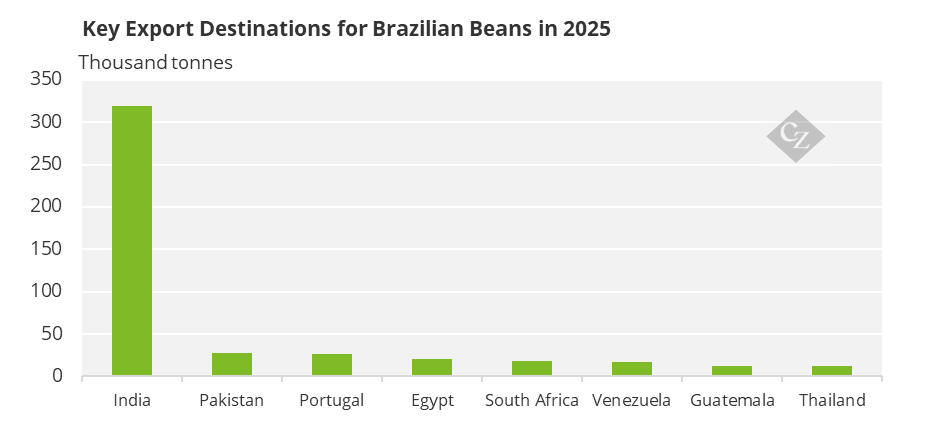
Source: Comex
Faced with climate uncertainties, wars, trade restrictions and shifts in international supply routes, Brazil’s strategy is to establish agreements with as many countries as possible.
Market opening, achieved through the signing of phytosanitary agreements, does not mean exports will begin immediately. Rather, it ensures that when demand or need arises, Brazil already has the formal authorisation to export. This reduces response times and provides greater certainty for both the importing country and the Brazilian production chain.
India is currently Brazil’s largest market, but where else do you see opportunities for growth? Could Pakistan and China become important destinations in the years ahead?
Yes. Pakistan can represent a good opportunity, especially given its status as a traditional consumer of pulses. However, it is a market sensitive to prices, currency availability, government decisions and competition from established suppliers.
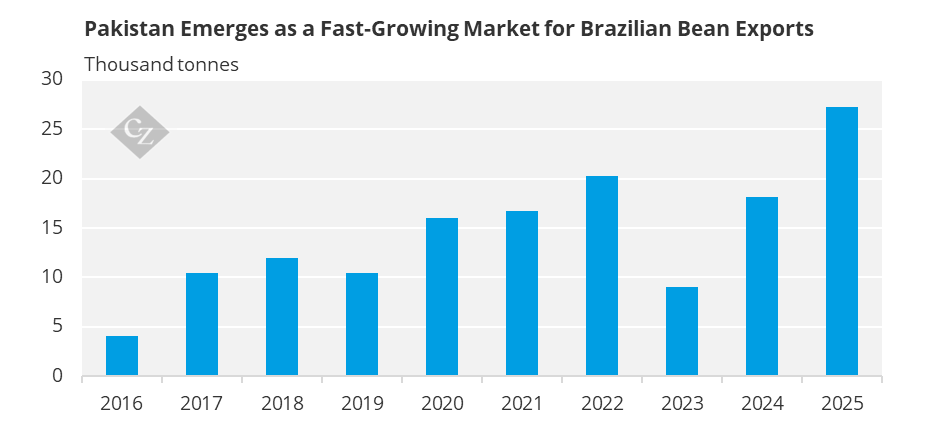
Source: Comex
China could represent an even greater and more diverse opportunity, particularly for mung beans, adzuki beans, and products destined for sprouts, starches, ingredients and proteins. However, the Chinese market is not yet formally open to Brazilian beans (note: a phytosanitary agreement between Brazil and China allowing for the export of beans is still pending).
Are Brazilian producers increasing the cultivation of the varieties most in demand abroad?
Yes, especially in the case of black grams. Export growth has sparked interest and stimulated the cultivation of these varieties.
Brazil has seen significant progress. Fifteen years ago, we had about three exportable varieties. Today, there are over 20, and we could reach 25 before long. This enables us to serve very diverse markets.
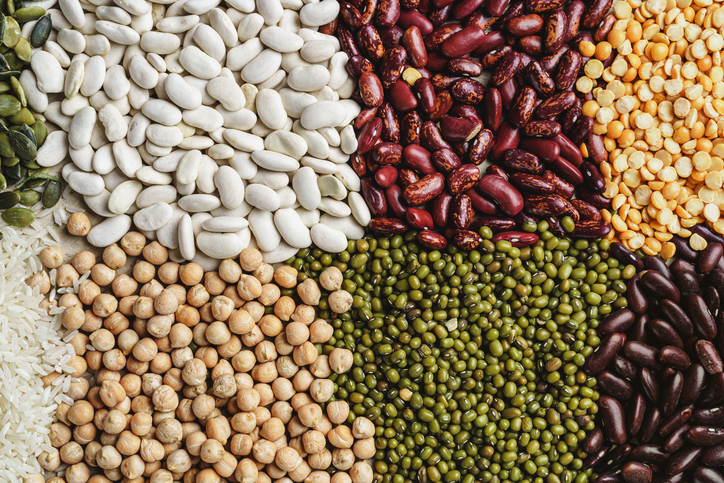
If Europe signals demand for Alubia, Navy, Slow Darkening Cranberry or Dark Red Kidney beans, for example, Brazil has the capacity to produce them. If Asian markets require mung beans or adzuki beans, we can meet that need as well. For Latin America, we have the capacity to supply black beans, as we already do, along with other varieties.
This flexibility is one of Brazil’s key competitive advantages, but production growth must be accompanied by real demand and reliable trade relationships.
Has Brazil’s Central-West been shifting more toward export-oriented varieties?
Yes. Growth in export-oriented varieties is taking place mainly in the Central-West and in parts of Matopiba, an agricultural region made up of Tocantins and parts of Maranhão, Piauí and Bahia, with Mato Grosso, Goiás, Tocantins, Bahia, Maranhão and Piauí standing out.
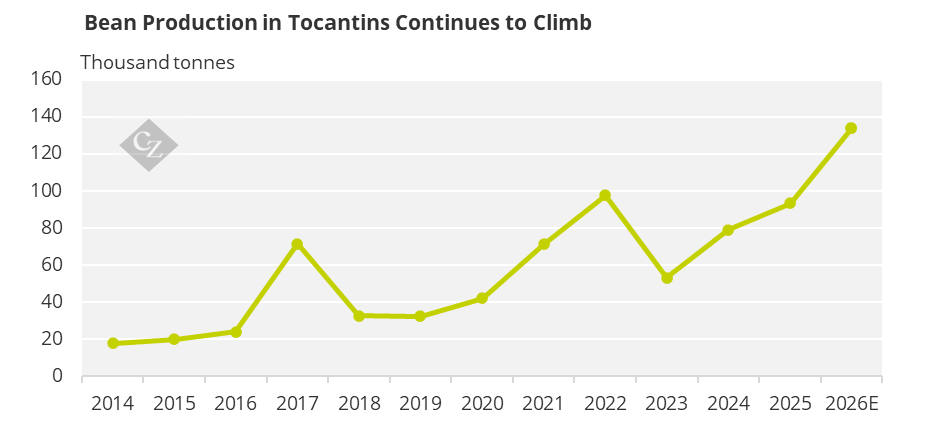
Source: Conab
These regions offer scale, mechanisation, technology and opportunities to incorporate beans and pulses into production systems. They also make it possible to take advantage of planting windows between larger crops such as soybeans, corn and cotton.
Finally, what still needs to improve for Brazil to strengthen its position as an international supplier?
Brazil has already shown it can produce a wide range of varieties, meet quality standards and honour commercial commitments. However, that responsibility also needs to be shared by importers.
There are cases in which international buyers sign contracts, encourage planting and then make fulfilment of the agreement conditional on their ability to resell the product. Ibrafe has been urging national and international institutions to curb these practices and create more effective mechanisms for guarantees, arbitration and accountability.