Insight Focus
Semaglutide generics are expanding Brazil’s fast-growing GLP-1 market. Since the semaglutide patent expired, Anvisa has approved six domestic versions of the drug, with generics expected to nearly double the market’s value this year. While high costs and limited insurance coverage continue to constrain uptake, early shifts in GLP-1 users’ eating habits are already attracting the attention of Brazilian food manufacturers and retailers.
In line with elsewhere in the world, those taking GLP-1 medications in Latin America have been cutting back on purchases of high-fat and high-sugar foods—such as bread, chocolate, and snacks—according to a study by Worldpanel Brazil.
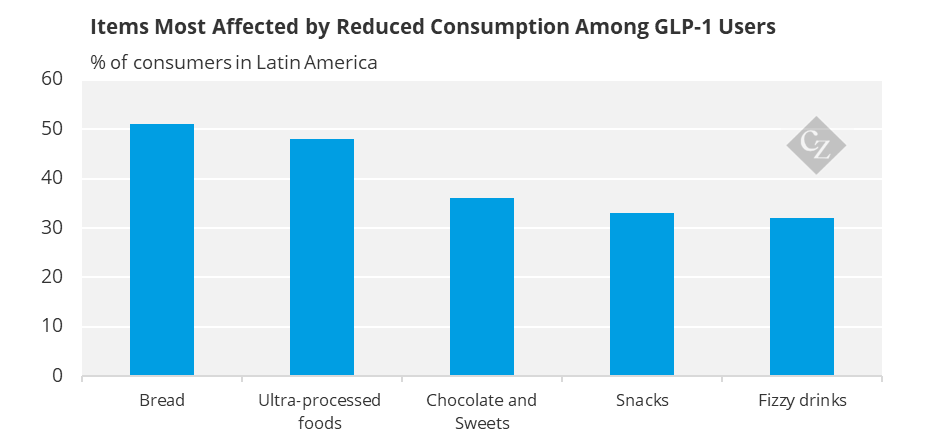
Source: Worldpanel Brazil
In Brazil, consumers using weight-loss medications have been buying more products rich in protein and fibre, such as yogurt and cereals. Conversely, sales of processed meats and ready-made sauces remain sluggish.
The pursuit of wellness and a healthy diet was already driving sales of foods like high-protein yogurts. Between January and October of last year, consumption of these products rose by 16%, according to a survey by Scanntech conducted in partnership with McKinsey. Semaglutide has provided an additional boost to this category of foods.
Impact on Consumption Remains Uncertain
It remains to be seen, however, just how much this market might grow in Brazil and what impact that would have on consumption.
In markets such as the US, where 12.5% of adults use GLP-1 drugs according to the KFF Health Tracking Poll, the food industry is already monitoring this group closely. Semaglutide can reduce appetite and cravings for sweets and ultra-processed foods (UPF), which may change the way users shop and eat.
Brazil is at an earlier stage. Only 2.8% of adults use semaglutide-based medicines, and even with expected growth, GLP-1 drugs are unlikely to reach mass-market adoption soon. As a result, they are unlikely to reshape grocery retail at scale in the near term.
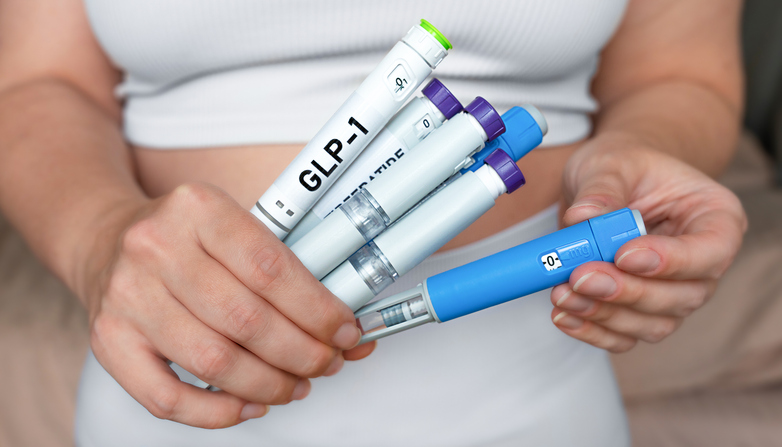
Generics should make treatment more affordable, with monthly costs expected to fall to around BRL 300 (USD 58). This is because, until recently, brands like Ozempic and Mounjaro dominated the Brazilian market for GLP-1 analogue drugs. This landscape has been shifting since March, when the patent for semaglutide, the active ingredient in these medications, expired. In recent months, the National Health Surveillance Agency (Anvisa) has approved six domestic versions of the product.
Another 13 registration applications are currently under review, with the processes expected to conclude by the end of the year. Price reductions compared to imported versions, manufactured by companies such as Novo Nordisk and Eli Lilly, are expected to reach up to 60%.
It is no surprise, then, that the sector is projected to generate approximately BRL 20 billion (USD 3.8 billion) this year, nearly double the figure recorded in 2025, according to UBS. “We view 2026 as a pivotal year for the mainstream adoption of GLP-1s, driven by easing supply constraints and the patent expiration,” the financial institution stated in a report.
Economic Outlook Limits Spending
However, affordability will remain a major constraint. More than 60% of Brazilians earn up to two minimum wages per month, equivalent to BRL 3,242 (USD 624.90), leaving limited room for treatment even at a lower price point.
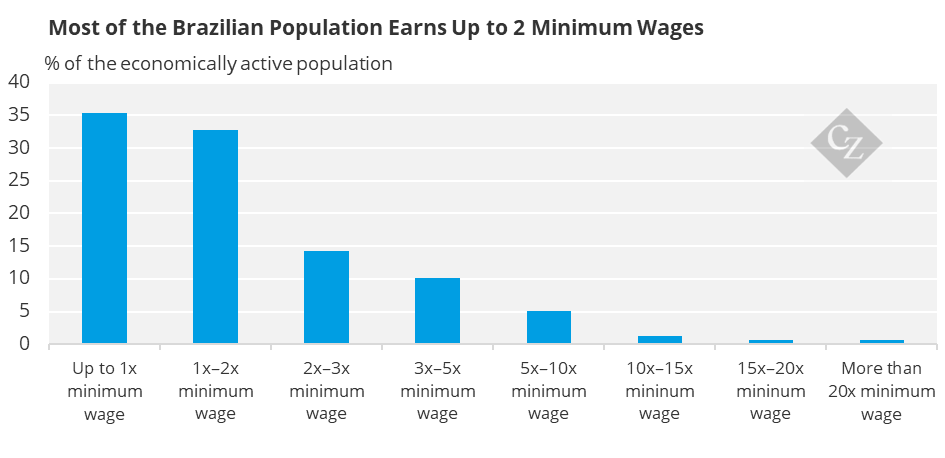
Source: IBGE
“People want to lose weight, but they lack the funds to do so,” says Danilo Bertasi, CEO of TM&TL, a telemedicine company that recently conducted a study on the subject. “Weight-loss pens are expensive and require months of use.”
According to the survey, the cost of the medication is the primary obstacle preventing 73% of consumers from starting treatment. Price is considered a barrier even for higher-income individuals earning between BRL 8,000 (USD 1,547.80) and BRL 15,000 (USD 2,881.70) per month.
Meanwhile, half of all Brazilians reach the end of the month without enough money to pay all their bills, according to a recent survey by Serasa Experian, a credit information and analytics company. With budgets stretched thin, credit cards often end up being used to cover essential expenses, such as food and electricity bills.
It comes as no surprise that household debt levels are high. In July, the rate of indebted families reached 82%, the highest level since the series began in 2010, according to the National Confederation of Trade in Goods, Services, and Tourism (CNC).
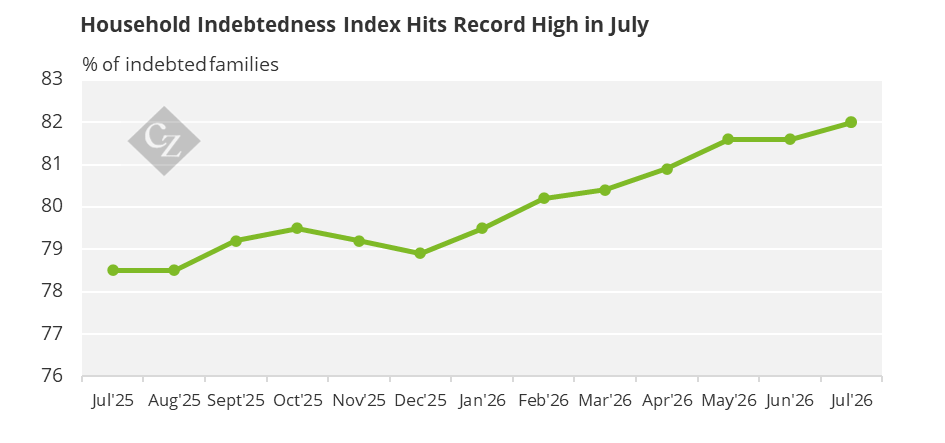
Source: CNC
Tight financial conditions are impacting consumer spending. In June, Brazilian spending fell by 1.7% compared to the previous month, according to the Daily Economic Activity Index (IDAT) from Itaú bank, which tracks spending via credit cards and other payment methods. This marked the third consecutive month of decline, signaling an economic slowdown.
And consumers who can afford products like weight-loss pens represent a small segment of the population. According to Nielsen, approximately 70% of weight-loss pen users in Brazil belong to higher socioeconomic classes and are aged between 36 and 50, a demographic profile generally associated with greater professional and financial stability.
In the long run, however, the picture could change. The public health system has already begun testing the efficacy and cost-effectiveness of GLP-1 drugs on a small-scale using control groups.
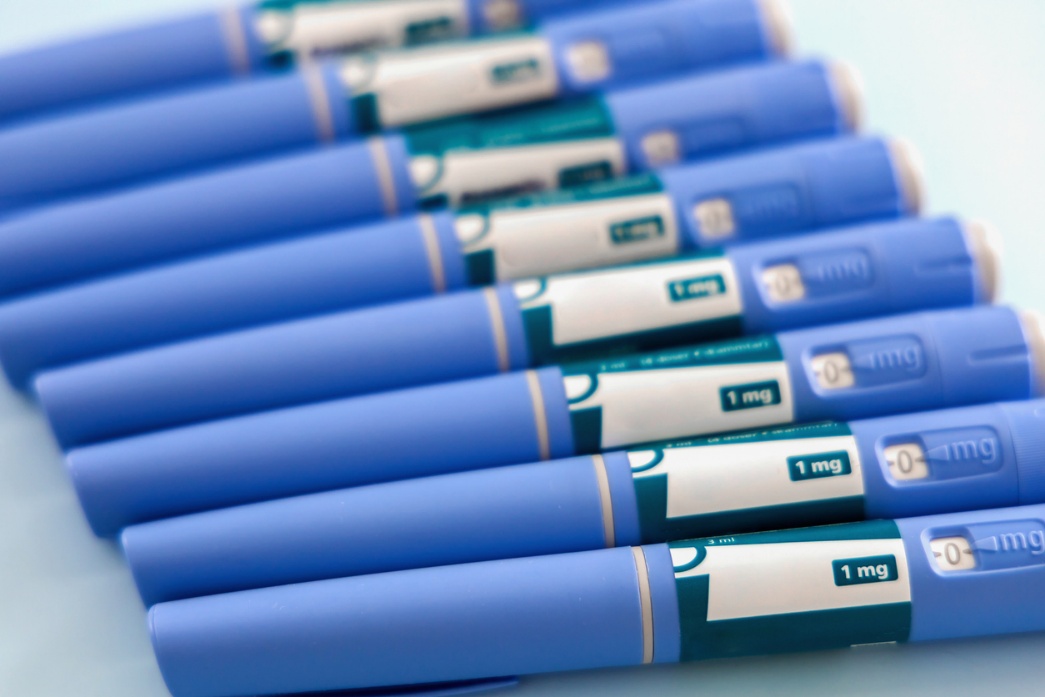
Public Health System Tests GLP-1 Drugs in Pilot Projects
In June, the Ministry of Health launched a pilot project at a public hospital in Porto Alegre, Rio Grande do Sul, involving 250 patients suffering from severe obesity. “The goal is to evaluate how the treatment can be adapted to the realities of the public health system and to assess the therapy’s cost,” the ministry stated. The study is expected to conclude in two years.
State and municipal governments have begun to follow a similar path. In Goiás, the state health department approved a protocol in March to treat a group of young people with obesity using semaglutide. In Rio de Janeiro, 320 people are receiving the injections at a municipal health centre.
For now, however, the government has resisted the idea of adding GLP-1 drugs to the list of treatments offered nationwide by the public health system, citing high costs. Health insurance providers have adopted a similar stance.
However, this could change if prices gradually decrease over the coming year with the arrival of more generics and a wider supply of the product.
Food and Retail Industries Adapt to New Trends
“We are expanding our range of products such as protein drinks, granola, and seeds,” said Belmiro Gomes, CEO of the Assaí supermarket chain—one of the country’s largest—during the first-quarter earnings call. The company noted it is closely monitoring the shift in consumption from carbohydrate-rich foods to categories with higher protein content.
With an eye on the demand for protein-rich foods, Danone increased the production capacity of its plant in Poços de Caldas, Minas Gerais, in August. The French multinational has invested approximately BRL 1 billion (USD 192.7 million) in its Brazilian operations over the past few years.

“The goal is to keep pace with the transformation in consumer habits,” stated Mário Rezende, Vice President of Operations for Danone in Brazil. The facility produces dairy beverage and yogurt brands such as YoPRO, Danone and Danette.
The food retail sector is also catering to increased protein consumption, including from animal-based sources. “Today, when you walk into a supermarket, you might even struggle to choose an egg because there is such a wide variety available. There are cage-free eggs, eggs with higher omega-3 content, organic eggs, and so on,” says Marcio Milan, Vice President of the Brazilian Supermarket Association (ABRAS).
“All of this is aimed at meeting the needs of consumers who are increasingly concerned about health and well-being,” Milan stated. The data confirm this perception. Brazilian egg consumption increased by approximately 62% between 2016 and 2025, according to Euromonitor.