Insight Focus
Global container capacity is still outstripping demand. This remains true, even as the Red Sea blockade continues to re-route ships and add time onto journeys. But as some container carriers begin to consider a return to the Red Sea, rates could fall even further.
Rates Slide as Demand Softens
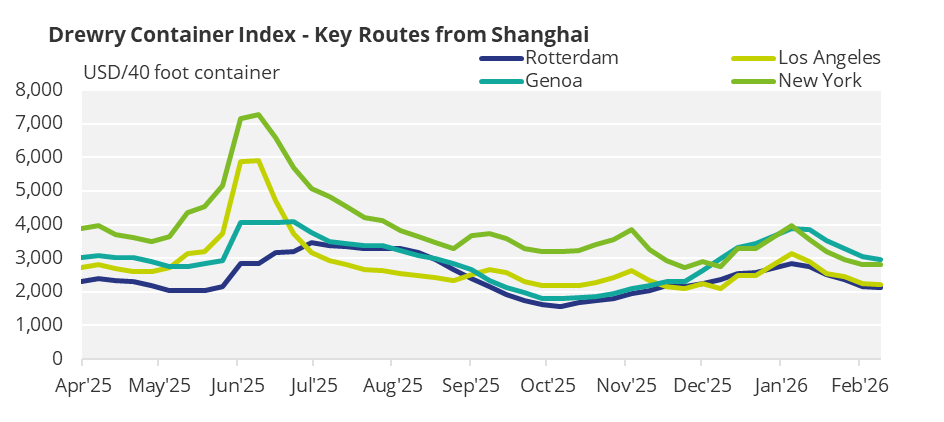
Global container freight markets over the past month have been defined by weakening demand, falling spot rates, and aggressive carrier capacity management. Multiple assessments show consecutive weekly declines in the Drewry World Container Index (WCI), with the composite rate falling to USD 1,933–1,959/FEU, marking four–five straight weeks of decreases driven by soft volumes on Transpacific and Asia–Europe lanes.
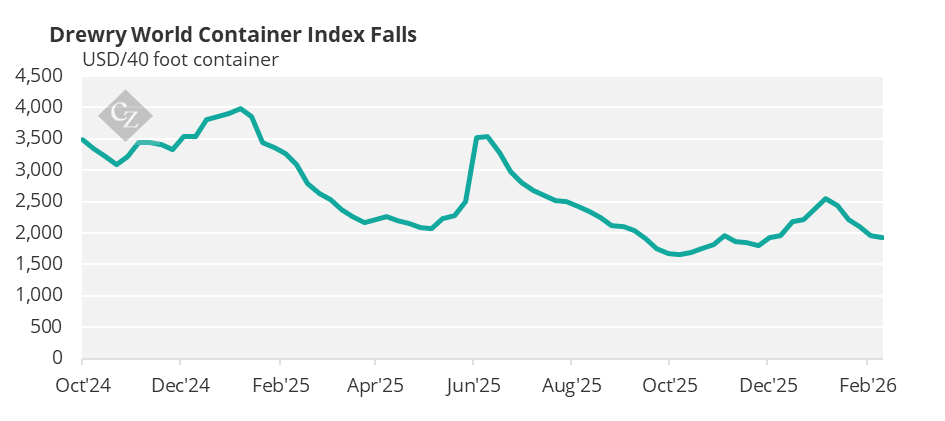
Source: Drewry
The decline is broad‑based: US, European, and intra‑Asia routes all experienced reductions as the anticipated pre‑Lunar New Year surge failed to materialize. Carriers responded with high numbers of blank sailings—57 on Transpacific routes and 24 on Asia–Europe/Med routes—to stem rate erosion.
Spot rates across major trade lanes posted marked drops during the period:
Asia–Europe: Shanghai–Rotterdam fell 2–9% to roughly USD 2,127 from USD 2,164, while Shanghai–Genoa dropped 3–7% to USD 2,965 from USD 3,048—even slipping below the psychologically important USD 3,000 level for the first time in months.
Transpacific: Shanghai–Los Angeles rates declined 4–8% to around USD 2,214 from USD 2,239, and Shanghai–New York fell 1–7% to USD 2,800 from USD 2,819. Year‑on‑year declines are sharper—down 50–55% on US routes.
Source: Drewry
Intra‑Asia: Rates fell 10% in late January, with routes such as Shanghai–JNPT dropping 24%, reflecting regional softness and effects of new Chinese export‑licensing rules.
This sustained downward pricing trajectory signals a market fundamentally oversupplied relative to trading conditions.
Weakness Ahead of Lunar New Year; Shifts in Routing
Outbound Asia flows underperformed seasonal norms as pre‑holiday cargo surges arrived earlier than usual or failed entirely to materialize. Analysts attribute the softness to cautious US and European importers, weaker retail restocking cycles, and China’s steel‑export licensing controls slowing regional cargo processing.
Europe–US flows showed unusual resilience on backhaul legs: Rotterdam–New York and New York–Rotterdam both posted modest weekly increases (up 1–2%), illustrating a segmented market where headhaul weakness contrasts with relatively stable backhaul demand.
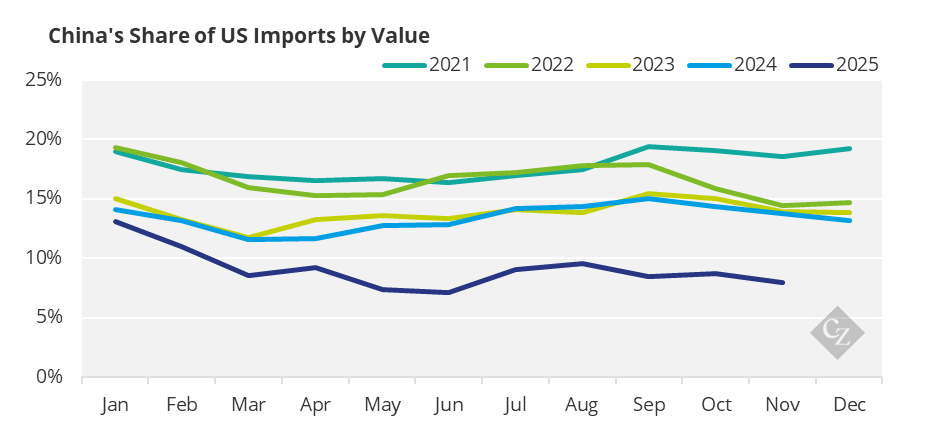
China’s share of US imports continued its structural drift downward as buyers diversify toward Southeast Asia. Meanwhile, US import volumes rose 2% month‑on‑month into December but remained below year‑earlier levels.
Source: USITC
Overcapacity Pressures Intensify
Structural overcapacity remains the defining theme. Analysts estimate global container‑ship capacity will rise 36% between 2023–2027, far outpacing expected demand contraction of ~1.1% in 2026 if carriers fully revert to Red Sea routing.
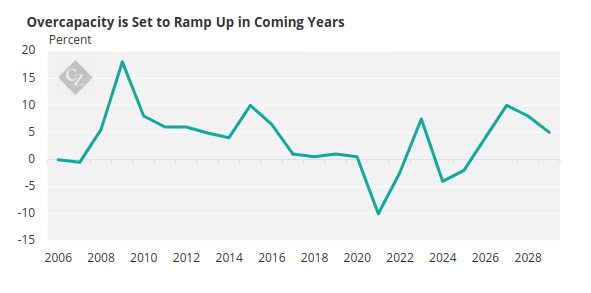
New vessel deliveries, limited scrapping, and carriers extending fleet lifespans (e.g., Maersk’s shift from 20 to 25 years) add further effective capacity.
Carrier behaviour has shifted to strict capacity management: high blank‑sailings, selective port calls, and routing changes. Still, these measures have not offset the downward pricing momentum, illustrating the supply–demand imbalance.
Gradual Reopenings Threaten to Release Capacity
The potential return of shipping through the Red Sea—and early test transits by Maersk—has emerged as the month’s most important structural variable. A full reopening would free up 6–7% of global fleet capacity and shorten Asia–Europe voyages by 10–15 days, removing one of the last supports under freight rates.
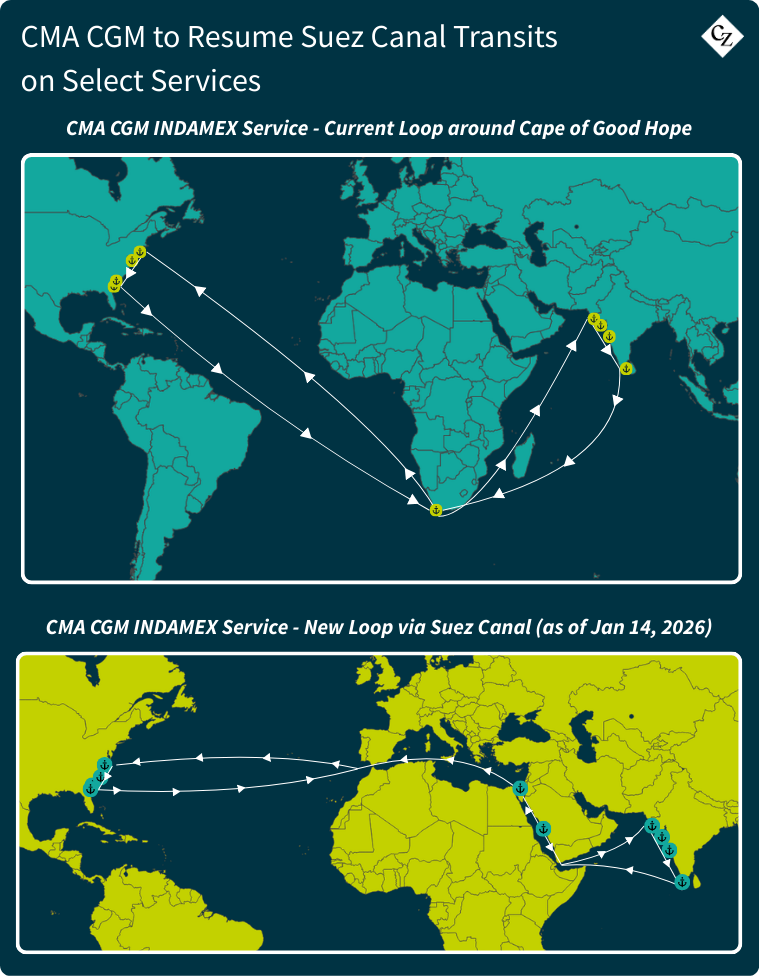
Analysts warn that a sudden reversion to the Suez routing could accelerate the market’s slide into oversupply, especially if it coincides with the arrival of newbuilds. Maersk and CMA CGM have begun selectively restoring Suez‑transiting services, though most carriers remain cautious pending stable security conditions.
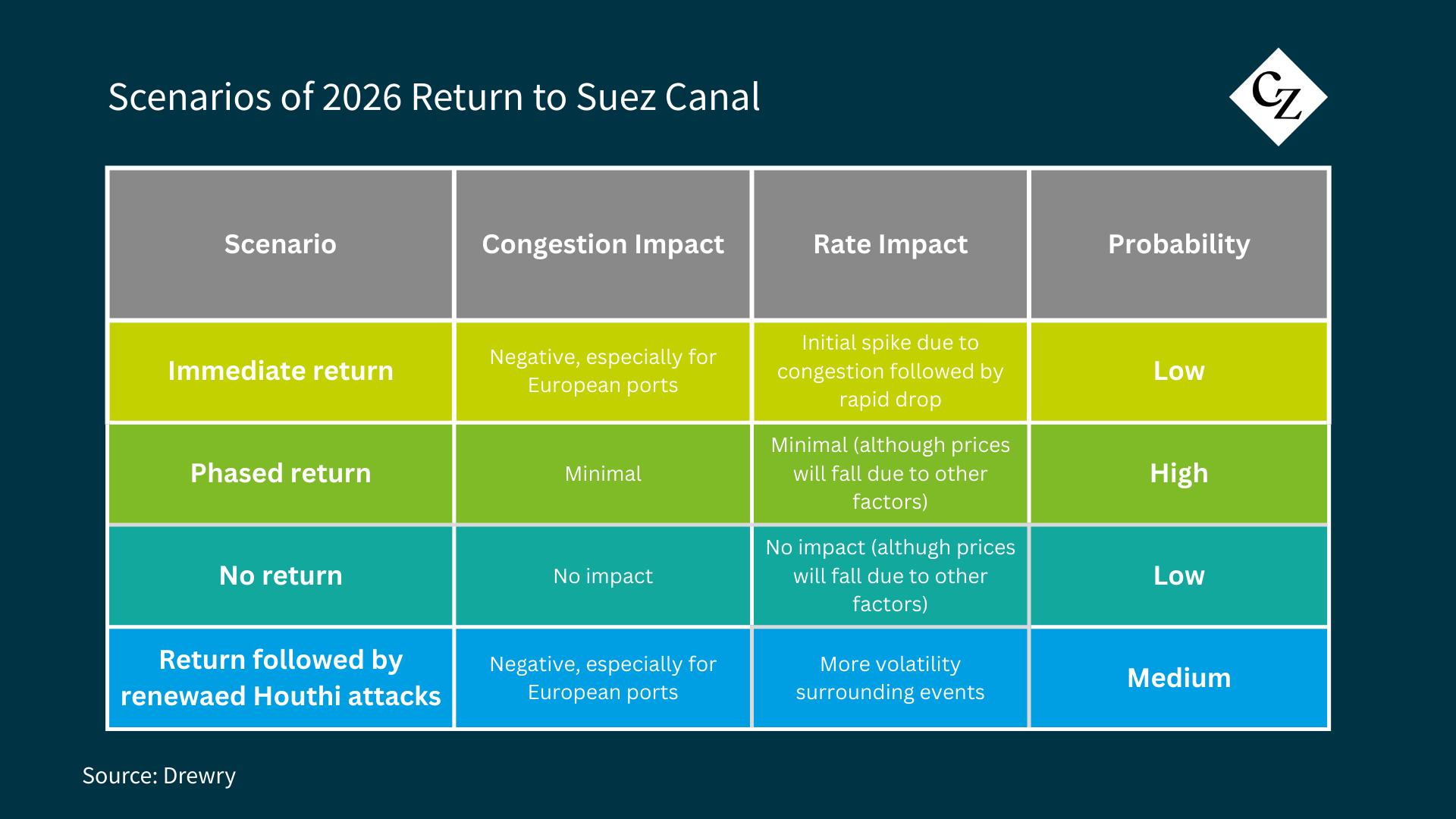
The broader logistics reality, however, is that Red Sea challenges over the past two years forced carriers to institutionalize Cape of Good Hope detours—now absorbed into schedules and budgets. This shift added 10–14 days to Asia–Europe transit times, increased fuel consumption 30–35% and kept capacity tighter than pure fleet numbers suggest.
Meanwhile, falling rates continue to weigh on carrier profitability. Maersk expects earnings to be halved in 2026 due to lower freight rates and the resumption of shorter routes; Hapag‑Lloyd’s Q4 pre‑tax profit plunged 75% even as volumes rose. Some carriers have begun cost‑cutting measures, including staff reductions and reductions in buyback programs.