Insight Focus
Soybeans have decoupled from surging oil prices. Prices fell as China–US trade uncertainty and delayed summit expectations weighed on demand, offsetting any support from higher energy markets. At the same time, slowing US sales to China and a large Brazilian harvest (with some logistical bottlenecks) reinforced ample supply and added downward pressure on global markets.
Soybeans Decouple as Oil Prices Spike
As the conflict in Iran moved into its second and third weeks, soybean prices decoupled from the rise in petroleum prices. Brazil’s soybean exports ramped up during March, while the delay of the planned Trump–Xi summit dashed hopes that China might commit to boosting its purchases of US beans.
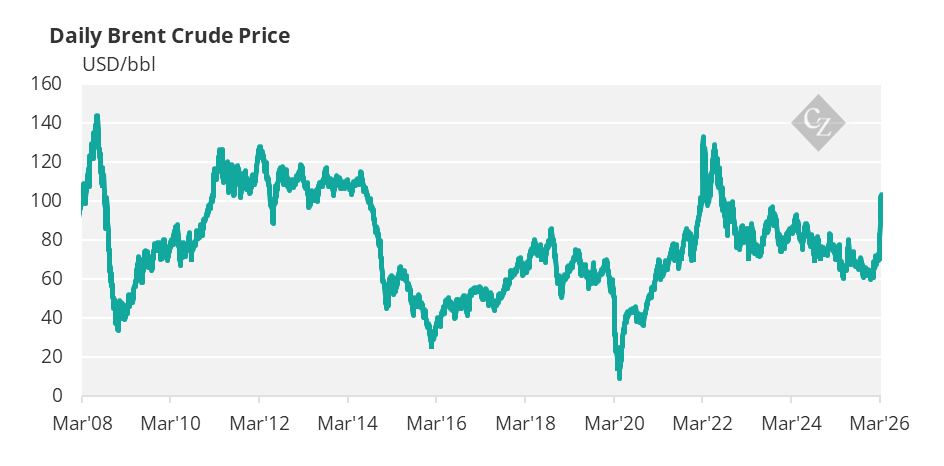
During mid-March, crude prices surged to more than 50% above their late-February level as the Iran war disrupted transportation through the Strait of Hormuz. Relatively few soybeans move through the Persian Gulf, but the market is vulnerable to higher shipping costs and has ties to the energy sector through biofuel use of vegetable oils.
Source: USDA
Soybean prices moved in the opposite direction as the rise in crude prices accelerated. China–US relations once again came to the fore in the soybean market after President Trump signalled his intention to delay his visit to Beijing, which had been set for March 31 – April 2. Negotiators had signalled that the summit would result in increased Chinese commitments to buy US agricultural products, including soybeans.
Coinciding with news of the delay, Chicago soybean prices crashed from their USD 12/bushel peak on March 16. During the week that followed, the May 2026 contract fluctuated between USD 11.50-11.60, returning to its pre-war level. Soybean oil prices fell along with soybean prices, but soybean oil remained about 6.8% above its pre-war level.
US Soybean Sales to China Begin to Stall
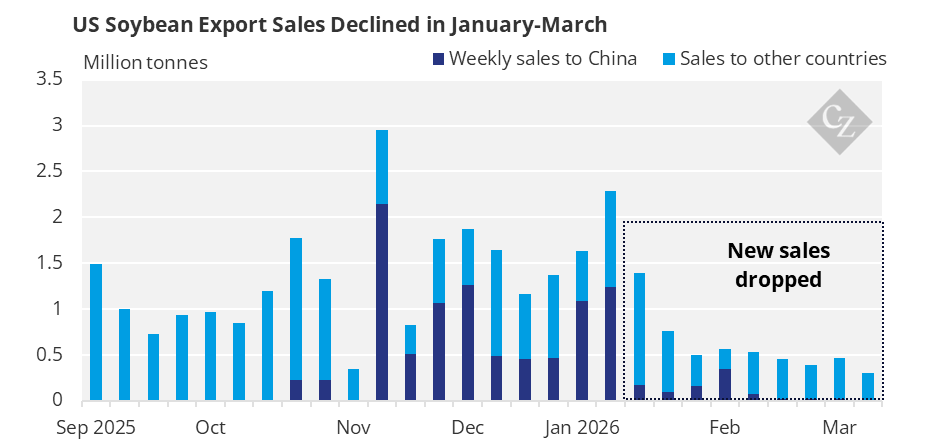
As of March 12, the USDA reported that soybean sales to China were near 11 million tonnes, not far from the 12 million tonnes in purchases promised at the October 2025 Trump–Xi summit. Most sales to China were made between November and early January. Announcements of sales to China slowed to a trickle in February and March.
Source: USDA
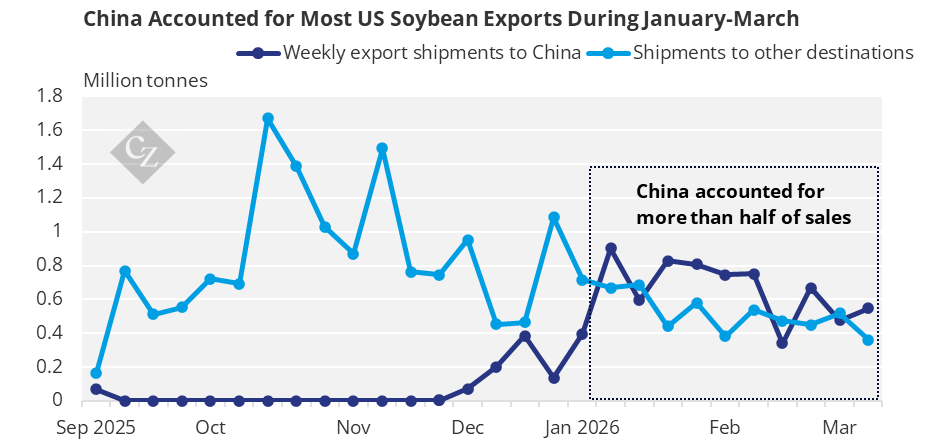
Inspections of export shipments to China were robust, with about 500,000 tonnes shipped weekly during early March. The USDA reported cumulative soybean exports to China of 7.85 million tonnes as of March 12.
The slowing pace of US sales to China dimmed the prospects for exceeding the October commitment. Moreover, postponement of the summit will likely push its timing too late for any new commitment to be fulfilled in the 2025/26 market year. Soon, Chinese buyers will need to begin purchases from the 2026 soybean crop to meet Xi’s October pledge to purchase 25 million tonnes annually over the next three years.
Source: USDA
Record Brazilian Supply Meets Export Bottlenecks
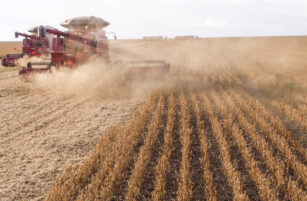
Brazil had harvested half of its soybeans by mid-March. Progress was slowed by wet weather—the harvest was 66% complete at the same time last year. Rising diesel fuel prices raised the cost of transporting soybeans by truck to ports in Brazil, and harvest activities that rely on mechanised equipment were reportedly disrupted in some areas.
Nevertheless, a record harvest and record exports were expected by most analysts. Brazil’s ABIOVE estimated 2026 production at a record 177.85 million tonnes and soybean exports at 111.5 million tonnes, as well as 1.5 million tonnes of soybean oil exports and 24.6 million tonnes of soybean meal exports. Brazil’s CONAB projected soybean exports at 112.2 million tonnes. Projections had been pared back modestly but remained at record highs.
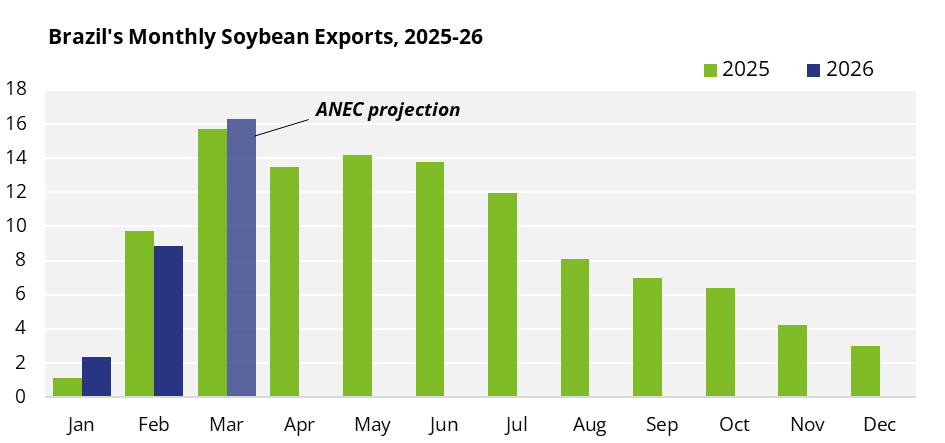
Brazil’s ANEC projected that monthly soybean exports could rise to 16.3 million tonnes in March 2026 based on ship lineups. However, ANEC’s mid-March reports cautioned that March exports could be as low as 15 million tonnes due to slowdowns in cargo loading.
Source: ANEC
In early March, stricter soybean inspection procedures adopted by Brazil’s agriculture ministry slowed the release of soybean cargoes for export. According to one report, 20 or more vessels were waiting for inspections at Brazilian ports in mid-March. Brazilian officials adopted new procedures to address Chinese customs inspectors’ concerns about weed seeds, pesticide- and fungicide-coated soybeans, and heat damage.
Following a March trip to China, Brazil’s director of animal and plant health said Chinese officials agreed to stop enforcing zero tolerance for weed seeds in Brazilian cargoes until a minimum threshold could be established. Cargoes would still need to meet requirements for chemically treated seeds and live insects.
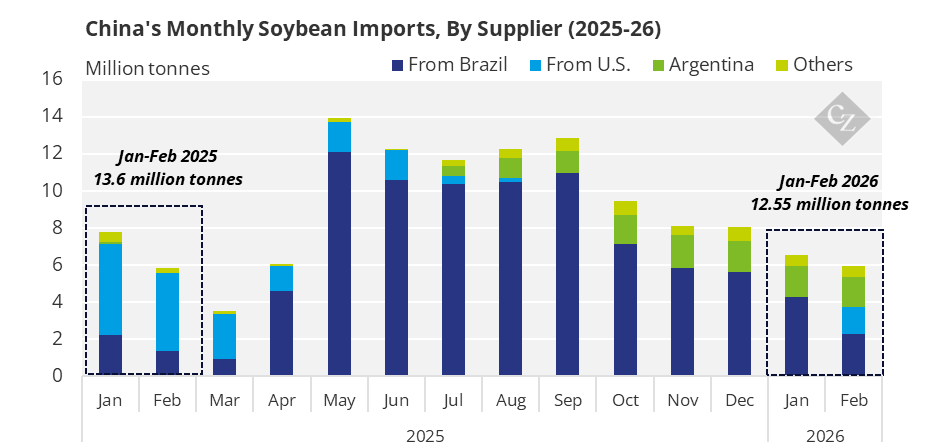
Chinese customs data showed that China imported 12.55 million tonnes of soybeans during January–February 2026 combined, about 1 million tonnes less than a year earlier. Most soybeans arriving in China during those months were from Brazil and Argentina, reversing the usual seasonal pattern of importing mainly US soybeans during January–February. Only 38,000 tonnes of US soybeans cleared Chinese customs in January 2026.
Another 1.45 million tonnes of US soybeans were reported in February, the first month since June 2025 that imports of US soybeans exceeded 1 million. More shipments of US soybeans will arrive in China during March–May 2026.
Source: China Customs
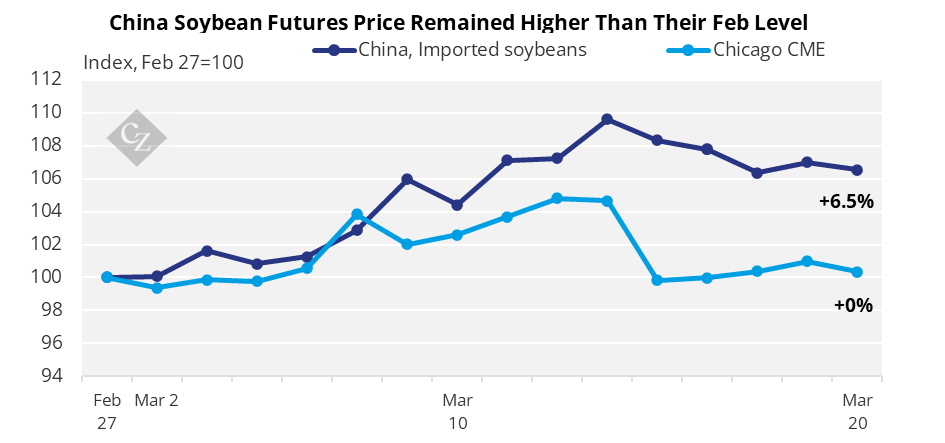
Arrivals of Brazilian soybeans will accelerate during April and May, putting downward pressure on spot prices in China. However, international shipping costs may be bolstered by the surge in global crude prices. Chinese futures prices for imported soybeans remained at an elevated level following the March 16 crash in US soybean prices.
The May 2026 Chinese futures contract for No. 2 soybeans peaked on March 13 at a level 9.6% above its late-February level, then gradually declined to about 6.5% above its February 27 level by the end of the week. Chinese soybean oil futures prices peaked on March 16 and were about 5% above their February 27 level by March 20. Chinese prices increased much less than global crude prices.
Source: CME
During March 2026, Chinese weekly soybean crush rebounded to near 2 million tonnes after most processors resumed operations following the February Lunar New Year holiday. One market monitoring report estimated that monthly crush by major processors would reach 7.5 million tonnes, exceeding the three-year average for March by about 800,000 tonnes.