Insight Focus
Tight supplies supported gains across US dairy powder markets. NDM and dry whey prices strengthened amid constrained availability and steady demand, while WPC markets remained uncertain. Butter markets were quiet, while cheese stabilised as holiday demand began to build.
This update is from Sosland Publishing’s Dairy Report. For more information and subscription details, CLICK HERE.
Dairy product prices moved unevenly this week, with gains in the powder complex contrasting with steadier butter and fluctuating cheese markets.
NDM and Whey Prices Rise on Tight Supplies
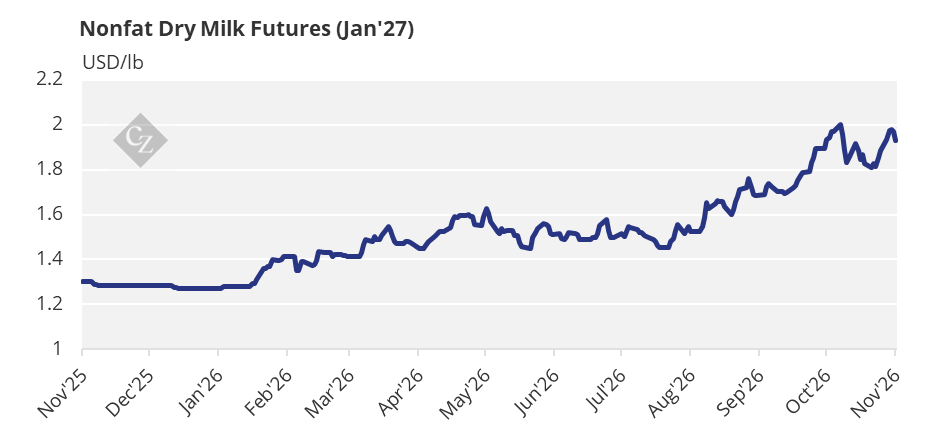
Nonfat dry milk (NDM) prices climbed amid constrained inventories and steady domestic and export demand. Mexican buyers showed renewed interest, although purchases were often made closer to immediate needs.
One trade source said elevated US prices were less of a deterrent than earlier in the year, as international skim milk powder values had climbed into the mid USD 1.80s/lb, narrowing the gap with US offerings.
Meanwhile, dry whey prices edged higher, aided by limited spot availability and processors favouring higher-protein products. Whey protein concentrate (WPC) 34% prices increased despite limited spot activity, with production largely committed under contract. WPC 80% buyers were still assessing the recent correction. One trade source suggested lower prices could encourage renewed purchasing but cautioned that further declines were possible.
“Typically, prices that correct too high are followed by a period of over correction to the downside, so more is possible,” the source said. The earlier shift toward milk protein concentrates and isolates may also lose momentum as their price advantage narrows, particularly where WPC 80% offers functional benefits that alternatives cannot easily replicate.
Butter and Cheese Markets Settle Ahead of Holidays
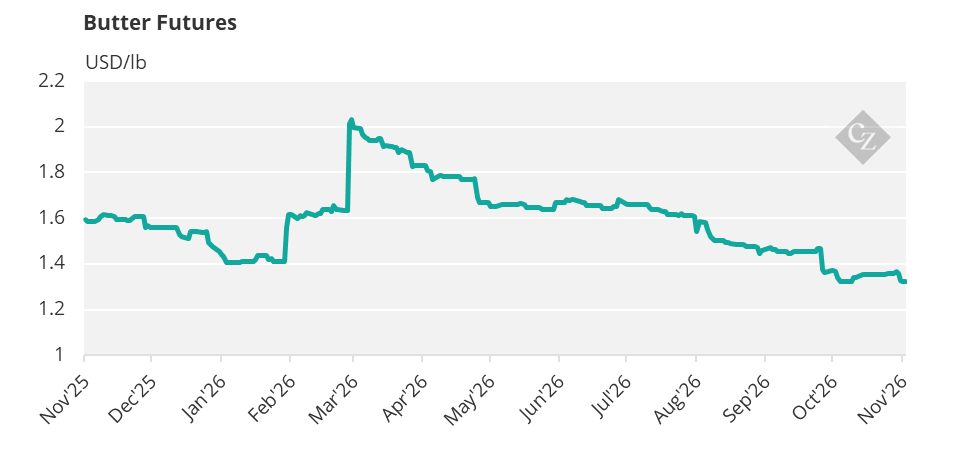
Butter markets were comparatively quiet, with holiday production and retail packaging activity picking up. Churns operated at strong rates, although demand varied by region.
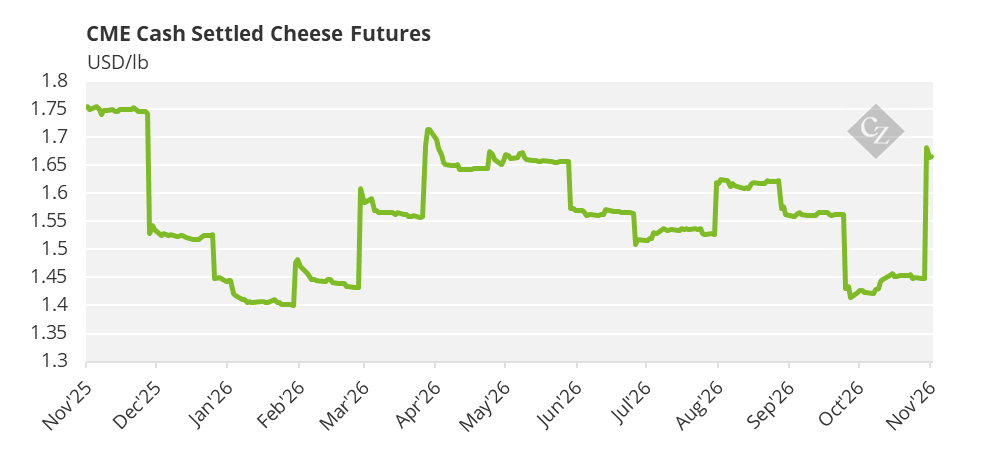
Cheese markets settled into a more balanced pattern following the late-October rally. The squeeze in fresh cheddar availability eased, although Midwest manufacturers reported brisk orders for Italian-style cheeses, particularly mozzarella. Holiday merchandising began to generate additional interest.
Milk production was steady to higher across much of the country, aided by favourable fall conditions. Washington was an exception, where highly pathogenic avian influenza detections complicated regional milk movements. Looking toward 2027, one trade source said buyers were holding back where greater availability was expected, while others were “biting the bullet and locking in prices.”