Insight Focus
US milk production continues to strengthen year on year. A larger dairy herd and higher cow productivity lifted September output, while third-quarter production also increased. Dairy markets were mixed, with cheese and dry whey strengthening, butter and WPC weakening, and nonfat dry milk prices varying.
This update is from Sosland Publishing’s Dairy Report. For more information and subscription details, CLICK HERE.
Dairy product markets moved irregularly this week as whey proteins showed signs of stabilising, cheese prices advanced, and butter values softened. Nonfat dry milk prices varied by region.
Larger Dairy Herd Lifts US Milk Production
US milk production totalled 19.4 billion lbs in September, up 3% from a year earlier, according to the USDA.
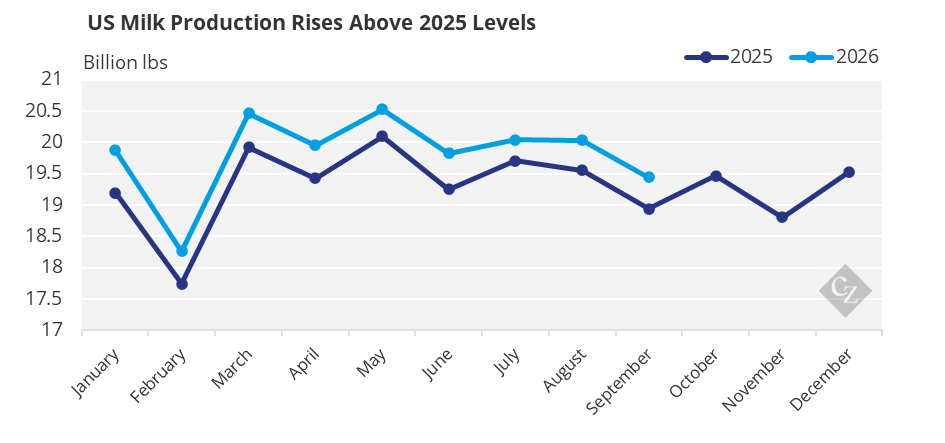
Production in the 24 major dairy states increased 3% to 18.7 billion lbs, with the dairy herd expanding by 162,000 head to 9.3 million cows. Output per cow increased by 18 lbs to 2,012 lbs. National third-quarter production totalled 59.5 billion lbs, up 2.3% from a year earlier.
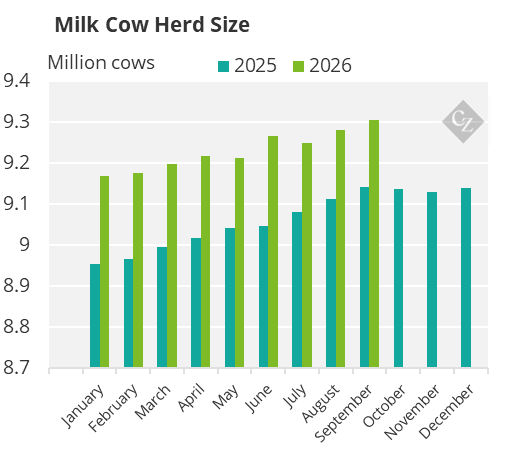
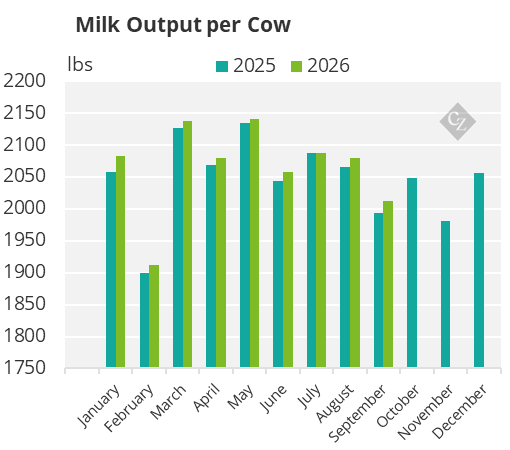
Source: USDA
Dry Whey Firms as WPC Prices Weaken
Dry whey prices were steady to higher, bolstered by strong export interest and reduced production as manufacturers prioritised higher-protein concentrates.
Whey protein concentrate (WPC) 34% prices declined despite sustained demand. Manufacturers focused on contractual commitments, with some commanding premiums approaching WPC 80% protein-equivalent values, which was met with resistance from buyers.
One trade source attributed the recent weakness in WPC 80% prices partly to inventory adjustments after elevated US offerings dampened demand from international buyers. Spot values stabilised last week, with processors awaiting clearer first-quarter pricing direction. Whey protein isolate prices remained firm.
Dairy Markets Diverge as Cheese Rises and Butter Falls
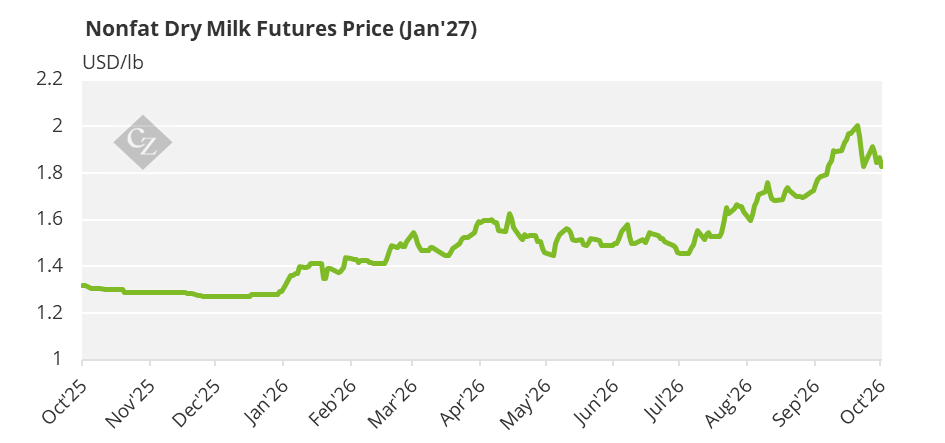
Nonfat dry milk prices were mixed. Higher US prices weighed on export interest, and recent volatility kept buyers cautious.
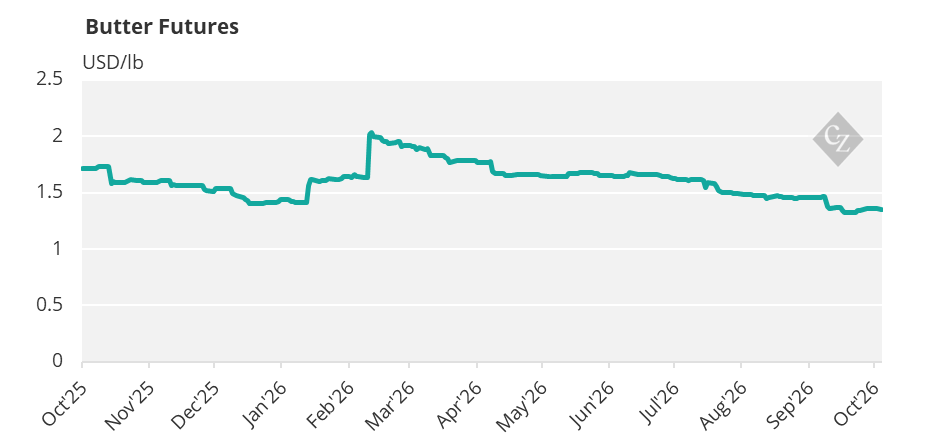
Butter prices declined further despite improving seasonal demand. Churns were active ahead of the holidays as retail orders increased and export interest remained steady. Cream supplies were generally adequate. High inventories of conventional butter pressured values.
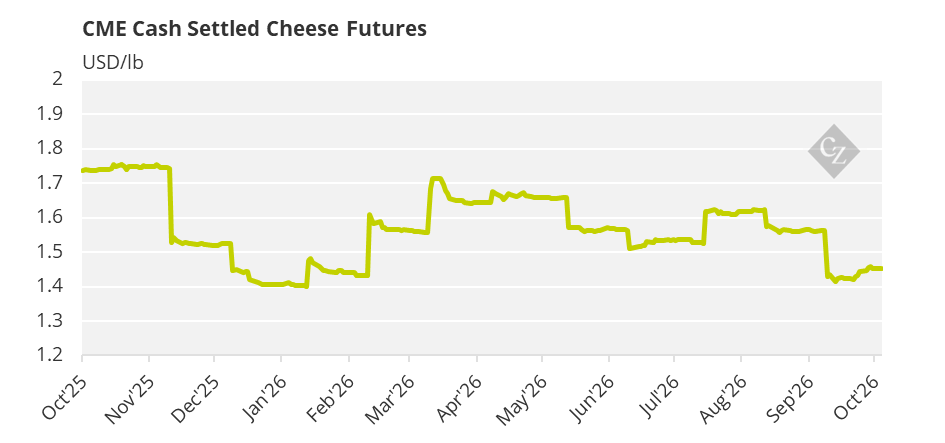
Cheese prices advanced. CME blocks and barrels both posted gains despite plentiful cheddar inventories. Mozzarella demand was favourable, while cheddar production slowed in parts of the Midwest due to plant downtime and quality concerns. Retail demand was steady, but foodservice purchases were below expectations. Export interest was strong, providing an important outlet for domestic production.