Insight Focus
US protein demand supports dairy powders as butter prices weaken. Competition for skim and whey solids is tightening supplies, supporting NDM and driving WPC 34% prices to record highs. Meanwhile, abundant milkfat supplies and resilient milk production continue to weigh on butter markets, limiting prospects for a sustained recovery.
This update is from Sosland Publishing’s Dairy Report. For more information and subscription details, CLICK HERE.
Prices of dry dairy products were moderately to sharply higher this week, but plentiful milkfat supplies kept the butter market under pressure.
Competition for Skim Solids Supports NDM Prices
Nonfat dry milk (NDM) continued to stand out. Supplies were constrained as processors faced competition for skim solids from ultrafiltered milk, milk protein concentrate, and other higher-protein products. Domestic NDM demand has surged this year, adding pressure to a market already receiving less product from dryers.
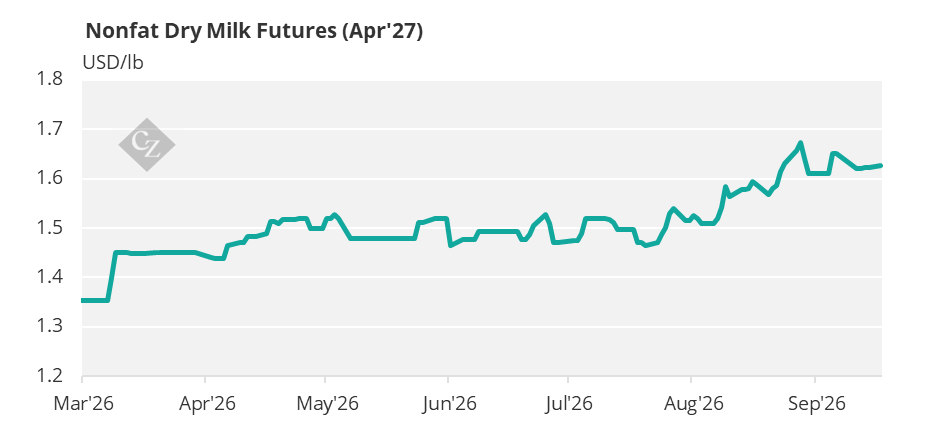
“Nonfat looks to be fundamentally short, due to a lack of skim solids going to the dryers,” said one trader. The source said prices might pull back from recent highs but expects NDM to trade at historically elevated levels over the longer term as protein demand competes for available solids.
Strong WPC Markets Contrast with Weak Domestic Cheese Demand
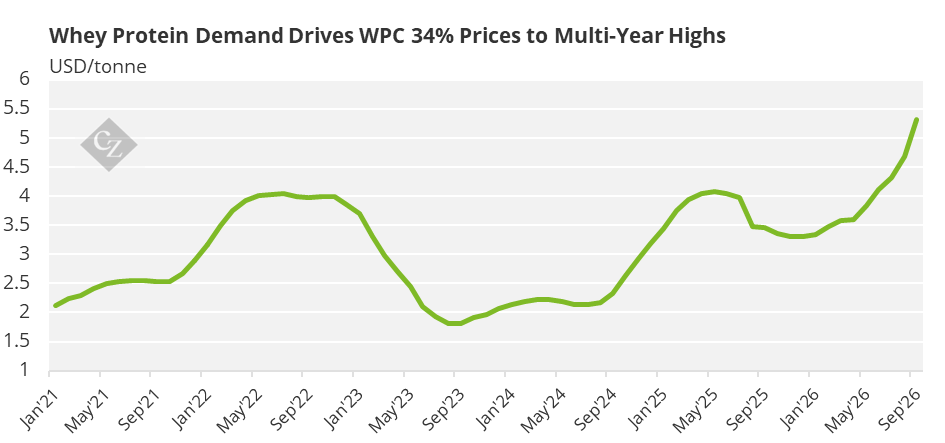
Competition for whey solids also shaped dry whey markets. Some processors continued directing streams toward higher-value whey protein concentrate 80% and whey protein isolate, restricting conventional dry whey output. Whey protein concentrate 34% prices jumped as a result.
Source: CLAL
As demand for protein has grown, cheese has increasingly become a byproduct of manufacturers’ appetite for whey protein, adding to an already well-supplied market. Domestic disappearance has not been strong enough to absorb that output, making exports an important outlet.
A meaningful price shift would require strong exports and a rebound in domestic demand. One merchandiser noted heavy hedging activity in cheese futures, saying, “I would anticipate there being a good amount of promotions on cheese in the coming months to help move retail product.”
Butter Demand Struggles to Absorb Ample Milkfat Supplies
Butter buying was active, but the volume of milkfat in the market overwhelmed demand. Much of the fall seasonal business appears to have been covered, leaving spot demand weaker than is typical for this time of year. Prolonged low prices may encourage buyers to carry less coverage, potentially leaving them exposed if supplies contract.
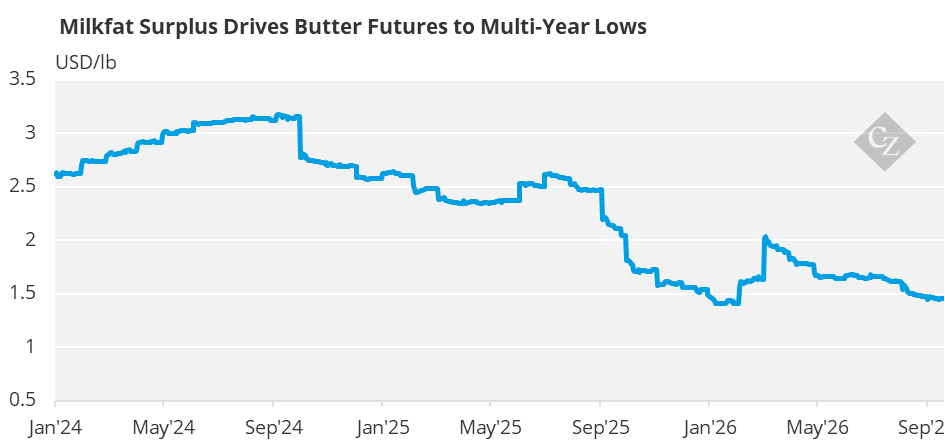
Despite pressure across parts of the dairy complex, a meaningful slowdown in milk production was not thought to be imminent. Weaker milk prices may not be enough to alter farm output. Under current economics, production appears largely set for the next 12 months.