Insight Focus
Dairy markets diverged as tight protein supplies contrasted with butter weakness. The USDA raised its milk production forecasts through 2027, lowered butter and cheese price outlooks, and increased its nonfat dry milk forecast. Limited milk available for drying, lean inventories and strong demand supported NDM and WPC prices, while ample butter supplies kept pressure on futures.
This update is from Sosland Publishing’s Dairy Report. For more information and subscription details, CLICK HERE.
Dairy markets were irregular this week. Nonfat dry milk (NDM) pushed sharply higher, while weakness in butter persisted.
Stronger Milk Production Expected Through 2027
In the September WASDE report, the USDA raised its 2026 and 2027 milk production forecasts as both cow inventories and output per cow increased.
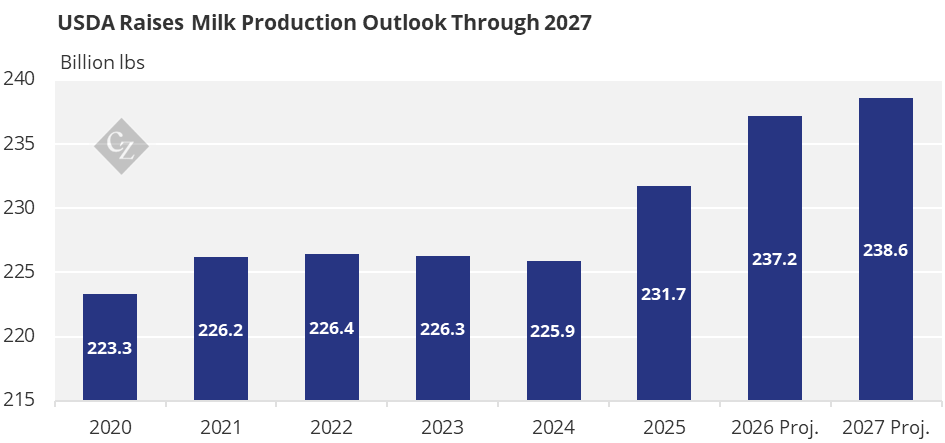
Source: USDA
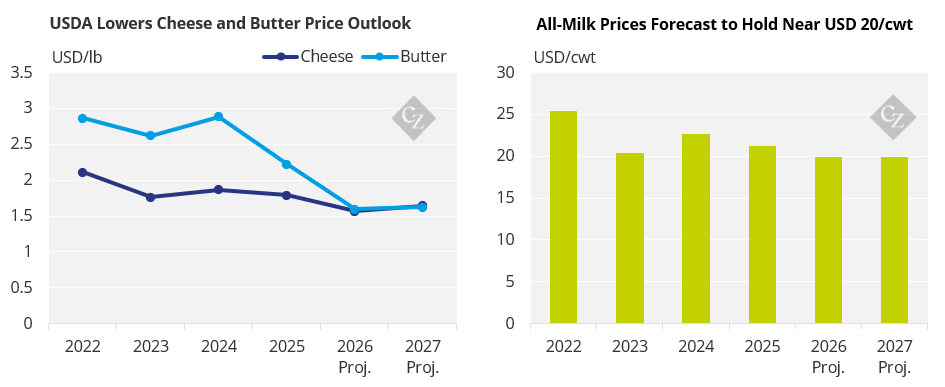
The USDA lowered its butter and cheese price forecasts while raising its nonfat dry milk forecast. Whey was unchanged for 2026 but raised for 2027. The all-milk price forecast was raised to USD 19.90/cwt for 2026 and left unchanged at USD 19.80 for 2027.
Source: USDA
Limited Milk for Drying Tightens NDM Supplies
The NDM market was notably short, as less milk made its way to dryers. Class I demand has pulled milk away from balancing plants, leaving inventories thin and restricting production. Export buying also competed for available loads. One source said the shortage could produce another sizable run-up in NDM before prices eventually retreat.
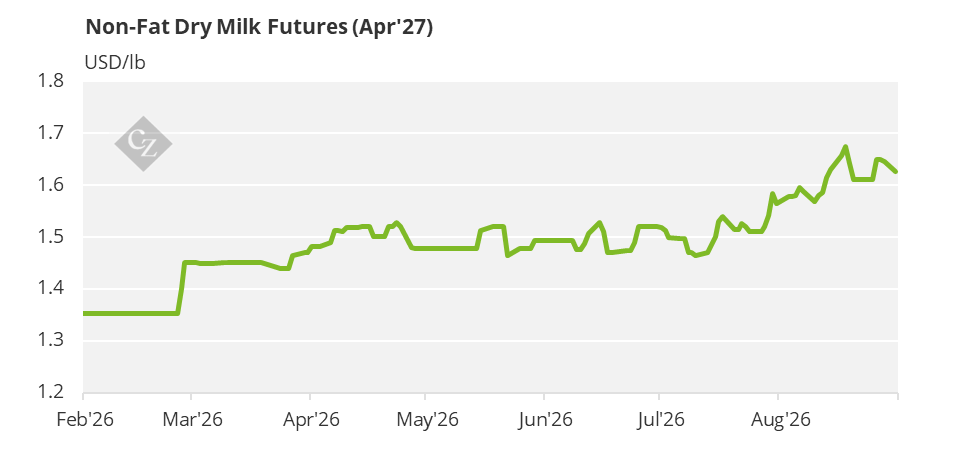
Part of the supply squeeze stems from stronger demand elsewhere in the dairy complex, with more milk being directed toward yogurt and cottage cheese instead of dryers. Looking ahead to 2027, New Zealand’s spring weather may help determine when prices correct. Favourable growing conditions would encourage seasonal milk production and add more powder to the global market, while poor weather could prolong the supply squeeze.
Buttermilk powder supplies were particularly scarce in the Central and Eastern regions, and strong NDM values added upward pressure. Western production was beginning to catch up, although most product was moving under contract rather than into the spot market.
Protein Markets Stay Firm While Butter Extends Losses
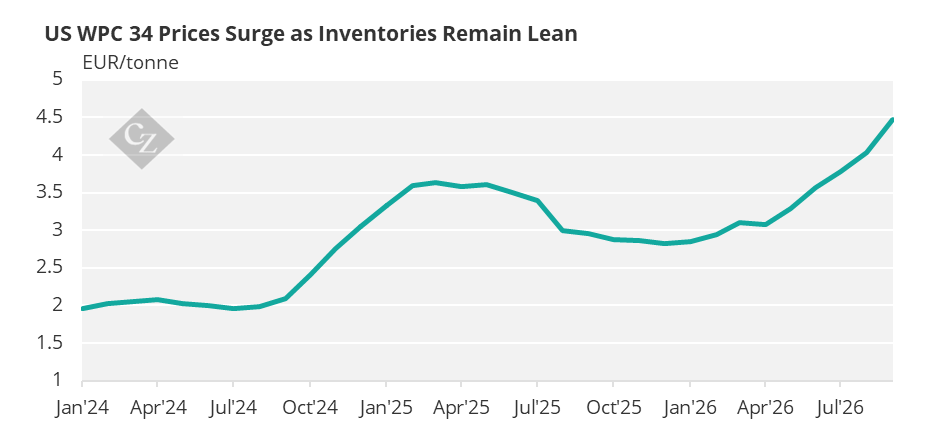
Dry whey was steady overall, as processors favoured higher-value protein products over conventional powder. Whey protein concentrate (WPC) 34% increased at the top of its range amid extremely lean inventories and strong food-grade demand. WPC 80%, by contrast, showed a softer bias as buyers resisted offers, stalling fourth-quarter negotiations.
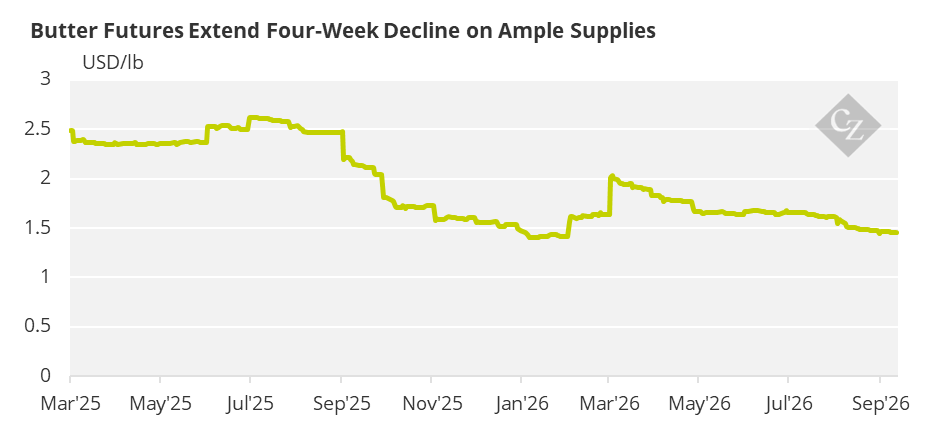
Source: CLAL
Butter tumbled lower for a fourth consecutive week. CME values declined, and one analyst expected the weakness to persist. With roughly 60 to 70 days before seasonal stock-building begins, there was still plenty of product available.