Insight Focus
Milk powder and whey prices rose as supplies remained tight. The USDA lowered milk production forecasts for 2026 and 2027 while raising its 2027 all-milk price forecast. Strong demand and limited supplies supported gains in nonfat dry milk, whey and cheese, while rising powder premiums raised export concerns and butter prices remained under pressure.
This update is from Sosland Publishing’s Dairy Report. For more information and subscription details, CLICK HERE.
USDA Trims Production Forecasts as Milk Prices Stabilise
Dairy ingredient prices advanced across much of the complex this week.
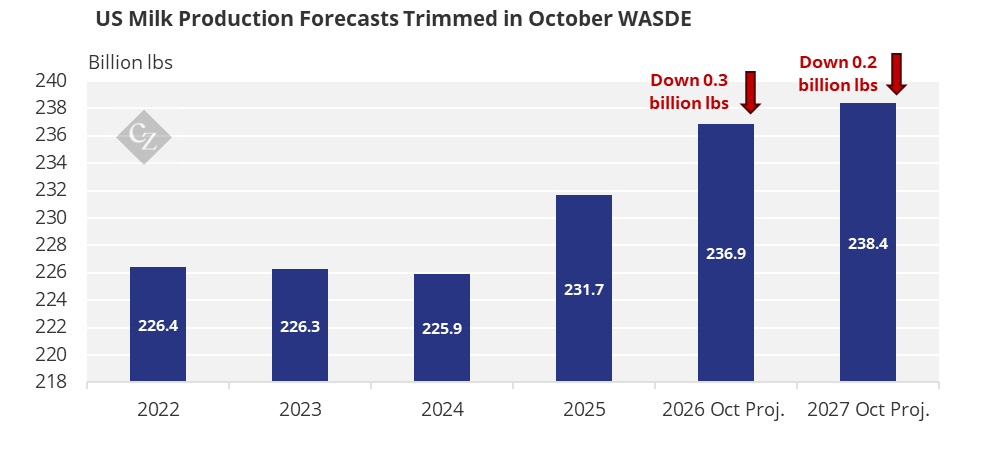
In its October WASDE report, the USDA slightly lowered its milk production forecasts for both 2026 and 2027, reflecting reduced cow inventories in 2026 and lower expected output per cow in both years.
Source: USDA
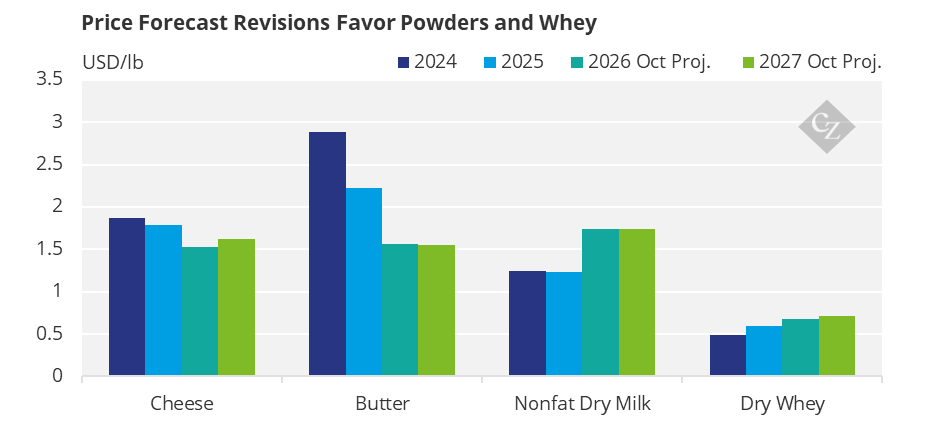
The USDA lowered its butter and cheese price forecasts while raising projections for nonfat dry milk and whey.
Source: USDA
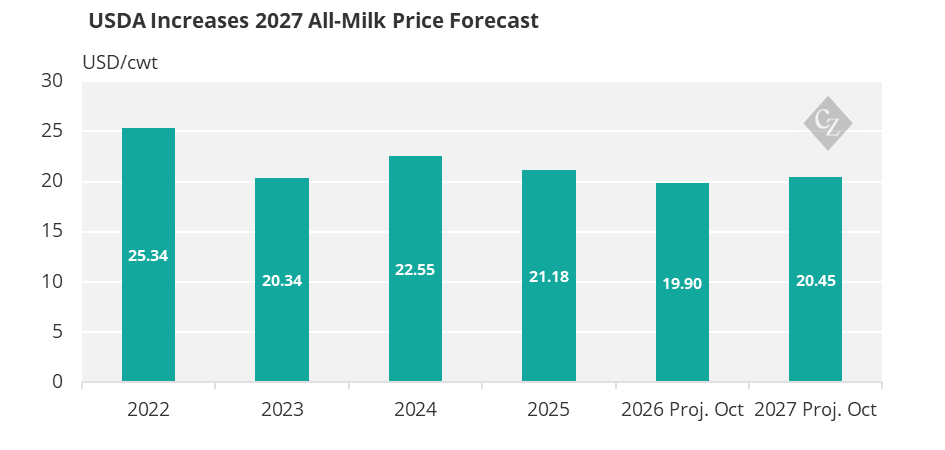
The all-milk price forecast was unchanged at USD 19.90/cwt for 2026 and increased to USD 20.45 for 2027.
Source: USDA
Milk Powder Markets Strengthen as Availability Tightens
Nonfat dry milk prices strengthened as robust domestic and Mexican demand, coupled with limited production, tightened spot availability. Western dryers operated at capacity, with some production already committed into 2027. Scarce high-heat powder pushed buyers beyond their typical sourcing regions.
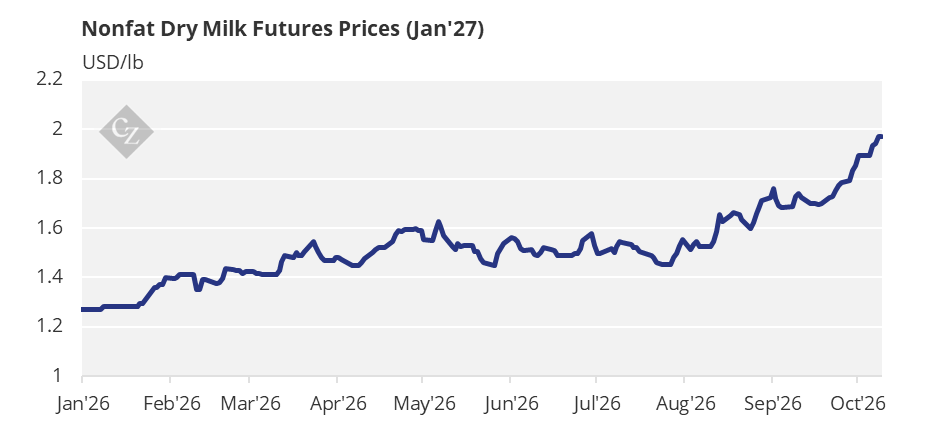
The widening premium for US nonfat dry milk over international skim milk powder prices began to raise concerns about export competitiveness. With seasonal drying expected to increase later in the year, US suppliers may need to narrow the gap with world prices to attract first-quarter 2027 bookings. Higher prices may begin to discourage new export orders as early as late November.
Dry whey prices advanced as production downtime and a shift toward higher-value proteins tightened inventories. Asian demand remained strong, while scarce spot supplies pushed whey protein concentrate (WPC) 34% prices higher. WPC 80% prices softened as buyers delayed purchases.
Milk production remained subject to weather conditions. In the Central region, where temperatures cooled, supplies became more comfortable. Heat in the Southwest constrained milk output, while Eastern supplies remained heavy. Elevated diesel costs continued to complicate distribution.
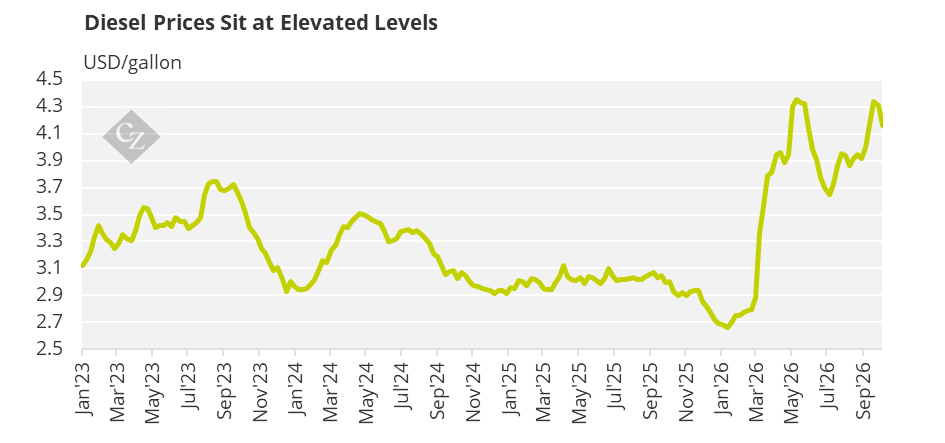
Source: EIA
Strong Cheese Demand Contrasts with Weak Butter Market
Cheese prices climbed sharply despite heavy cheddar inventories. Interest in mozzarella and provolone improved, tightening supplies, while western export demand remained favourable, particularly from Mexico and Asia.
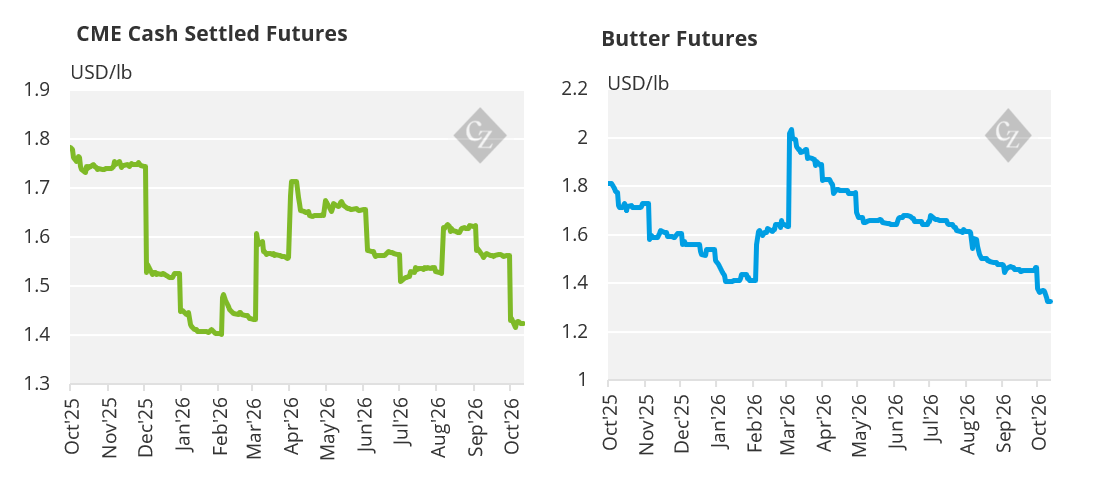
Butter prices declined again. One analyst cautioned that butter stocks may exceed official estimates, potentially limiting a price recovery even as seasonal demand improves.