Insight Focus
US dairy prices diverged last week. The USDA raised its 2026 and 2027 milk production and all-milk price forecasts, while a new HPAI case was confirmed in Oregon dairy cattle. Nonfat dry milk and butter prices softened, while tight supplies and strong protein demand supported higher whey prices.
This update is from Sosland Publishing’s Dairy Report. For more information and subscription details, CLICK HERE.
Dairy product prices were irregular this week as nonfat dry milk retreated from recent highs and whey gained ground.
USDA Lifts Dairy Outlook as HPAI Returns
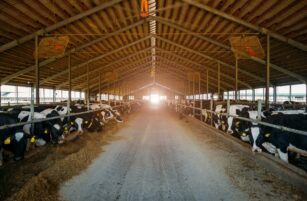
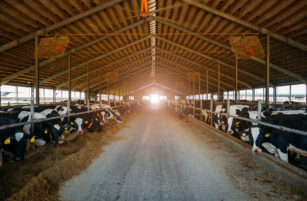
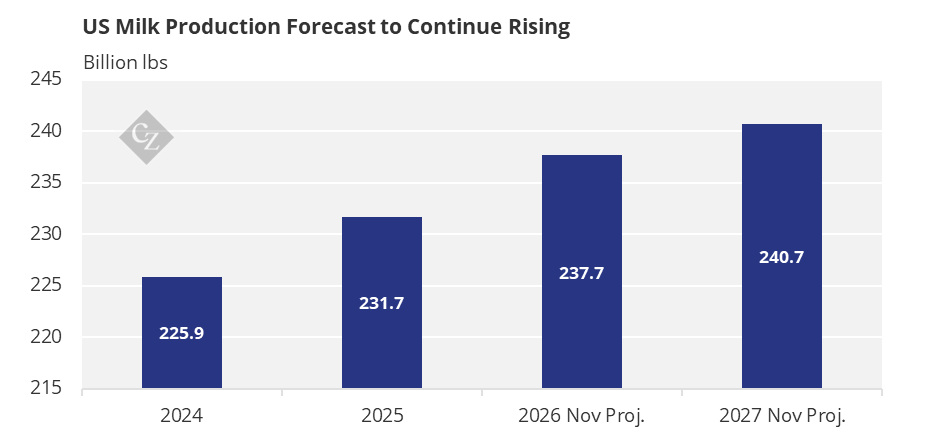
In its November WASDE report, the USDA raised its milk production forecasts for 2026 and 2027, citing larger dairy herds and increased output per cow.
Source: USDA
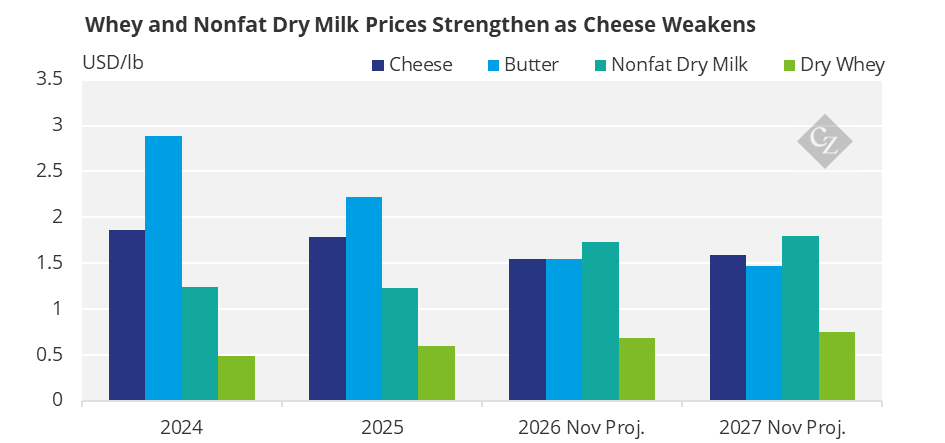
Price forecasts for nonfat dry milk and whey were raised on strong demand for high-protein products, while butter forecasts were lowered as milkfat production outpaced consumption.
Source: USDA
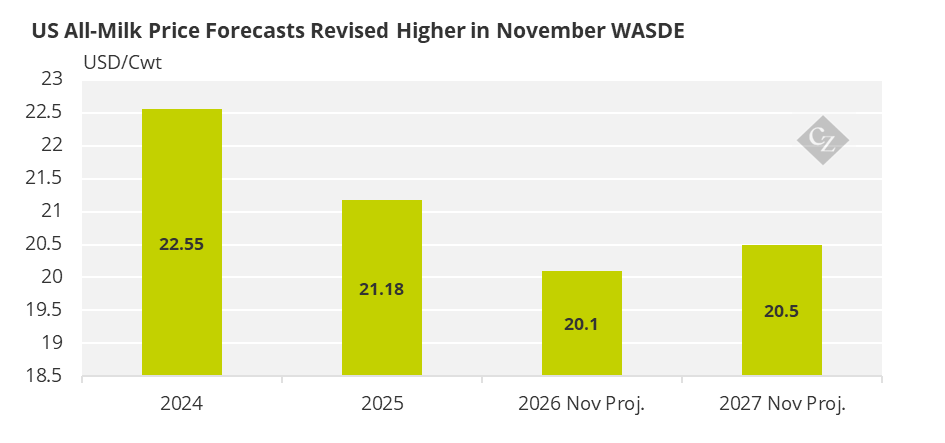
The USDA raised its all-milk price forecasts to USD 20.10/cwt for 2026 and USD 20.50/cwt for 2027.
Source: USDA
The USDA also confirmed a case of highly pathogenic avian influenza (HPAI) in Oregon dairy cattle on November 10, bringing the number of affected states to 22 since March 2024. The infection was detected through routine milk surveillance at a Morrow County dairy, which was placed under quarantine. No additional outbreaks were reported.

Whey Climbs as Butter and Nonfat Dry Milk Prices Ease
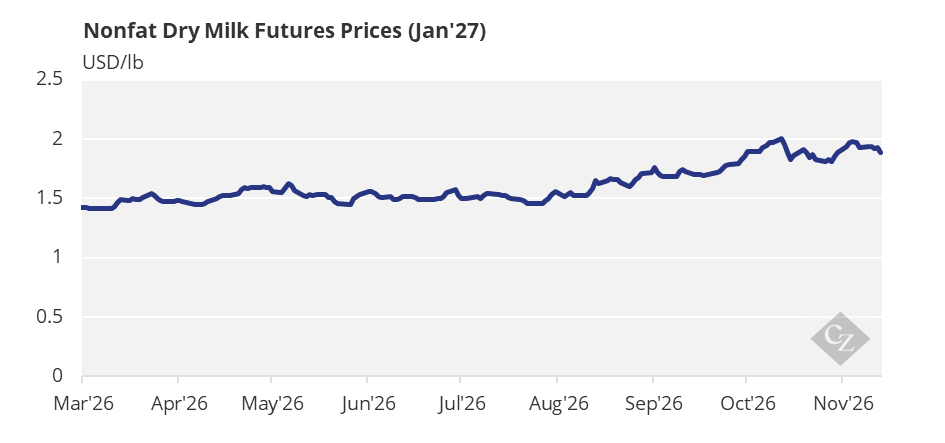
Nonfat dry milk prices declined after a sustained rally, although limited availability and export interest offered some underlying strength. Contacts reported renewed inquiries from Mexico and reduced production as fluid milk processors secured additional volumes ahead of the holidays. Buyers and sellers were reluctant to commit to first-quarter contracts amid volatile market activity.
Dry whey prices climbed as manufacturers prioritized higher-protein concentrates, limiting conventional whey production. Whey protein concentrate (WPC) 34% availability was constrained, with most production committed under contract. Interest in WPC 80% was less consistent, as buyers resisted elevated domestic prices and lower-priced European offerings attracted attention.
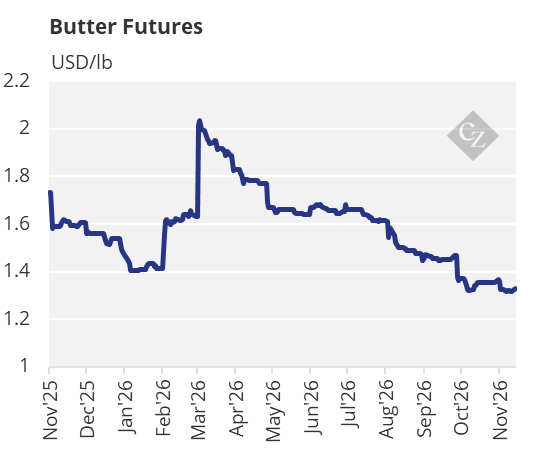
Butter prices softened despite strong holiday sales and promotional activity. Some manufacturers operated churns as many as seven days per week, purchasing additional cream to meet demand.
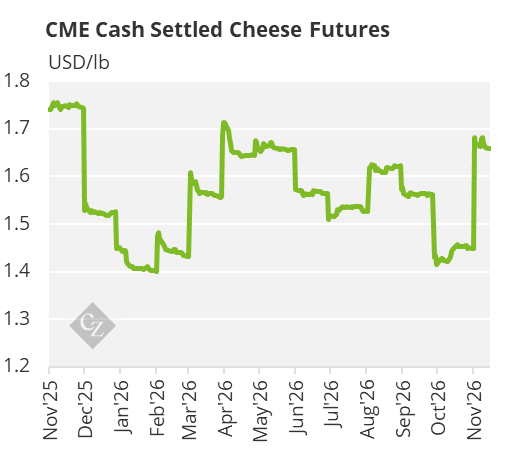
Cheese prices were uneven, as strong demand for Italian-style varieties contrasted with disappointing food service business.
Milk production was steady to slightly above average in the Upper Midwest. Class I and Class II processors absorbed available spot loads, limiting volumes for manufacturing.